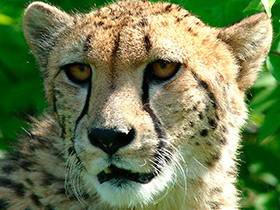















African leopard Panthera pardus pardus
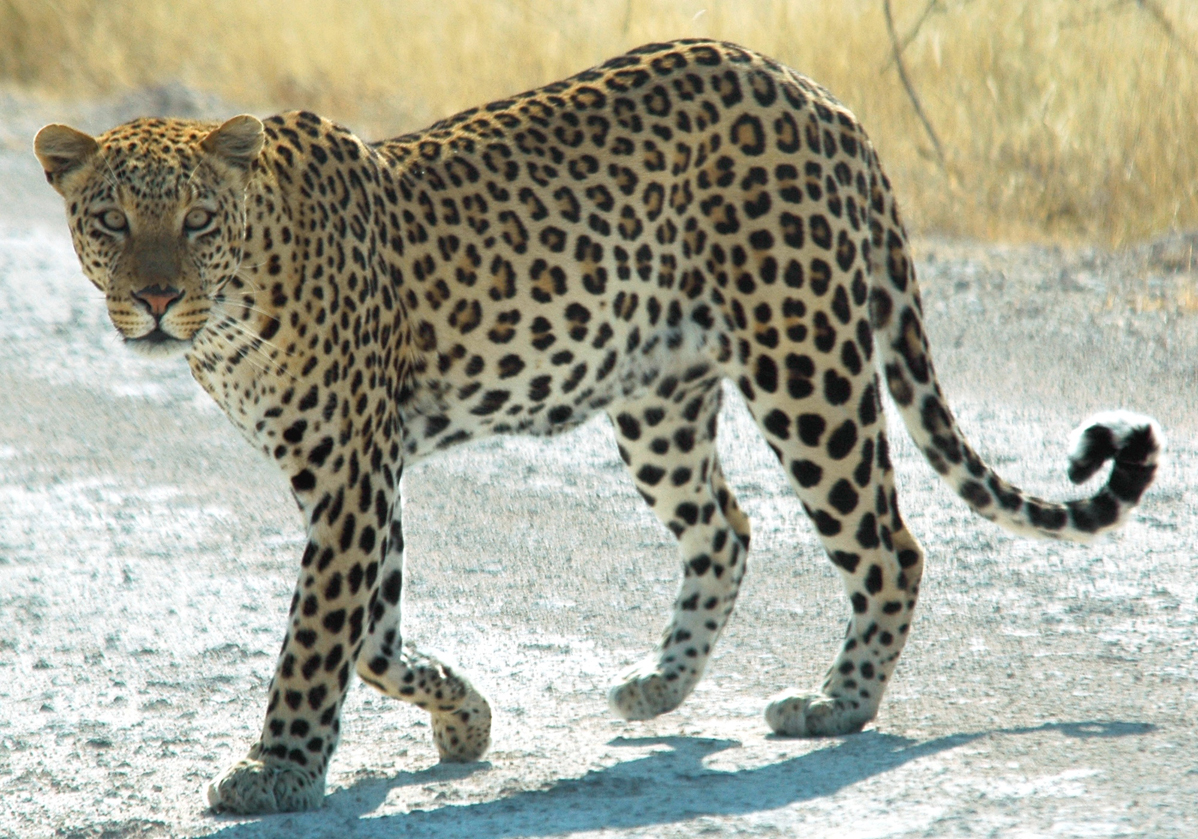
The African leopard (Panthera pardus pardus) is the nominate subspecies of the leopard, native to many countries in Africa. It is widely distributed in most of sub-Saharan Africa, but the historical range has been fragmented in the course of habitat conversion. Leopards have also been recorded in North Africa as well.
Characteristics
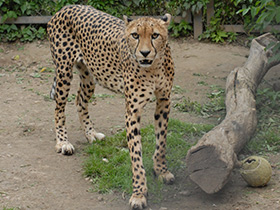
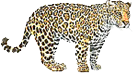
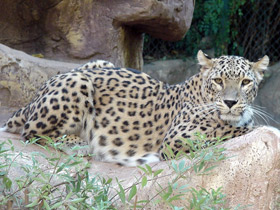
The African leopard exhibits great variation in coat color, depending on location and habitat. Coat colour varies from pale yellow to deep gold or tawny, and sometimes black, and is patterned with black rosettes while the head, lower limbs and belly are spotted with solid black. Male leopards are larger, averaging 58 kg (128 lb) with 90 kg (200 lb) being the maximum weight attained by a male. Females weigh about 37.5 kg (83 lb) on average.
Distribution and habitat
The African leopards inhabited a wide range of habitats within Africa, from mountainous forests to grasslands and savannahs, excluding only extremely sandy desert. It is most at risk in areas of semi-desert, where scarce resources often result in conflict with nomadic farmers and their livestock.[21][22] It used to occur in most of sub-Saharan Africa, occupying both rainforest and arid desert habitats. It lived in all habitats with annual rainfall above 50 mm (2.0 in), and can penetrate areas with less than this amount of rainfall along river courses. It ranges up to 5,700 m (18,700 ft), has been sighted on high slopes of the Ruwenzori and Virunga volcanoes, and observed when drinking thermal water 37 °C (99 °F) in the Virunga National Park.
Diet and hunting
The leopard has an exceptional ability to adapt to changes in prey availability, and has a very broad diet. It takes small prey where large ungulates are less common. The known prey of leopards ranges from dung beetles to adult elands, which can reach 900 kg (2,000 lb). In sub-Saharan Africa, at least 92 prey species have been documented in leopard scat, including rodents, birds, small and large antelopes, hyraxes, hares, and arthropods. Leopards generally focus their hunting activity on locally abundant medium-sized ungulates in the 20 to 80 kg (44 to 176 lb) range, while opportunistically taking other prey. Average intervals between ungulate kills range from seven[30] to 12–13 days. Leopards often hide large kills in trees, a behavior for which great strength is required. There have been several observations of leopards hoisting carcasses of young giraffes, estimated to weigh up to 125 kg (276 lb), i.e. 2–3 times the weight of the leopard, up to 5.7 m (19 ft) into trees.