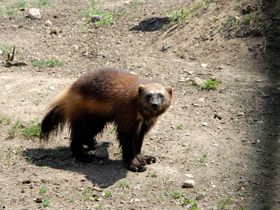















The American marten or the American pine marten (Martes americana)
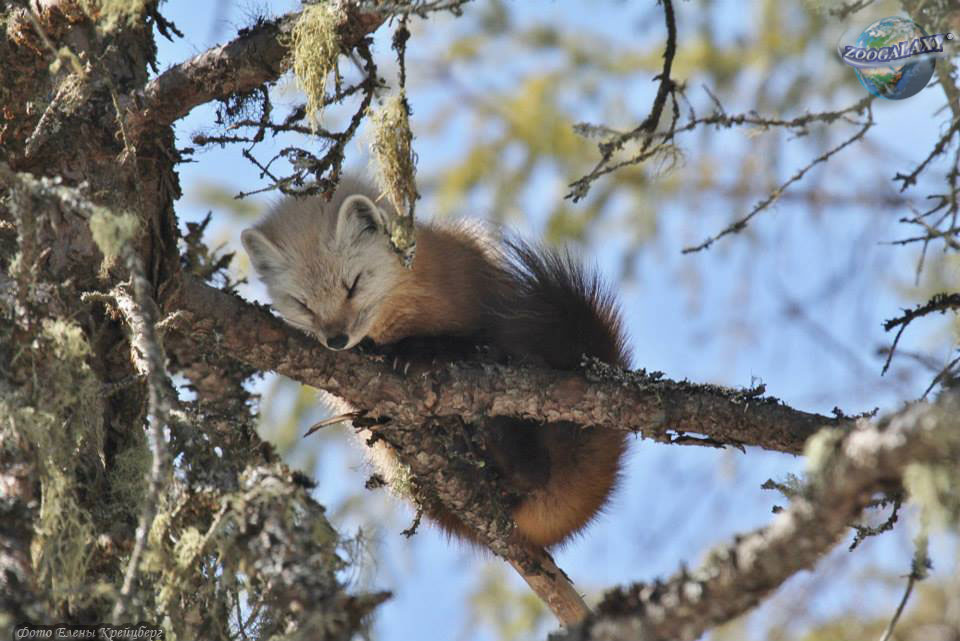
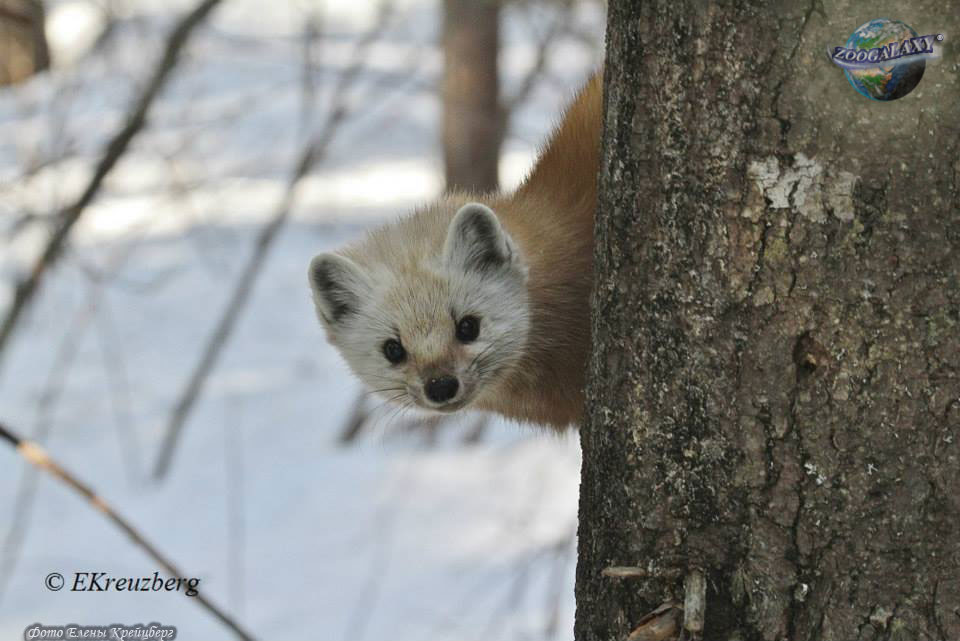
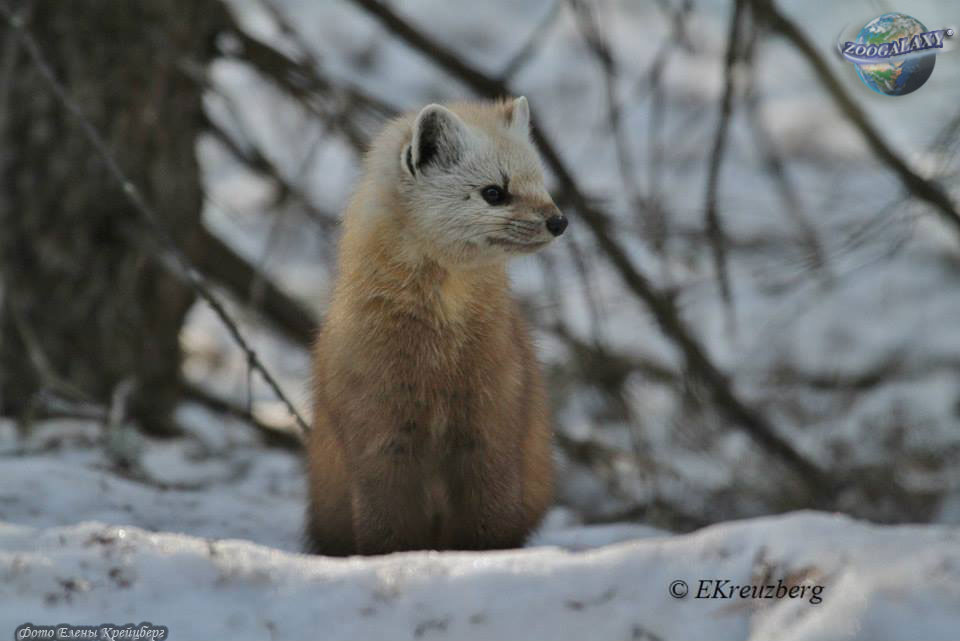
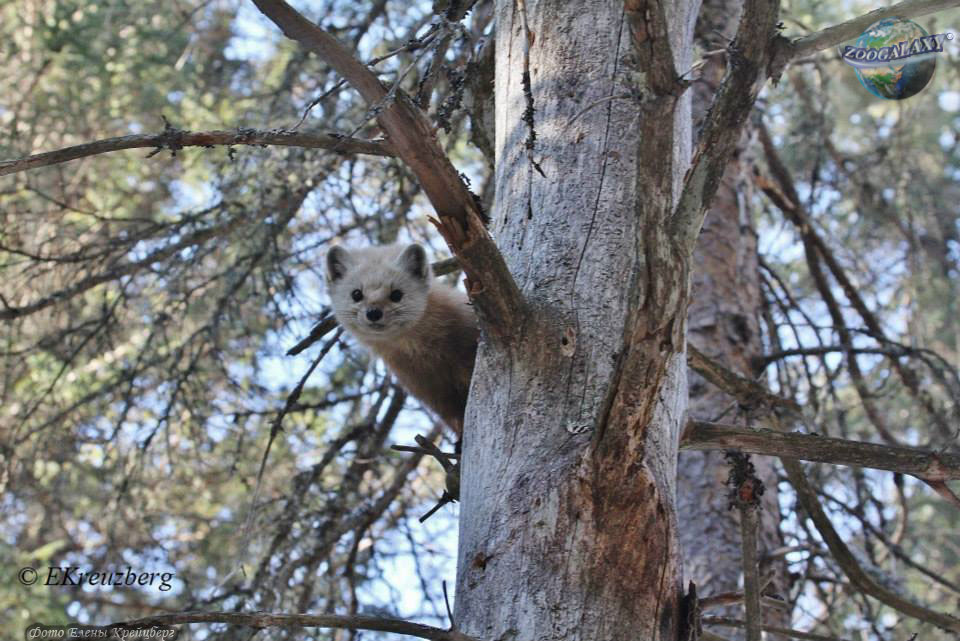
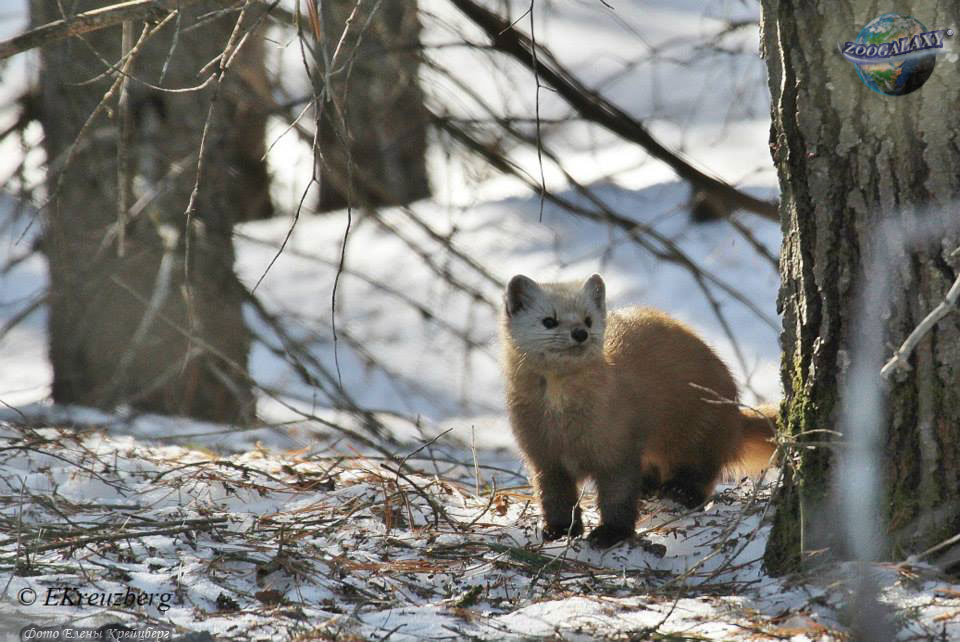
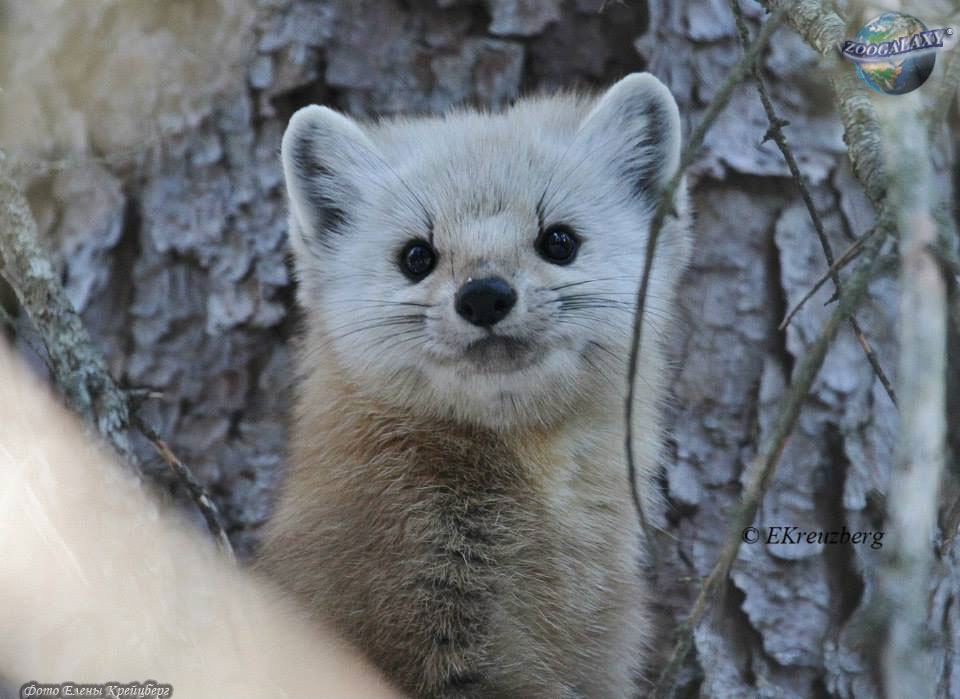
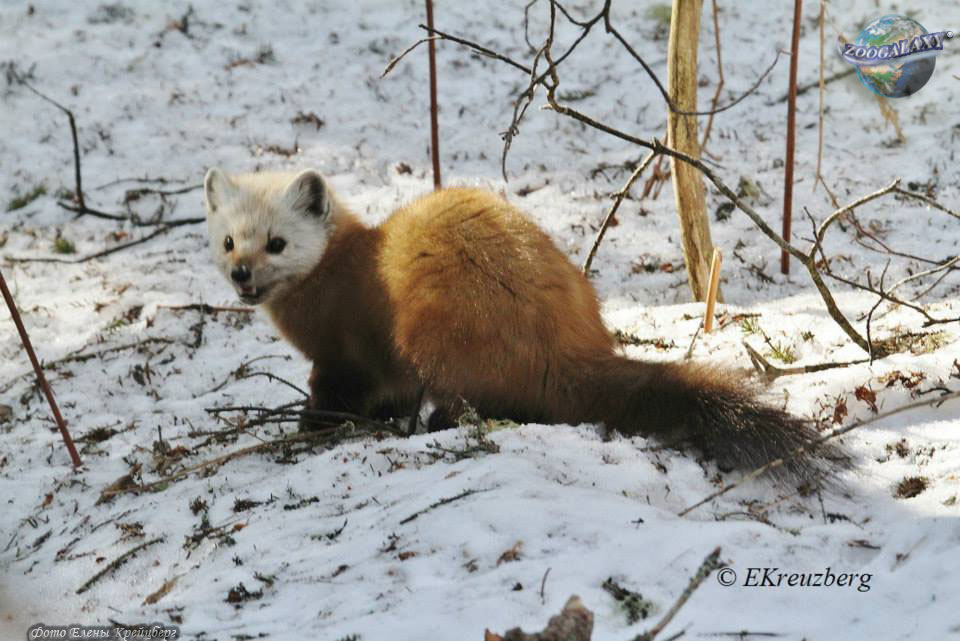
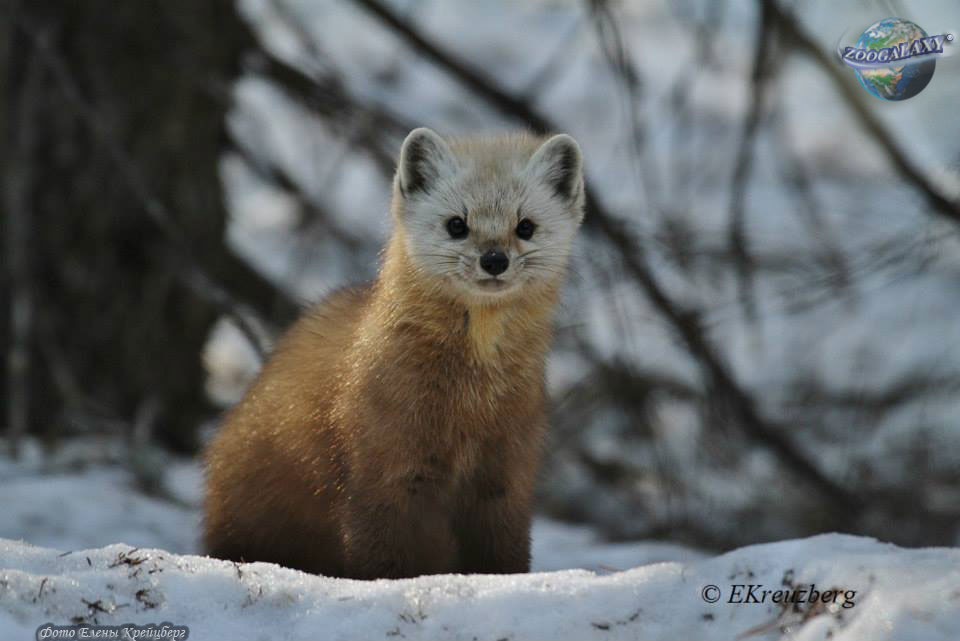
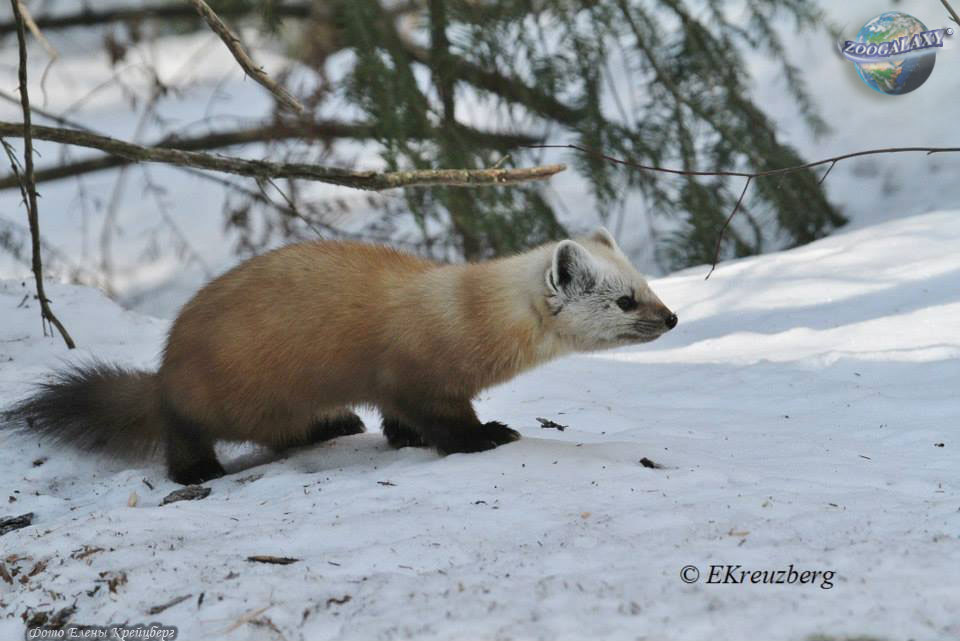
The American marten (Martes americana), also known as the American pine marten, is a species of North American mammal, a member of the family Mustelidae. The species is sometimes referred to as simply the pine marten. The name "pine marten" is derived from the common name of the distinct Eurasian species, Martes martes. Martes americana is found throughout Canada, Alaska, and parts of the northern United States. It is a long, slender-bodied weasel, with fur ranging from yellowish to brown to near black. It may be confused with the fisher (Pekania pennanti), but the marten is lighter in color and smaller. Identification of the marten is further eased by a characteristic bib that is a distinctly different color than the body. Sexual dimorphism is pronounced, with males being much larger.
Habitat
American marten is common in the United States and Canada. The American marten inhabits dark coniferous forests, as well as mixed forests including white pine, yellow birch, maple, spruce and fir. The beast was once widespread in the United States and Canada, but has been heavily exterminated and has only recently begun to recover in numbers. Old-growth forests often contain fallen and decaying trees and logs, which are excellent places to build nests and provide Martes americana with diverse and reliable shelters.
Appearance
American Martes americana has a small, long and flexible body, with a length in males of 55 to 68 cm and in females of 49 to 60 cm, of which the tail is 16 to 24 cm, and the weight varies from 0.5 to 1.5 kg.
The American Martes has short legs with large five-toed feet and a fluffy tail one third the length of its body. It has large eyes, cat-like ears and curved, sharp claws well adapted for climbing trees. The American Martes has small, rounded ears and a pronounced muzzle. The coat of this small carnivore is long and glossy, but rougher and less valuable than that of the marten. The basic shade of the coat is brown, but it is sometimes coloured from dark red to very light brown. The muzzle and lower body are usually much lighter, the legs and tail are dark brown or black, and the chest has a cream-coloured patch.
It is distinguished from the smaller sable (Martes pennanti) by its smaller size and lighter brown coat.
Lifestyle and nutrition
Martes americana are very agile and hop nimbly from branch to branch, marking the paths of travel with the scent of their glands. They are well adapted to climbing trees, where they catch squirrels in their nests at night. Martes americana is a nocturnal mammal, but is usually active at dusk (morning and evening) and often during the day when diurnally active prey are abundant.
Martes americana is a very efficient predator. It usually hunts alone. This predator kills its prey by biting the back of the head, crushing the cervical vertebrae and destroying the victim's spinal cord. In winter, the Martes americana tunnels under the snow in search of rodents. This member of the furbearer family consumes a wide range of food, and is willing to eat any animal it can catch. The Martes americana feeds on red squirrels, rabbits, chipmunks, mice, voles, grouse and other small birds and their eggs, fish, frogs, insects, honey, mushrooms and seeds. In winter, when food is scarce, Martes americana may even eat plant foods and carrion. Martens always have a huge appetite and are curious, which sometimes gets them into trouble, such as getting caught in traps.
Reproduction and social behaviour
The reproductive biology of Martes americana is similar to that of other species of the genus. Males and females do not form permanent pairs and only meet during the two months of July and August, when oestrus occurs. They find each other by means of strong scent marks left by their anal glands. After mating, the fertilised eggs do not develop immediately, but remain dormant in the uterus for 6-7 months.
Pregnancy lasts an average of 267 days, with an actual gestation period of only 2 months, so that the young are born in the most favourable period, in early spring. The male does not participate in the care of his young.
In March or April of the following year, the females give birth to up to 7 young (3-4 on average) in nests lined with grass and other plant material. Nests are usually located in hollow trees, logs or other cavities. Newborn pups are blind and deaf and weigh between 25 and 30g. The pups' ears open at 26 days and their eyes at 39 days.
The female stops feeding her young with milk at 2 months of age and by 3-4 months they are able to feed themselves. Young females usually mature at 15-24 months, but do not breed until they are three years old. American Martes live between 10 and 15 years.
Male American Martes are territorial: they defend an area of up to three square miles. The territory of females is smaller and does not exceed 0.5 to 1.0 square miles. Observation of the animals has shown that some individuals are sedentary and others are nomadic. The latter include, in particular, young animals that have become self-sufficient.
The marten is hunted for its valuable fur. Martes americana can become playful companion animals if they are raised and cared for by humans from infancy.
Taxonomy
The Pacific marten (Martes caurina) was formerly thought to be conspecific, but genetic studies support both being distinct species from one another. The Pacific marten has a longer snout and a broader cranium than the American marten.
Seven subspecies have been recognized. None of the subspecies are separable based on morphology and subspecies taxonomy is usually ignored except for conservation issues centered around subspecies rather than ranges.
- Martes americana abieticola (Preble);
- Martes americana abietinoides (Gray);
- Martes americana actuosa (Osgood);
- Martes americana americana (Turton);
- Martes americana atrata (Bangs);
- Martes americana brumalis (Bangs);
- Martes americana kenaiensis (Elliot);
- Martes americana caurina;
- Martes americana humboldtensis;
- Martes americana nesophila;
- Martes americana origensis;
- Martes americana sierrae;
- Martes americana vancourverensis;
- Martes americana vulpina.
A fossil species from the Late Pleistocene to Early Holocene known as Martes nobilis is considered synonymous with the American marten.