














The Galápagos fur seal (Arctocephalus galapagoensis)
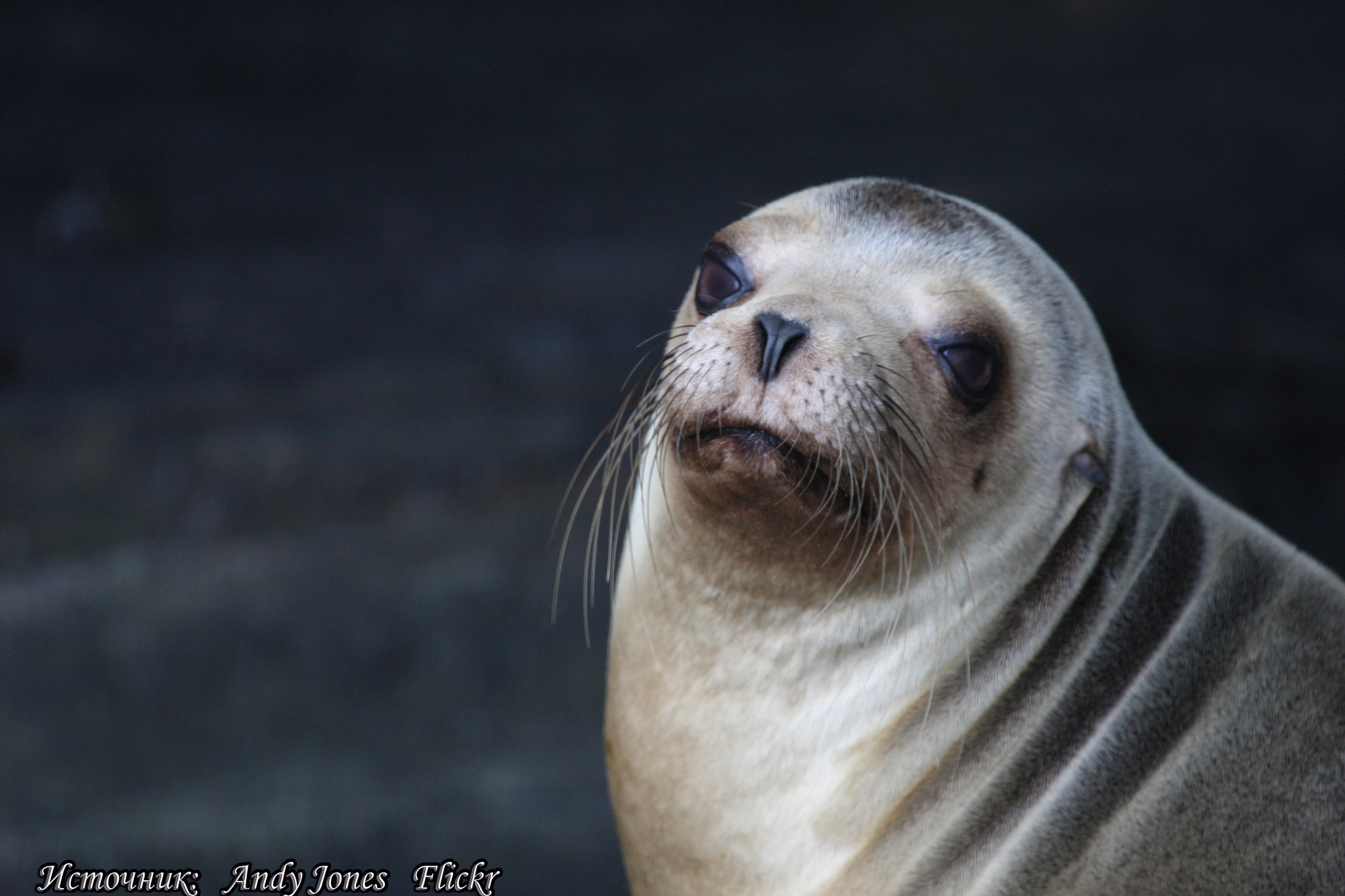
The Galápagos fur seal (Arctocephalus galapagoensis) is one of eight seals in the genus Arctocephalus and one of nine seals in the subfamily Arctocephalinae. It is the smallest of all of the eared seals. They are endemic to the Galápagos Islands in the eastern Pacific. The total estimated population as of 1970 was said to be about 30,000, although the population has been said to be on the decline since the 1980s due to environmental factors such as pollution, disease, invasive species, and their limited territory. Due to the population having been historically vulnerable to hunting, the Galápagos fur seal has been protected by the Ecuadorian government since 1934.
Description
Galápagos fur seals are the smallest otariids. They are born with a black natal coat that they molt to reveal a lighter brown coat before becoming adults. Of the otariids, Galápagos fur seals display the least amount of sexual dimorphism. The males are up to 2x heavier than the females and 1–1.3 times longer. Males grow to be 1.5 m (5 feet) on average and weigh about 64 kg (140 lb). Females grow to be 1.25 m on average and weigh 27 kg. (60 lb). They also have large eyes which allows them to hunt at night. The Galápagos fur seals look very similar to the Galápagos sea lions so it is important to note some of their differences.
Population
Over the course of the 19th century, Galápagos fur seals experienced an extreme decrease in their population size due to sealing. Fortunately, their population was able to recover in the 20th century. Around the late 1970's, there was an estimate of around 30,000 of them, and even though they were able to partially recover from their protection in the Galapagos, they still experienced multiple shifts in their population due to other environmental factors in the late 1980's that has resulted in a decline. Most fur seals have been found around the northern and western areas of the Archipelago. Even though there has not been a lot of evidence of immigration of this species, there were sightings in Ecuador during an El Niño event and southern Mexico.
Range and habitat
The Galápagos fur seal is endemic to the Galapagos Islands in Ecuador, South America. It is present on nearly all the islands of the Galapagos. They are typically found close to the coastline where there are rock ledges and crevices that they can find shade in, in such a warm climate. It is classified as a non-migrant species. Females that are lactating do not travel long distances and tend to stay within the colony and only have moderately brief outings when they do venture out. However, recent research has documented the presence of Galápagos fur seals in Mexico and Guatemala.
Reproduction
Galápagos fur seals live in large colonies on the rocky beaches of the Galápagos Islands. These colonies are then divided into territories by the male seals during breeding season, which is mid-August to mid-November, with a peak in late September and early October. Each successful reproductive female will choose a territory on the beach to pup on.
Maternal care
Galápagos fur seals have the lowest reproductive rate reported in seals, and it takes an unusually long time to raise seal pups to independence. Females bear only one pup at a time, and she remains with her newborn for a week before leaving to feed. She then periodically returns to the pup and stays to suckle it for a few days before leaving on another hunting trip. Females recognize their own pups by smell and sound, and pups also learn to identify their mothers by the females’ "pup attraction calls". Mother-pup recognition is crucial because females exclusively nurse their own pups, often violently rejecting strange pups that approach. Orphaned seal pups usually try to sneak up on sleeping or calling females to suckle, but stealing milk is not enough to sustain the pups, and they usually die within a month.
Male competition
Males will compete for the females when they become large enough by establishing territories on the beaches. The beaches are valuable pupping substrate for females. They have territories that average 200 m2. This is large compared to amount of territory occupied by most otariid males.
Feeding and predation
The Galápagos fur seal feeds primarily on fish, squid and shellfish. They feed relatively close to shore and near the surface, but have been seen at depths of 169 m (554 ft). They primarily feed at night because their prey is much easier to catch then. During normal years, food is relatively plentiful. However, during an El Niño year, there can be fierce competition for food, and many young pups die during these years. The adult seals feed themselves before their young and during particularly rough El Niño years, most of the young seal populations will die.
The Galápagos fur seal has virtually no constant predators. Occasionally, sharks and orcas have been seen feeding on the seals, but this is very rare. Sharks and orcas are the main predator of most other seal species, but their migration paths do not usually pass the Galápagos.
Status
Galápagos fur seals have had a declining population since the 19th century. Thousands of these seals were killed for their fur in the 1800s by poachers. Starting in 1959, Ecuador established strict laws to protect these animals. The government of Ecuador declared the Galápagos Islands a national park, and since then no major poaching has occurred. Despite the laws, another tragic blow to their population occurred during the 1982–1983 El Niño weather event. Almost all of the seal pups died, and about 30% of the adult population was wiped out. Since 1983, no major calamity has occurred to decrease their population significantly.