














The Hawaiian monk seal (Neomonachus schauinslandi)

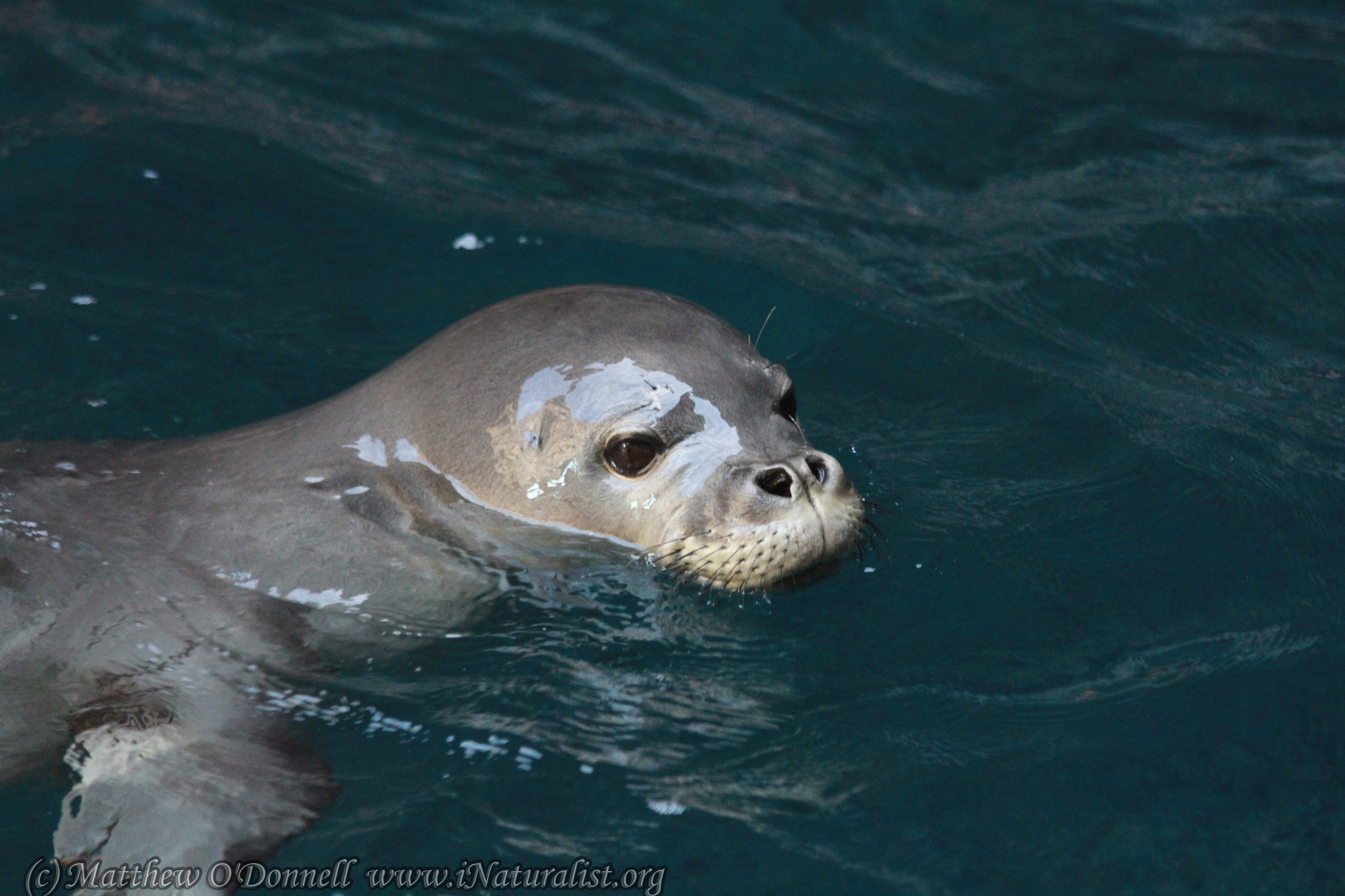
The Hawaiian monk seal (Neomonachus schauinslandi) is an endangered species of earless seal in the family Phocidae that is endemic to the Hawaiian Islands.
The Hawaiian monk seal is one of two extant monk seal species; the other is the Mediterranean monk seal. A third species, the Caribbean monk seal, is extinct.
The Hawaiian monk seal is the only seal native to Hawaii, and, along with the Hawaiian hoary bat, is one of only two mammals endemic to the islands.
N. schauinslandi is a conservation reliant endangered species. The small population of about 1,400 individuals is threatened by human encroachment, very low levels of genetic variation, entanglement in fishing nets, marine debris, disease, and past commercial hunting for skins. There are many methods of conservation biology when it comes to endangered species; translocation, captive care, habitat cleanup, and educating the public about the Hawaiian monk seal are some of the methods that can be employed.
Etymology
Known to native Hawaiians as ʻIlio-holo-i-ka-uaua, or "dog that runs in rough water", its scientific name is from Hugo Schauinsland, a German scientist who discovered a skull on Laysan Island in 1899. Its common name comes from short hairs on its head, said to resemble a monk. It is the official state mammal of Hawaii.
Description
Its grey coat, white belly, and slender physique distinguish them from their cousin, the harbor seal (Phoca vitulina). The monk seal's physique is ideal for hunting its prey: fish, lobster, octopus and squid in deep water coral beds. When it is not hunting and eating, it generally basks on the sandy beaches and volcanic rock of the Northwest Hawaiian Islands.
The Hawaiian monk seal is part of the family Phocidae, being named so for its characteristic lack of external ears and inability to rotate its hind flippers under the body. The Hawaiian monk seal has a relatively small, flat head with large black eyes, eight pairs of teeth, and short snouts with the nostril on top of the snout and vibrissae on each side. The nostrils are small vertical slits which close when the seal dives underwater. Additionally, their slender, torpedo-shaped body and hind flippers allow them to be very agile swimmers.
Adult males are 140 to 180 kilograms (300 to 400 pounds) in weight and 2.1 metres (7 feet) in length while adult females tend to be, on average, slightly larger, at 180 to 270 kg (400 to 600 lb) and 2.4 m (8 ft) in length. When monk seal pups are born, they average 14 to 18 kg (30 to 40 lb) and 1 m (40 in) in length. As they nurse for approximately six weeks, they grow considerably, eventually weighing between 70 and 90 kg (150 and 200 lb) by the time they are weaned, while the mother loses up to 140 kg (300 lb).
Monk seals, like elephant seals, shed their hair and the outer layer of their skin in an annual catastrophic molt. During the most active period of the molt, about 10 days for the Hawaiian monk seal, the seal remains on the beach. The hair, generally dark gray on the dorsal side and lighter silver ventrally, gradually changes color through the year with exposure to atmospheric conditions. Sunlight and seawater cause the dark gray to become brown and the light silver to become yellow-brown, while long periods of time spent in the water can also promote algae growth, giving many seals a green tinge. The juvenile coat of the monk seal, manifest in a molt by the time a pup is weaned is silver-gray; pups are born with black pelage. Many Hawaiian monk seals sport scars from shark attacks or entanglements with fishing gear. Maximum life expectancy is 25 to 30 years.
Habitat
A Hawaiian monk seal observed in Kauai Monk seal with green sea turtle at Papahānaumokuākea Marine National Monument
The majority of the Hawaiian monk seal population can be found around the Northwest Hawaiian Islands but a small and growing population lives around the main Hawaiian Islands. These seals spend two-thirds of their time at sea. Monk seals spend much of their time foraging in deeper water outside of shallow lagoon reefs at sub-photic depths of 300 metres (160 fathoms) or more. Hawaiian monk seals breed and haul-out on sand, corals, and volcanic rock; sandy beaches are more commonly used for pupping. Due to the immense distance separating the Hawaiian Islands from other land masses capable of supporting the Hawaiian monk seal, its habitat is limited to the Hawaiian Islands.
Feeding
Hawaiian monk seals mainly prey on reef dwelling bony fish, but they also prey on cephalopods, and crustaceans. Both juveniles and sub-adults prey more on smaller octopus species, such as Octopus leteus and O. hawaiiensis, nocturnal octopus species, and eels than the adult Hawaiian monk seals, while adult seals feed mostly on larger octopus species such as O. cyanea. Hawaiian monk seals have a broad and diverse diet due to foraging plasticity which allows them to be opportunistic predators that feed on a wide variety of available prey.
Hawaiian monk seals can hold their breath for up to 20 minutes and dive more than 550 m (1,800 ft); however, they usually dive an average of 6 minutes to depths of less than 60 m (200 ft) to forage at the seafloor.
Predators
Tiger sharks, great white sharks and Galapagos sharks are the main predators of the Hawaiian monk seal.
Reproduction
Hawaiian monk seals mate in the water during their breeding season, which occurs between June and August. Females reach maturity at age four and give birth to one pup a year. The fetus takes nine months to develop, with birth occurring between March and June. Pups start around 16 kg (35 lb) and are about 1 m (3 ft 3 in) long.
Nursing
The pups are born on beaches and nursed for about six weeks. The mother does not eat or leave the pup while nursing. After that time, the mother deserts the pup, leaving it on its own, and returns to the sea to forage for the first time since the pup's arrival.
Status
A Hawaiian monk seal observed on the North Shore of Oahu, near Waimea Bay.
Most seals are found on the Northwestern Hawaiian Islands.
The Hawaiian monk seal is endangered, although its cousin species, the Mediterranean monk seal (Mediterranean monachus), is even rarer, and the even more closely related Caribbean monk seal (Neomonachus tropicalis), last sighted in the 1950s, was officially declared extinct in June 2008. In 2010, it was estimated that only 1100 individuals remained. A later estimate in 2016, which included a more complete survey of small populations, was approximately 1400 individuals.
Seals nearly disappeared from the main islands, but the population has begun to recover. The growing population there was approximately 150 as of 2004 and 300 as of 2016. Individuals have been sighted in surf breaks and on beaches in Kauaʻi, Niʻihau and Maui. Community volunteers on Oʻahu have made many anecdotal blog reports of sightings around the island since 2008. In early June 2010, two seals hauled out on Oʻahu's popular Waikiki beach. Seals have hauled out at O'ahu's Turtle Bay, and again beached at Waikiki on March 4, 2011, by the Moana Hotel. Another Monk Seal appeared at Punalu'u Black Sands Beach in July 2023. Yet another adult came ashore for a rest next to the breakwater in Kapiolani Park Waikiki on the morning of December 11, 2012, after first being spotted traveling west along the reef break from the Aquarium side of the Park. On June 29, 2017 monk seal #RH58 popularly known as "Rocky" gave birth to a pup on Kaimana Beach fronting Kapiolani park. Despite the fact Kaimana beach is popular and busy, Rocky has been routinely hauling out on this beach for several years. In 2006, twelve pups were born in the main islands, rising to thirteen in 2007, and eighteen in 2008. As of 2008 43 pups had been counted in the main islands.
The Hawaiian monk seal was officially designated as an endangered species on November 23, 1976, and is now protected by the Endangered Species Act and the Marine Mammal Protection Act. It is illegal to kill, capture or harass a Hawaiian monk seal. Even with these protections, human activity along Hawaii's fragile coastlines (and in the world at large) still provides many stressors.
Threats
Natural factors threatening the Hawaiian monk seal include low juvenile survival rates, reduction of habitat/prey associated with environmental changes, increased male aggression, and subsequent skewed gender ratios. Anthropogenic or human impacts include hunting (during the 1800s and 1900s) and the resulting small gene pool, continuing human disturbance, entanglement in marine debris, and fishery interactions.
Natural threats
Low juvenile survival rates continue to threaten the species. High juvenile mortality is due to starvation and marine debris entanglement. Another contributor to the low juvenile survival rates is predation from sharks, including tiger sharks. Most mature monk seals bear scars from shark encounters, and many such attacks have been observed.
Reduced prey abundance can lead to starvation, with one cause being reduction in habitat associated with environmental change. Habitat is shrinking due to erosion in the Northwest Hawaiian Islands, reducing the size of islands/beaches. Lobsters, the seals' preferred food other than fish, have been overfished. Competition from other predators such as sharks, jacks, and barracudas leaves little for developing pups. The creation of Papahānaumokuākea Marine National Monument which encloses these islands may expand food supplies.
Mobbing is a practice among the seals that involves multiple males attacking one female in mating attempts. Mobbing is responsible for many deaths, especially to females.
Mobbing leaves the targeted individual with wounds that increase vulnerability to sepsis, killing the victim via infection. Smaller populations were more likely to experience mobbing as a result of the higher male/female ratio and male aggression. Unbalanced sex-ratios were more likely to occur in slow-growing populations.
Postmortem examinations of some seal carcasses revealed gastric ulcerations caused by parasites. Some of the infectious diseases that pose a threat to the Hawaiian monk seal populations include distemper viruses, West Nile Virus, Leptospira spp., and Toxoplasma gondii. Protozoal-related mortality, specifically due to toxoplasmosis, are becoming a great threat to the recovery of the endangered Hawaiian monk seal and other native Hawaiian marine life.