













Goodfellow's tree-kangaroo or the ornate tree-kangaroo (Dendrolagus goodfellowi)
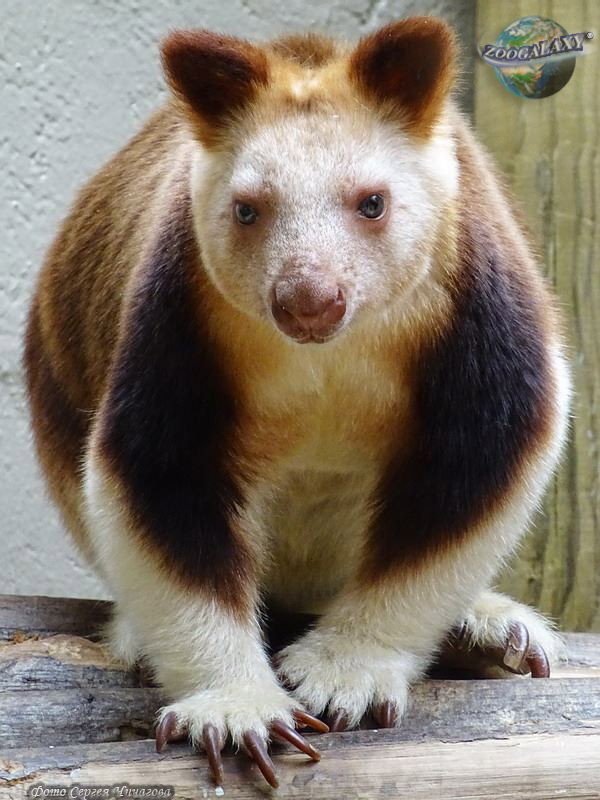
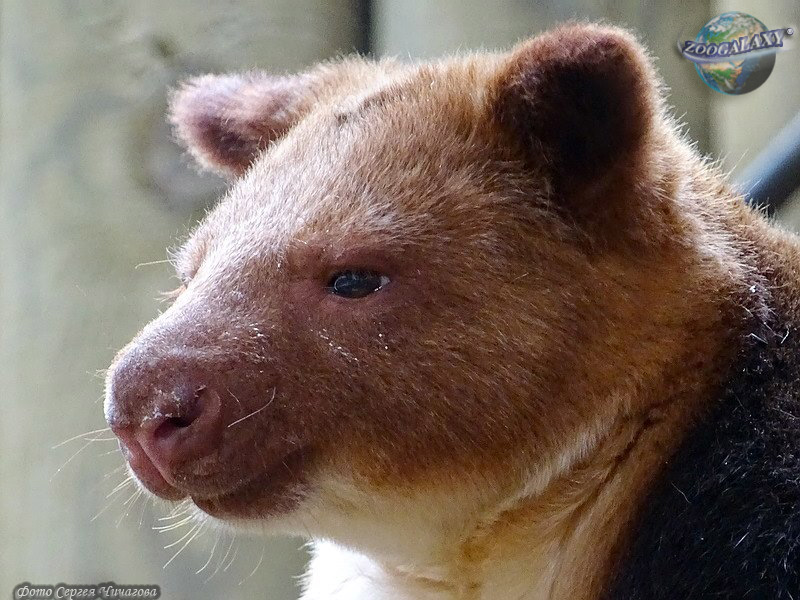
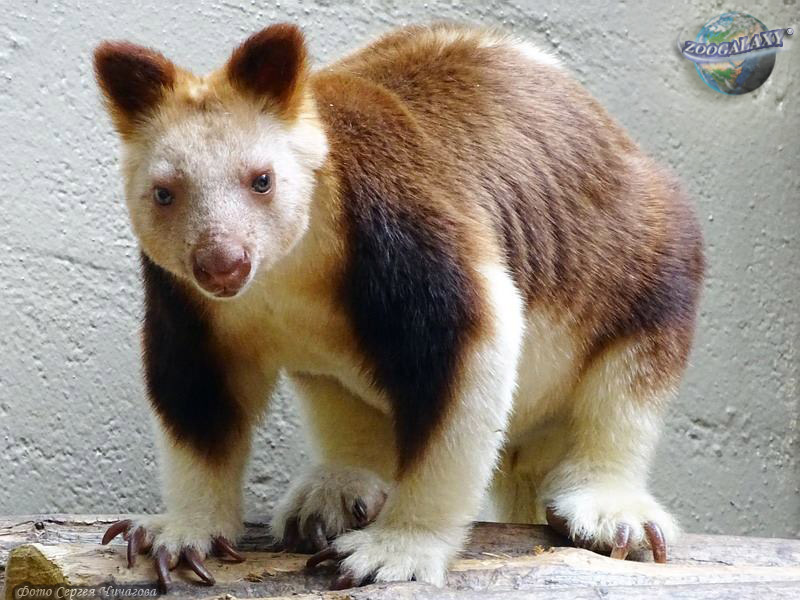
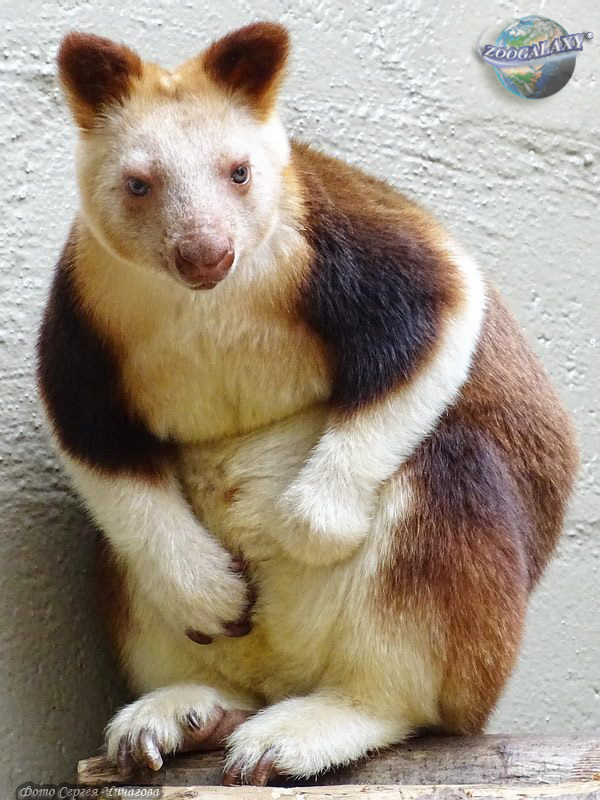
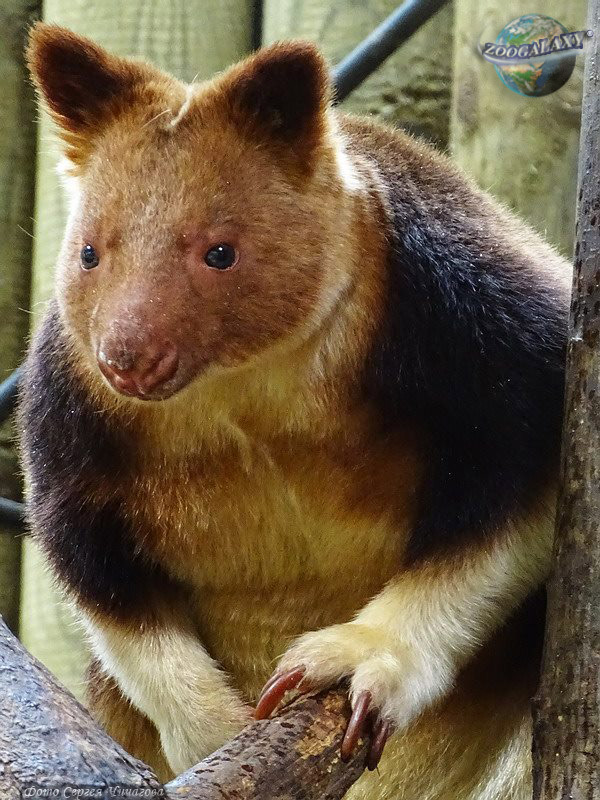
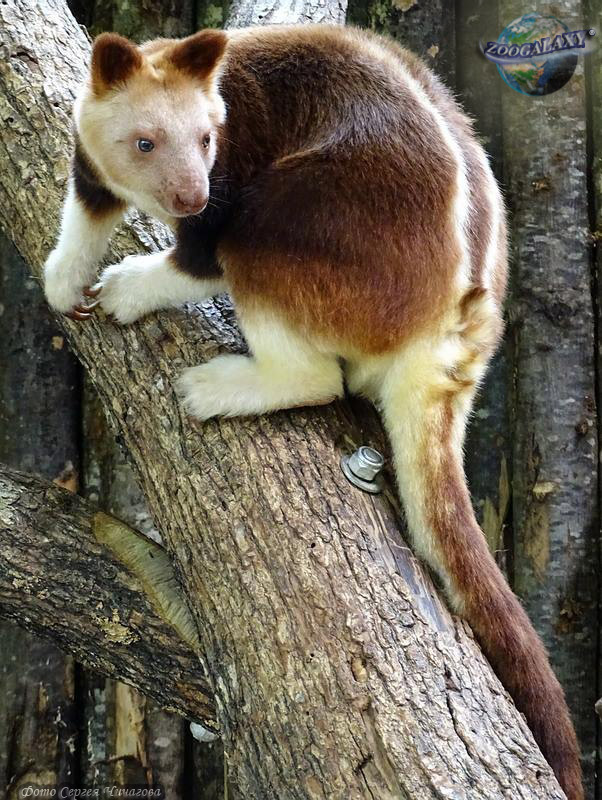
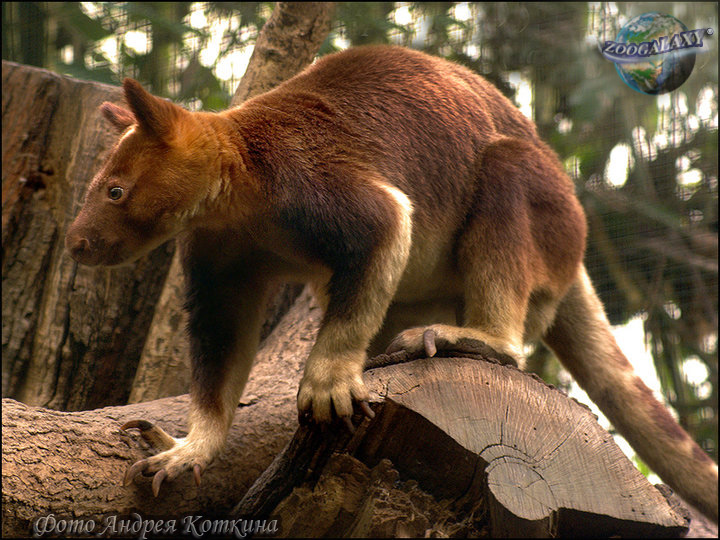
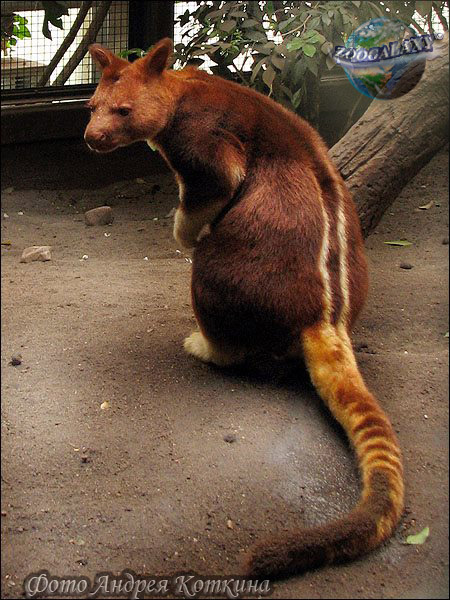
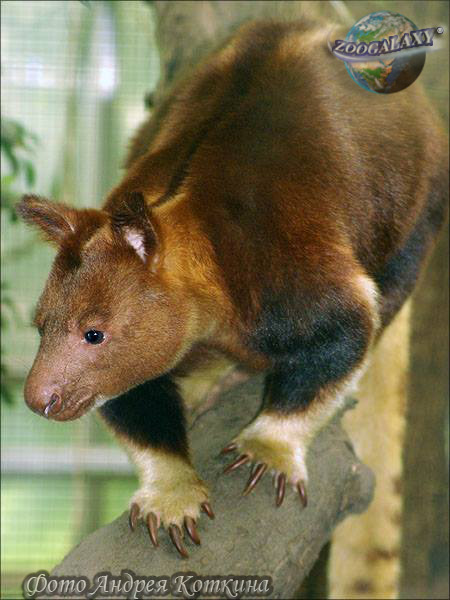

Goodfellow's tree-kangaroo (Dendrolagus goodfellowi), also called the ornate tree-kangaroo, is an endangered, long-tailed, bear-like mammal native to rainforests of New Guinea. Like most tree-kangaroos (genus Dendrolagus), it lives in the treetops and feeds on leaves or other plant matter. It belongs to the macropod family (Macropodidae) along with kangaroos, and carries its young in a pouch like other marsupials. Its main threats are habitat loss and hunting. There are two subspecies: Dendrolagus goodfellowi goodfellowi and Dendrolagus goodfellowi buergersi (known as Buergers' tree-kangaroo).
Name and taxonomy
The species name goodfellowi is in honour of British zoological collector Walter Goodfellow.
There are two subspecies of the Goodfellow's tree-kangaroo:
- Dendrolagus goodfellowi goodfellowi;
- Dendrolagus goodfellowi buergersi – Buergers' tree-kangaroo.
Description
Like the other tree kangaroos, Goodfellow's tree kangaroos are quite different in appearance from ground kangaroos. Unlike land kangaroos, there is less of a disproportion between the length of their hind legs and front legs, as the front legs are strong and end in hooked claws designed to grip tree trunks, and they have a long tail to help them balance. These features help them in their predominantly arboreal life. The Goodfellow's tree kangaroo has short, dense fur, usually ranging in colour from brown to reddish-brown on the upper parts, cream on the underparts including the legs and greyish-brown face, a long, blond tail with variable brown stripes, and two cream stripes running lengthwise down its back on either side of the spine. It weighs approximately 7 kg.
Behaviour
The Goodfellow's tree kangaroo is slow and clumsy on the ground, moving both walking and hopping with little agility, leaning forward to balance the weight of its heavy tail. In trees, however, it is bold and agile. It climbs trees by clinging to trunks with its forelegs and propelling itself upwards with its powerful hind legs. It has an extraordinary leaping ability and has been known to leap to the ground from heights of 9 metres without leaping.
Nutrition
Although they feed mainly on the leaves of Flindersia pimenteliana trees,10 they feed on other resources when available, such as various fruits, cereals, flowers and other plants. They have a large stomach that functions as a fermentation vat, similar to the stomach of cows and other herbivorous ruminants, where bacteria are responsible for digesting fibre from leaves and other plant matter.