














The genus Dorcopsis
The brown dorcopsis or the brown forest wallaby (Dorcopsis muelleri)
Dorcopsis is a genus of marsupial in the family Macropodidae. The members of the genus are found on the island of New Guinea.
Species
The genus contains the following species:
- Black dorcopsis (Dorcopsis atrata);
- White-striped dorcopsis (Dorcopsis hageni);
- Gray dorcopsis (Dorcopsis luctuosa);
- Brown dorcopsis (Dorcopsis muelleri).
Description
Dorcopsis is a genus of diprotodontid marsupials in the family Macropodidae. It is also the common name given to species of the genus, and to those of the genus Dorcopsulus.
The species of the genus, like those of the related genus Dorcopsulus, are intermediate between the tree kangaroos and the other kangaroos, both phylogenetically and morphologically.
They are small in size: the body length of the different species ranges from 42 to 70 cm and the tail length from 30 to 45 cm. The head of Dorcopsis is narrow and pointed, the ears small and rounded. The hairless nose mirror is large. The tail is long and gradually tapering from the base to the tip; it has no elongated hairs at the end. Hind legs comparatively short. The hair on the dorsal part of the body is grey-brown to black-brown, with dark patches. The abdomen is light grey-brown, grey or white. The hairs on the back, from the nape of the neck or mid-back to the nape of the neck, point forward.
Distribution and lifestyle
Dorcopsis are widespread in New Guinea. They live in the dense undergrowth of lowland and moist or montane forests and shrub thickets; they feed on the aerial and underground parts of herbaceous plants. The activity of all species is predominantly nocturnal. All members of the genus are rare animals.
The brown dorcopsis or the brown forest wallaby (Dorcopsis muelleri)
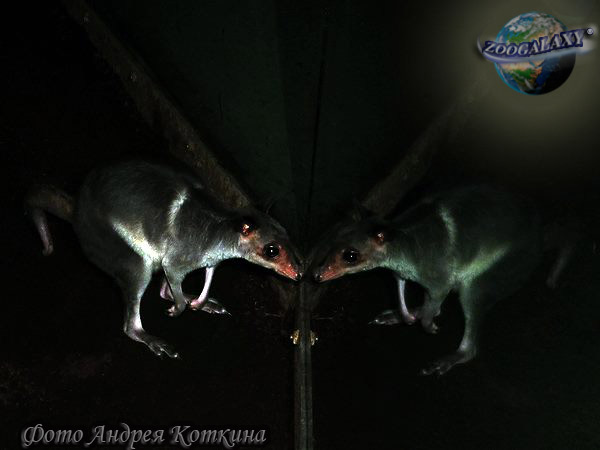
The brown dorcopsis (Dorcopsis muelleri), also known as the brown forest wallaby, is a species of marsupial in the family Macropodidae. It is endemic to the lowlands of West New Guinea and the nearby Indonesian islands in West Papua of Misool, Salawati, and Yapen.
Species of the genus, like those of the related genus Dorcopsulus, are intermediate between the tree kangaroos and the other kangaroos, both phylogenetically and morphologically.
Description
The dorsal colour is dull brown, chocolate brown, reddish brown or fawn and the underparts are off-white, creamy yellow or greyish. The arms are sometimes paler than the dorsal surface and the tip of the tail is hairless.
Habitat and reproduction
Dorcopsis muelleri is now found throughout western New Guinea and on the Indonesian islands of Misol, Salawati, Aru and Japen. The species is abundant on the south coast, but is rare elsewhere. Its typical habitat is lowland tropical swamp forest, including areas that flood in the rainy season, and it is thought to tolerate secondary forest, including abandoned gardens.
Female Dorcopsis give birth to a single young.
Status
The brown dorcopsis has a wide distribution. It is common in the southern coastal part of its range, but less common in the central part of the Vogelkop peninsula and, in general, its population appears to be stable. Much of its range is uninhabited by humans, but it is also present in areas close to human habitation. Its habitat may be affected by logging, particularly on Yapen Island, and by clearing of forest land for small-scale agriculture. Although it is hunted for food, it faces no major threats and is therefore classified as of "Least Concern" by the IUCN.
Subspecies:
- Dorcopsis muelleri muelleri;
- Dorcopsis muelleri muelleri lorentzii;
- Dorcopsis muelleri mysoliae;
- Dorcopsis muelleri yapeni.