














The Ugandan red colobus (Piliocolobus tephrosceles) or ashy red colobus
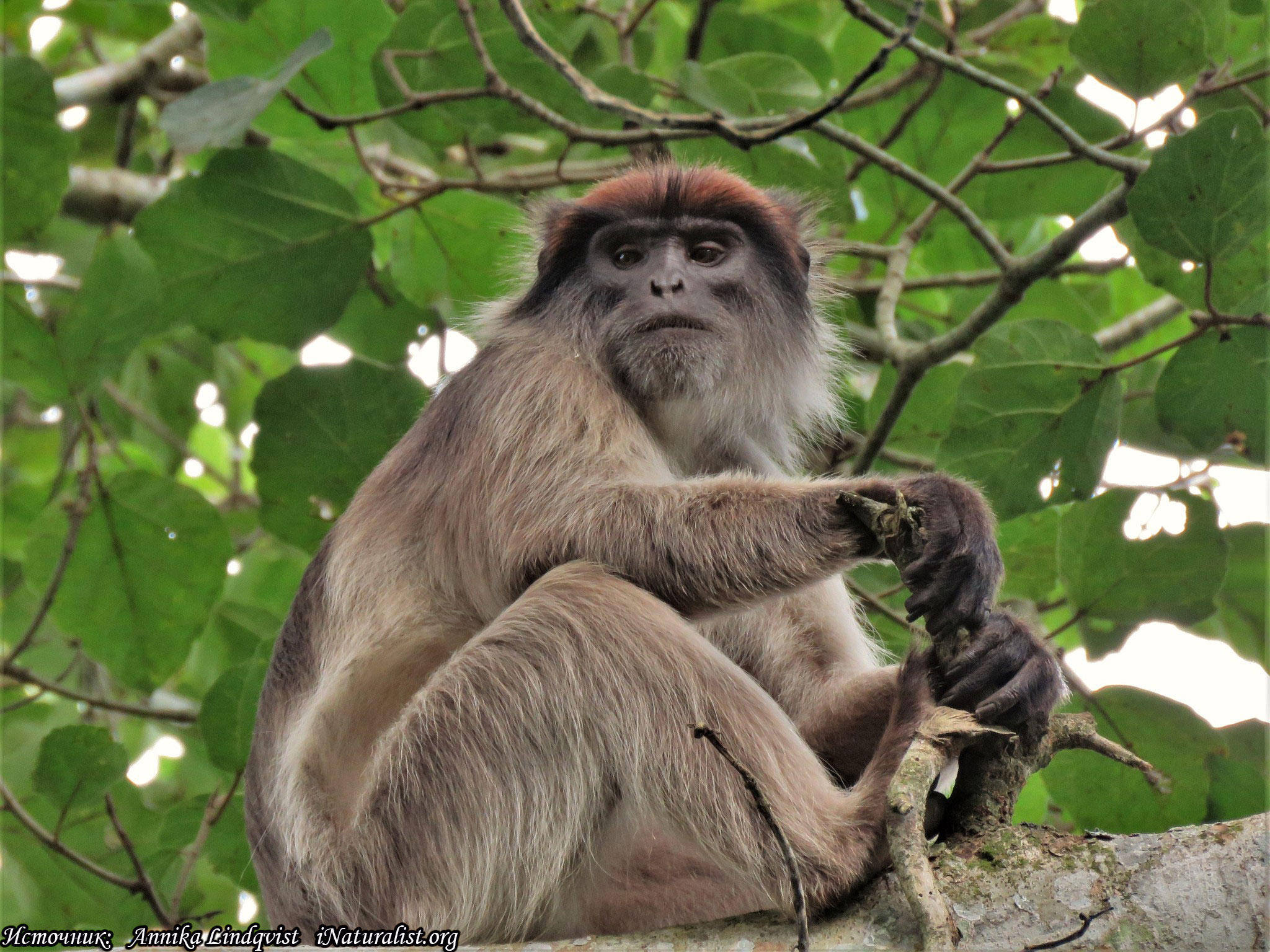

The Ugandan red colobus (Piliocolobus tephrosceles) is a threatened species of red colobus monkey, recognised as a distinct species since 2001. However, there is disagreement over its taxonomy, with many considering the Ugandan red colobus to be a subspecies (Procolobus rufomitratus tephrosceles). The Ugandan red colobus is an Old World monkey found in five different locations in Uganda and Tanzania.
Taxonomy
Recognised as a distinct species in 2001, the Ugandan red colobus had previously been considered a subspecies of Piliocolobus badius, and later a subspecies of Piliocolobus foai. It is currently debated whether it should be considered a subspecies of Piliocolobus rufomitratus.
Description
Piliocolobus tephrosceles is a species of catarrhine primate in the family Cercopithecidae. Piliocolobus tephrosceles is sexually dimorphic: males are larger than females. Males weigh 10.5 kg and females 7 kg.
Distribution
The species is distributed along the eastern border of the Rift Valley in western Uganda and western Tanzania. Five subpopulations are known. The species numbers over 20,000 individuals (2005), of which 17,000 live in Kibale National Park (Uganda).
Diet
The Ugandan red colobus is a folivore so the main component of its diet is leaves. It is not limited to any tree species in particular and different groups in the same forest have shown preferences for different tree species. Although not particularly fussy about which species of tree it eats, the Ugandan red colobus does have a preference for eating young leaves or the petioles of more mature leaves. Although uncommon the Ugandan red colobus has been observed eating bark, seeds and fruits, thought to be an important source of nutrients.
Social structure
Ugandan red colobus groups are multi-male. Habitat quality and predation can affect group size which range in size from as few as 3 to as large as 85 individuals, although an average group size is around 40 individuals. The size of a group is often determined by how many males are present. Within a social group males are the stable component and rarely successfully move to another group. Females can disperse to other groups easily and are attracted to groups which contain a higher number of males. In all social groups of Ugandan red colobus females out-number males. This natural imbalance is further exaggerated by the predatory action of common chimpanzees which single out females and juveniles as prey. Within groups there is a dominance hierarchy with adult males being dominant over adult females, most likely because of their larger size.
Ugandan red colobi often form fission–fusion groups in which a main large groups splits into smaller groups to forage. This is beneficial if there is limited food availability such as in more heavily logged or degraded parts of their forest habitat.
Grooming is a social behaviour which is frequently carried out amongst individuals of a group. Females are the main groomers, of males, young and other females. Males groom less often and receive the most grooming unless of a lower rank in the dominance hierarchy.
Interspecific interactions
The Ugandan red colobus is often found in association with other species of primates. Groups in parts of Kibale National Park have been seen to be in association with red-tailed monkeys for more than half their time. Although polyspecific associations are most common with red-tailed monkeys, associations have occasionally been observed between the Ugandan red colobus and the gray-cheeked mangabey, the blue monkey and the mantled guereza.
It is not certain why the Ugandan red colobus forms these associations with other species but protection from predators is the most accepted reason. The Ugandan red colobus is less vigilant, looking out for predators less often, when associated with the red-tailed monkey. It also forms these associations more readily when there are a large number of young in the Ugandan red colobus group which implies it may be more protected when with the other species.
Predators
The Ugandan red colobus has two main predators: the common chimpanzee and the crowned eagle. There are many primate species in Kibale National Park but chimpanzees rarely hunt any species other than the Ugandan red colobus. Each year in Ngogo, part of Kibale National Park, up to 12% of the red colobus population is killed by chimpanzees. Chimpanzees do not hunt Ugandan red colobus all year round, instead they tend to go through bouts of heavy hunting. In response to attacks by a chimpanzee, all members of a Ugandan red colobus group gather together and males assemble to aggressively try and deter the attacking chimpanzee.
Crowned eagles prefer to prey on infants and young juveniles of the Ugandan red colobus. Research has found that both the Ugandan red colobus and the red-tailed monkey are killed less often by crowned eagles than would be expected, based on both monkeys' high abundance in the Kibale National Park. Both monkey species's avoidance of capture has been attributed to their increased defence from forming interspecific associations.
Reproduction
Sexual maturity in males is reached at 5 years and between 4 and 5 years for females of the Ugandan red colobus. The gestation period is 5 to 6 months with females having their first infant between 4 and 5 years old. There is no distinct breeding season with infants being born all year round, however during the rainier months a peak in births is seen to coincide with the flush of new leaves for food.
Both males and females initiate copulation. During copulation other group members sometimes harass the pair by making loud calls, lunging at or leaping around or onto the males back. The harassers are usually either adult males in intrasexual competition or juveniles if it is their mother which is copulating.
Conservation status and threats
The Ugandan red colobus is classified as Endangered on the IUCN Red List. It has this listing because the populations are very fragmented and there is no movement of individuals between populations. The species is also classified as Endangered because the occurrence of all the populations combined is less than 5,000 km2 and this area is at risk of being decreased due to habitat loss and degradation that occurs outside protected areas. The Ugandan red colobus is also listed as Endangered due to there being a decline in numbers, principally due to common chimpanzee predation and habitat loss. Hunting of the Ugandan red colobus by humans is not common and in Kibale, Uganda hunting of all primates was stopped in the 1960s.
The Ugandan red colobus is listed in Appendix II of CITES.