














The white-naped mangabey (Cercocebus lunulatus)
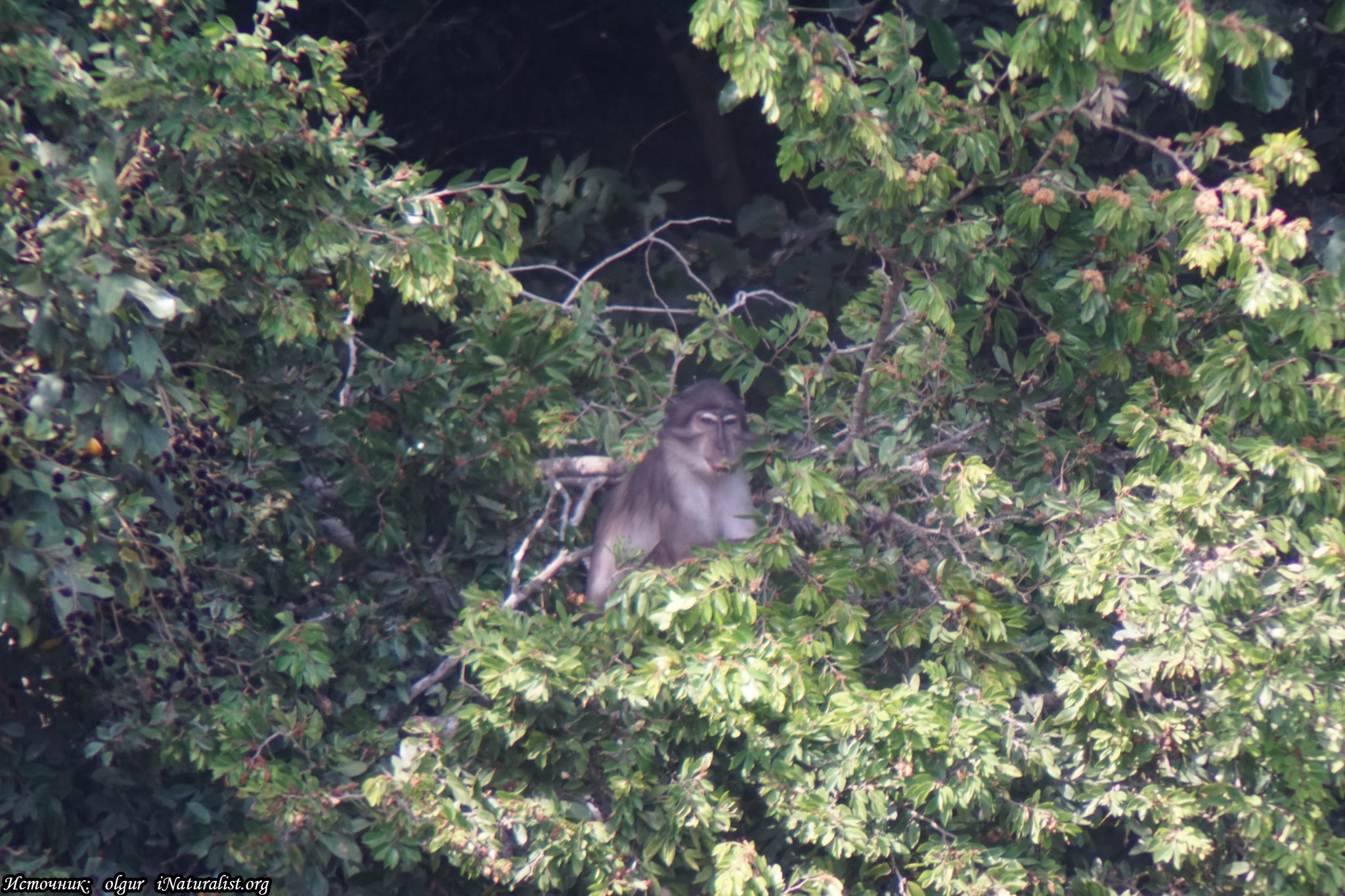

The white-naped mangabey (Cercocebus lunulatus) is a species of Old World monkey in the subfamily Cercopithecinae. The species is found in the forest of Burkina Faso, Ghana and Ivory Coast. The species population has been declining due to deforestation and hunting and has thus been put as an endangered species by the International Union for Conservation of Nature. The species was once considered a subspecies of the sooty mangabey but is now a separate species. This species had previously been regarded as a subspecies of Cercocebus atys, but was later raised to species status.
Characteristics
Class: Mammals. Order: Primates. Family: Cercopithecids.
Length of head and trunk: 45-70 cm. Length of tail: 55-75 cm. Weight: 4-10 kg.
Habitat: Humid forests. Distribution: central Africa, from Senegal to Ghana and from Nigeria to Gabon. Diet: Omnivore. Gestation: 165-175 days.
Litter: 1 calf. Sexual maturity: 5-7 years. Longevity: 30 years.
Description
Mangabeys are primates which in some species can weigh up to 15 kg, full of strength and agility. They have a long tail, the length of which is equal to the rest of the body. Under the tail they have callosities, which in the case of females, during oestrus, present swellings on the skin near the genitals. The muzzle is elongated and the mouth has large fangs. The upper part of the eyes has robust protuberances and the eyelids are brightly coloured against the dark background of the face. The general colour of the body varies according to the species or breed, predominantly black or grey with some lighter areas, and may be white in places.
Nutrition
The basis of their diet consists of fruits, seeds, palms, nuts, leaf buds, grass, mushrooms and invertebrates.
Reproduction
Females come into heat once a month and courtship is almost non-existent. Gestation lasts about 170 days, and once born the young cling to the mother's womb. It is surprising how solicitous the males are towards the young, some of them even taking care of the young. When the young become independent, they form bachelor groups and isolate themselves.
Customs and social life
Mangabeys live in social groups of 10 to 25 individuals, including several males. Sometimes these groups are divided into subgroups headed by an adult male. Females tend to clean the males a lot, while the opposite is rarely the case. Daily activity begins at sunrise, the group wakes up and starts to move about without any purpose. From eight to nine o'clock in the morning they have their first meal, followed by a period of rest. Around noon they eat a second meal. Around 5 o'clock they have their third meal, retiring to their resting place in the evening.
Conservation Status
It is one of the most endangered apes. Its populations have suffered a great decline due to human pressure through deforestation and abusive hunting to which they have been subjected. Its natural enemies include the African great eagles along with the leopard.