














The white-eared titi monkey (Plecturocebus donacophilus), the Bolivian titi or Bolivian gray titi
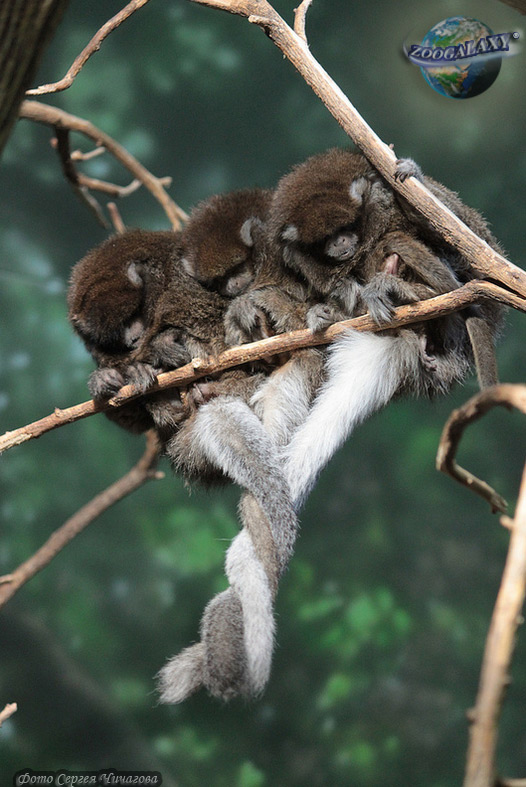
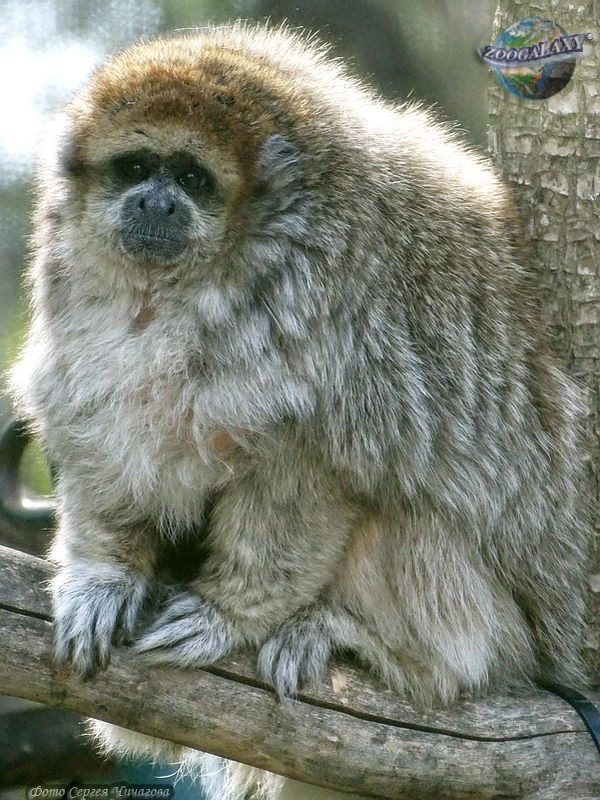
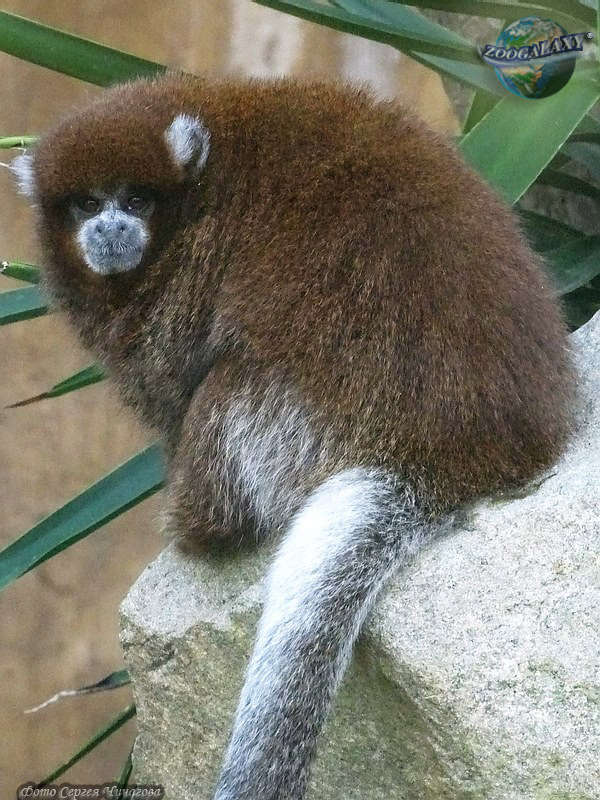
The white-eared titi monkey (Plecturocebus donacophilus) also known as the Bolivian titi or Bolivian gray titi, is a species of titi monkey, a type of New World monkey, from eastern Bolivia and an area of western Brazil. The species has a range that extends east from the Manique River in Beni Department, Bolivia to southern Rondônia in Brazil. The southern end of its range includes forests around the city of Santa Cruz de la Sierra.
Description
Callicebus donacophilus is a species of platyrrhine primate of the family Sheatidae. Callicebus donacophilus is a medium-sized primate: males are about 310 mm long and females about 340 mm, and weigh between 800 and 1200 g. Its fur is thick, with light patches around the ears and grey to orange colouration. Sexual dimorphism is not very pronounced in these primates, but females are slightly larger and males have a slightly denser build. The tail of Callicebus donacophilus is longer than the rest of the body and the tusks are relatively short compared to other New World monkeys. Longevity in captivity up to 25 years.
Taxonomy
The white-eared titi belongs to the New World monkey family Pitheciidae, which contains the titis, saki monkeys (Pithecia), bearded sakis (Chiropotes), and uakaris (Cacajao). It is a member of the subfamily Callicebinae. It was first described as Callicebus donacophilus in 1836, but was reassessed based on molecular evidence and recombined as a species within the genus Plecturocebus.
Within the new genus Plecturocebus, the white-eared titi is part of the Plecturocebus donacophilus group with the Rio Beni titi (Plecturocebus modestus), Rio Mayo titi (Plecturocebus oenanthe), Olalla brothers' titi (Plecturocebus olallae), white-coated titi (Plecturocebus pallescens), and Urubamba brown titi, (Plecturocebus urubambensis). The white-coated titi has sometimes been considered a subspecies of the white-eared titi, but they are treated as separate species in the latest edition of Mammal Species of the World.
Habitat
Callicebus donacophilus inhabits humid tropical forests and prefers densely vegetated areas. They tolerate partial destruction of their habitat reasonably well. In Bolivia, these primates are found in the upper reaches of the Mamoré River. Their range extends into Brazilian territory as far south as the state of Rondônia.
Social behaviour
Callicebus donacophilus are diurnal primates that form small family groups. The group consists of a monogamous pair and their offspring, with the total number of group members ranging from 2 to 7 individuals. Groups are also found consisting of males who have not found a mate. The young are usually carried by the male. At the age of two to four years, calves leave the parental group, with females leaving earlier than males. The bond between female and male is very close, they spend almost all their time together and there is no obvious leader in the pair. When males and females are separated, they show signs of intense anxiety and restlessness. Like other species, Callicebus donacophilus are territorial animals, each group defending its territory aggressively.
Nutrition
Callicebus donacophilus feeds mainly on fruits, leaves, insects and seeds. Their diet consists mainly of young leaves and shoots, so these primates spend most of the day resting and digesting the cellulose-rich plant food. Callicebus donacophilus eats more than 100 different plant species. During lactation, the proportion of protein-rich animal foods in the diet increases.
Conservation status
The white-eared titi is considered to be of least concern on the International Union for Conservation of Nature (IUCN) Red List. The species is not considered threatened due to its adaptability and abundance over a relatively wide range, and despite having a decreasing population trend the decline is not rapid enough to be placed in a threatened category. The species is also listed on CITES Appendix II.
The white-eared titi's main threat is deforestation and habitat loss due to agriculture. The area of greatest habitat loss is around the city of Santa Cruz de la Sierra, but it still survives within the city limits and on the edges of many rural establishments. It has few natural predators and is proven to be adaptable to habitat disturbance. Farmland may surround and isolate areas of titi habitat which occasionally has positive benefits to the monkey. Farmers may prevent hunters on the land, thereby inadvertently protecting the species. It also appears that the titi monkey can cross open ground between forest fragments, and some groups can thrive in disturbed habitats near human activities. However, the fragmented habitats may prevent the establishment of new territories and decrease reproductive opportunities. Forest corridors to connect fragmented forests have been proposed as an effective means to help ensure the survival of the titi monkey. The white-eared titi is found in the Beni Biological Station Biosphere Reserve and the Amboro National Park in Bolivia and benefits from the protection these reserves provide.