














The black-striped capuchin (Sapajus libidinosus), bearded capuchin or black-stiped capuchin
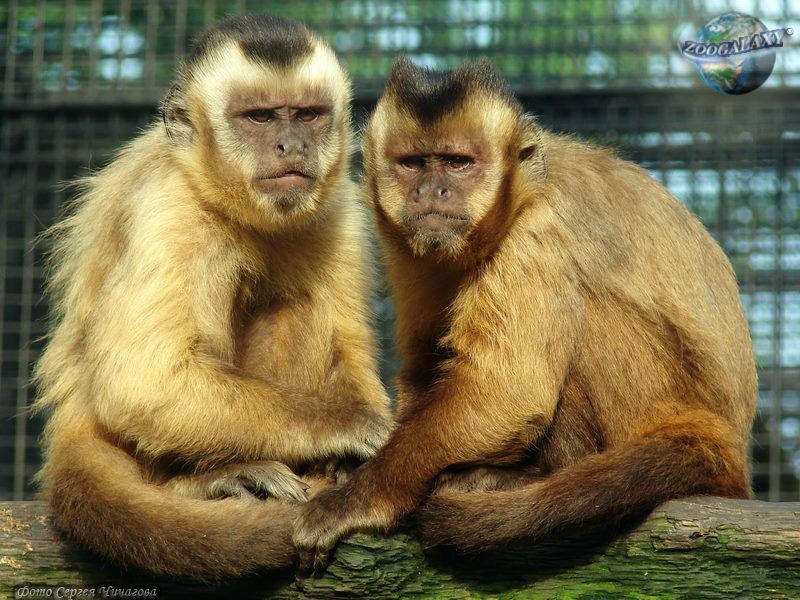
The black-striped capuchin (Sapajus libidinosus), also known as the bearded capuchin, is a New World monkey in the family Cebidae. They can be found in northern and central Brazil. These capuchins mostly live in dry forests, and savannah landscapes between the Rio Araguaia and the Rio Grande. Known for its tool use, the black-stiped capuchin has been shown to use tools in a wide variety of situations, ranging from using rocks for nut cracking to using sticks for digging. They were, until recently, considered a subfamily of the tufted capuchin, but because of more research and insights, they are considered their own species by many.
Appearance and habitat
Sapajus libidinosus is a species of South American capuchin in the family Cebidae. The species was previously classified in the genus Cebus, but genetic research in 2012 distinguished a new genus, Sapajus, from this genus. The evolutionary pathways of these two genera diverged about 6.2 million years ago.
The whistling monkey (Sapajus libidinosus) is a medium-sized primate with slender limbs and a long tail. Its body length varies between 30 and 55 cm, tail length about 50 cm and weight between 2.5 and 5 kg. Its coat is yellowish brown with a darker stripe on the back. The arms, legs and tail are also dark in colour. The top of the head is dark brown, here the hair forms two tufts.
Sapajus libidinosus is widely distributed in large parts of central South America and covers central Brazil, as well as southeastern Bolivia, Paraguay and the extreme north of Argentina. Sapajus libidinosus is a forest dweller and is most commonly found in dry deciduous forests.
These primates are diurnal tree dwellers and move mainly on all fours.
Taxonomy
The black-striped capuchin is a New World monkey and a member of the Cebidae family, which contains both capuchins and squirrel monkeys. Until the past few decades, the black-striped capuchin was considered a subspecies of the tufted capuchin but has slowly become accepted as a separate species over time. Even within the black-striped capuchin species, we see more taxonomical debate, as the southern population is sometimes considered a species of its own as well, called Azaras's capuchin.
Nutrition
They are omnivorous animals that feed mainly on fruit. They also eat other parts of plants, as well as insects and small vertebrates. To feed on plants, Sapajus libidinosus use tools such as sticks and stones to help them dig up roots and tubers, and break up hard, dry fruits. Capuchins raid plantations, warehouses and dwellings at the slightest opportunity.
Social behaviour and reproduction
Sapajus libidinosus has a diurnal lifestyle. They live in groups of 20-50 individuals. The clan is led by the dominant male and the dominant female. All other clan members are subordinate to them. The clan has its own territory, which it actively defends and at the same time strives to capture the territories of neighbouring clans.
At the time of breeding, females strive to choose the dominant male and, as a result, most of the offspring in the group are produced. Pregnancy in females lasts 5.5 months. At birth, the offspring weigh about 250g. The young feed exclusively on milk until one and a half years of age, and at two years of age they switch completely to the adult diet. Males reach sexual maturity at five years and females at four years. Life expectancy can be up to 18 years.