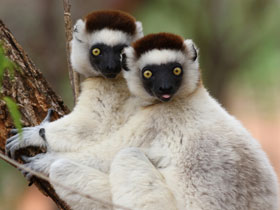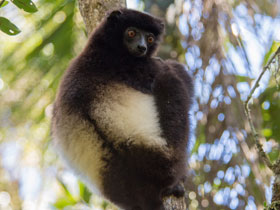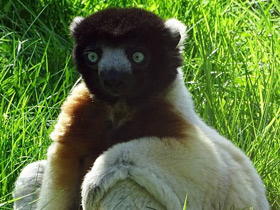















The family Indriidae (Indridae)
The Indriidae (sometimes incorrectly spelled Indridae) are a family of strepsirrhine primates. They are medium- to large-sized lemurs, with only four teeth in the toothcomb instead of the usual six. Indriids, like all lemurs, live exclusively on the island of Madagascar.
Classification
The 19 living species in the family are divided into three genera.
Family Indriidae:
- Genus Indri:
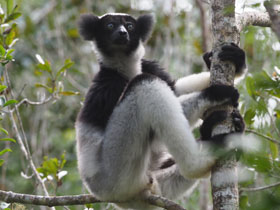
- Indri, Indri indri;
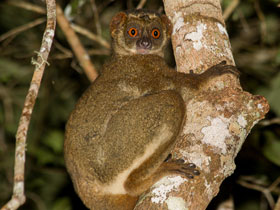
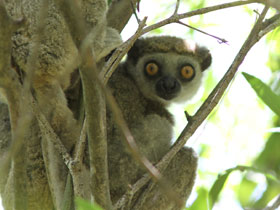
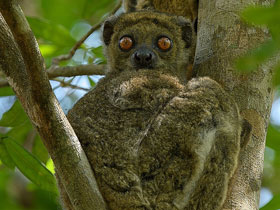
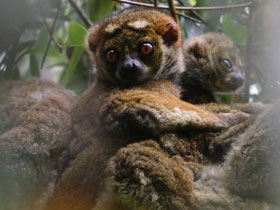
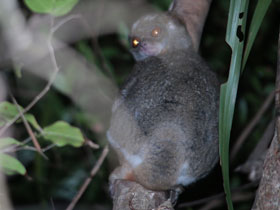
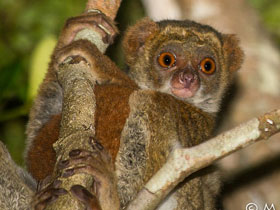
- Genus Avahi, woolly lemurs:
- Bemaraha woolly lemur, Avahi cleesei;
- Eastern woolly lemur, Avahi laniger;
- Moore's woolly lemur, Avahi mooreorum;
- Western woolly lemur, Avahi occidentalis;
- Sambirano woolly lemur, Avahi unicolor;
- Peyrieras's woolly lemur, Avahi peyrierasi;
- Southern woolly lemur, Avahi meridionalis;
- Ramanantsoavana's woolly lemur, Avahi ramanantsoavani;
- Betsileo woolly lemur, Avahi betsileo;
- Genus Propithecus, sifakas:
- Propithecus diadema group;
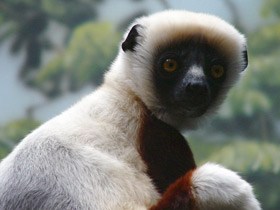
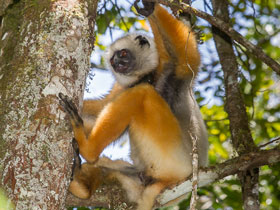
- Diademed sifaka, Propithecus diadema;
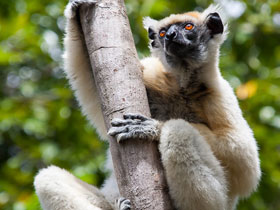
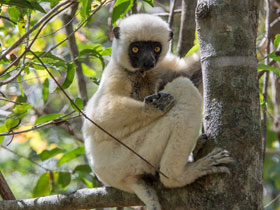
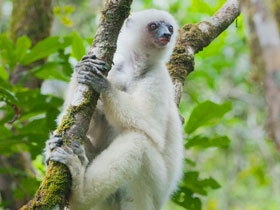
- Silky sifaka, Propithecus candidus;
- Milne-Edwards's sifaka, Propithecus edwardsi;
- Perrier's sifaka, Propithecus perrieri;
- Golden-crowned sifaka, Propithecus tattersalli;
- Propithecus verreauxi group;
- Verreaux's sifaka, Propithecus verreauxi;
- Coquerel's sifaka, Propithecus coquereli;
- Decken's sifaka, Propithecus deckenii;
- Crowned sifaka, Propithecus coronatus.
Indriidae - sometimes incorrectly referred to as "Indridae" - are a family of strepsirrhine primates containing the indris, which are the largest members of strepsirrhines.
The vernacular names of the extant genera are woolly lemurs (Avahi), indris (Indri) and sifacas (Propithecus). The sifacas and indris are traditionally protected from hunting by "fadys" (taboos), as the natives of the island believe they represent the spirits of their ancestors.
Appearance
Indriids (Indriidae) have long hind limbs (1/3 longer than the forelimbs), which they use to move along the ground in great leaps, with forelegs extended upwards or forwards. Their feet are very large but narrow. The arms of Indriidae are long, slender and strong. Their toes are covered with hairs on the back; on the hind limbs, the toes are joined by a cutaneous membrane to the second phalanges, but the first toe is free and opposes the others; on the hands, the first toe is small and weakly opposed. All fingers have nails, and the second finger of the hind limb has a grooming claw used for combing the hair.
Lifestyle
All members of the family are endemic to Madagascar. They all lead an arboreal lifestyle and are exceptionally vegetarian: they eat leaves, fruits, bark and flowers. In trees, Indriidae leap upright, using their hind legs to propel themselves and hold on after a leap; climb by trailing arms; and on the ground, using their hind legs and arms extended forward, leaping up to 4 m high.