














The silky sifaka or simpona (Propithecus candidus)
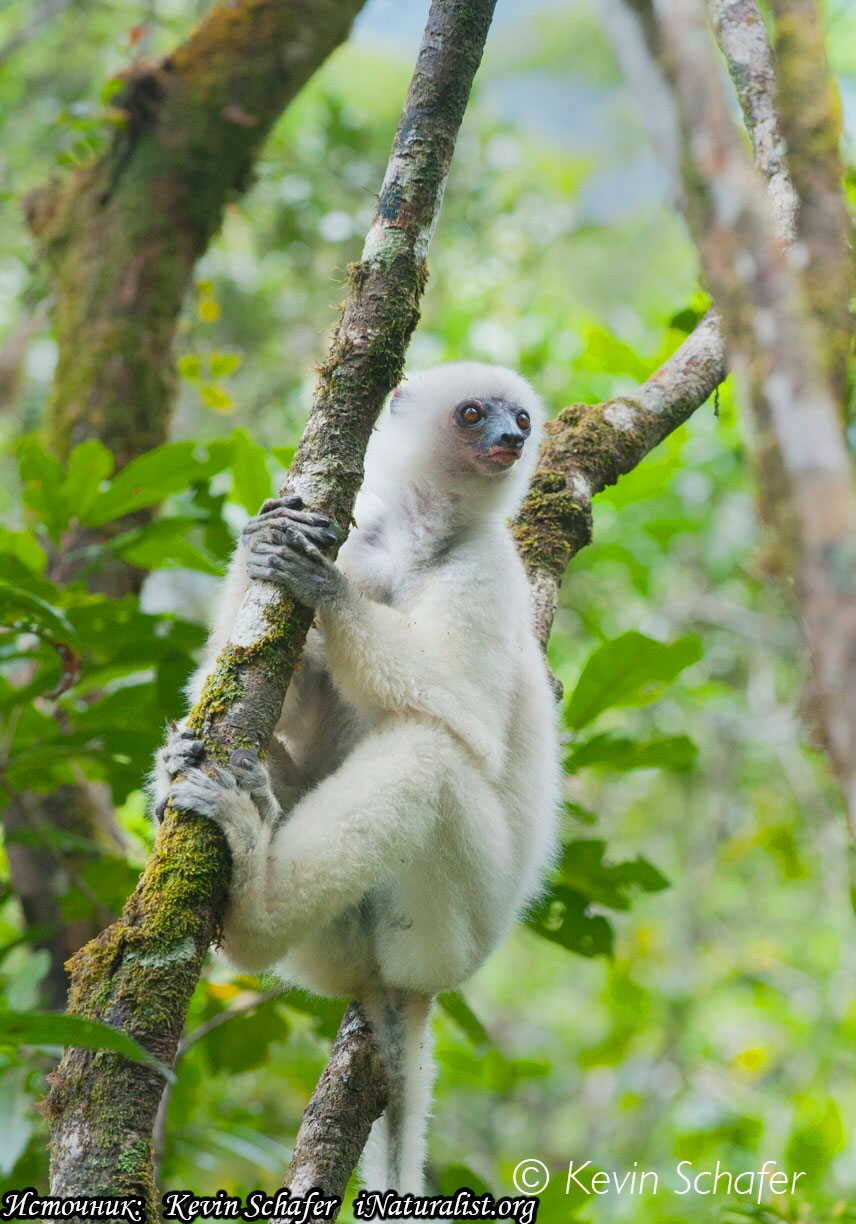

The silky sifaka (Propithecus candidus) is a large lemur characterised by long, silky, white fur. It has a very restricted range in northeastern Madagascar, where it is known locally as the simpona. It is one of the rarest mammals on Earth. The silky sifaka is one of nine sifaka species (genus Propithecus), and one of four former subspecies of diademed sifaka (Propithecus diadema). Studies in 2004 and 2007 compared external proportions, genetics, and craniodental anatomy supporting full species status, which has generally been accepted.
Description and distribution
Propithecus candidus is a species of strepsirrhine primate in the family Indriidae. They are fairly large lemurs with long white hairs. The range is quite small, located in northeastern Madagascar, where these animals are known as "simpuna". The population is small and the species is one of the rarest primate species in the world, listed as one of the "25 most endangered primates in the world". It is one of nine species in the genus Propithecus, and was previously considered a subspecies of Propithecus diadema, but studies in 2004 and 2007 confirmed species status based on a combination of morphological and genetic characters.
Lifestyle and feeding habits
They form groups of two to nine individuals. Each group defends its territory by marking its boundaries with odorous secretions. Spends most of the day foraging, with considerable attention also devoted to intra-group social interactions such as play and grooming. Diet is predominantly leaves and seeds, with fruits and flowers supplementing the diet. Breeding is seasonal, with the mating season occurring at the beginning of the rainy season. All members of the group care for their young. Adult vocalisations include seven types of sounds.
Conservation status
Found in protected areas in the tropical forests of north-eastern Madagascar. Most of the population lives in Marogeja National Park and Anjanaharibe-Sud Reserve. Several groups also inhabit Makira National Park and several unprotected areas of the forest. The conservation status of this primate is "critically endangered". The main threats to the population are hunting and habitat destruction.