














The white-headed lemur (Eulemur albifrons), the white-headed brown lemur, white-fronted brown lemur, or white-fronted lemur
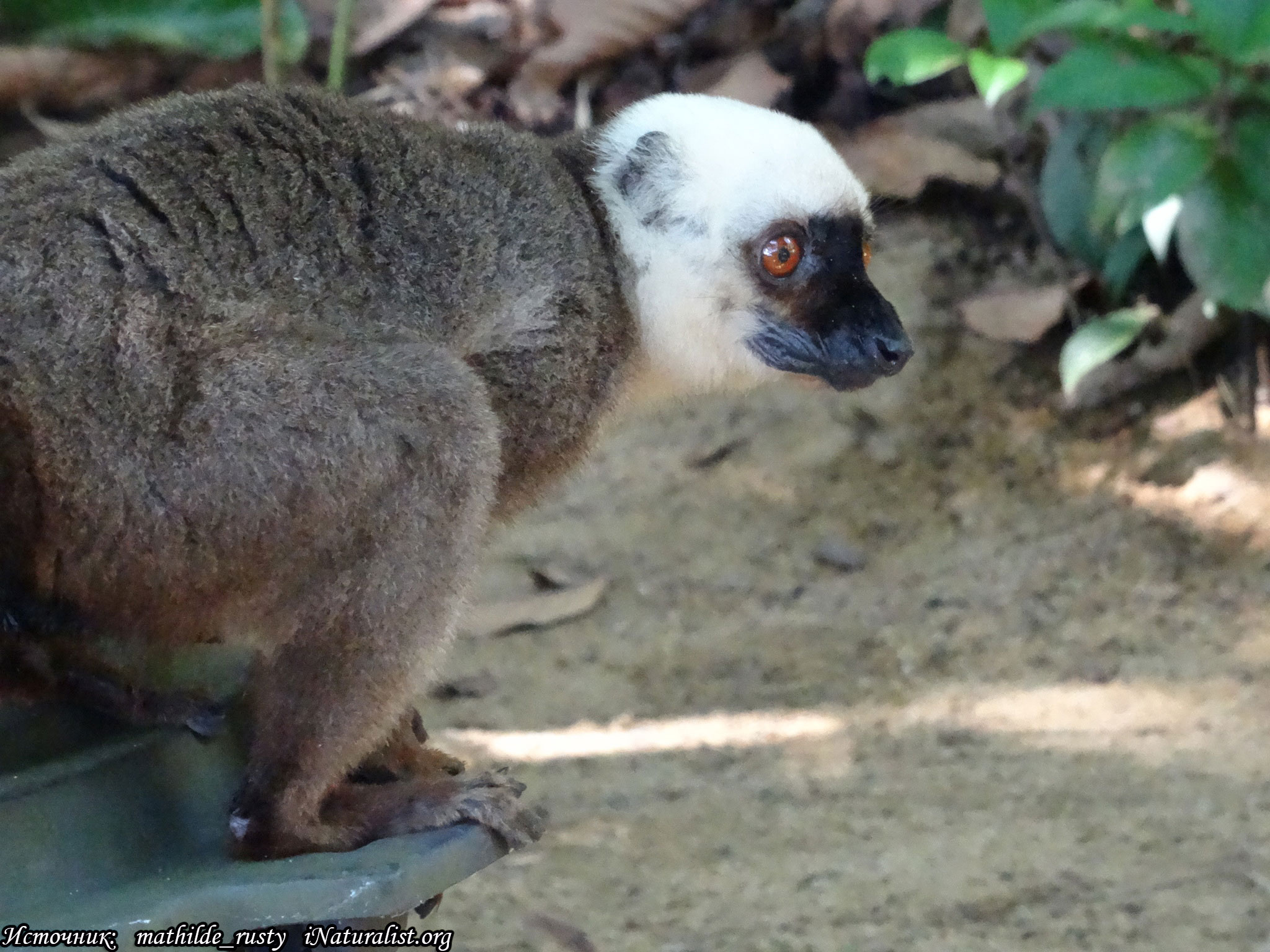

The white-headed lemur (Eulemur albifrons), also known as the white-headed brown lemur, white-fronted brown lemur or white-fronted lemur, is a species of primate in the family Lemuridae. It is found only in northeastern Madagascar. It is arboreal and is usually found in the treetops of tropical rainforest. Formerly recognised as a subspecies of the common brown lemur (Eulemur fulvus).
Description and distribution
Eulemur albifrons is a species of strepsirrhine primate belonging to the family Lemuridae.
Eulemur albifrons is a species of mammal in the lemur family. Endemic to Madagascar (north-eastern part of the island). Until 2001, it was a subspecies of the brown lemur.
The average weight of the animals is 2.3 kg, length - 40 cm (tail can reach 50). Longevity in the wild is probably 20-25 years, in captivity up to 36 years. They live in the upper level of the rainforest.
Behaviour and mating
This species is catemeral, which means that it is active at different times of the day and night. It has an omnivorous diet consisting of fruits, ripe leaves, flowers, bark, sap, soil, insects, centipedes and millipedes. Diet changes depending on the reproductive stage of the females, during gestation both males and females supplement their diet with flowers, during lactation, more flowers and young leaves and when not reproducing they eat more mature leaves and other miscellaneous items such as millipedes.
The mating system of this lemur has not been reported. However, other species of the genus Eulemur are monogamous or polygynous. It is likely that the white-headed lemur is similar. During the first three weeks of life, the young lemur hangs on to its mother's belly and only clings to her for suckling. After three weeks, it changes position and climbs onto its mother's back. It then begins to take its first steps. Then it starts to try solid food, nibbling on what the other members of the group are eating. This is his first sign of independence. Breastfeeding continues, but its importance in the baby's diet diminishes. The young lemur is weaned after about four months, usually in January.
Unlike other members of the genus, females do not usually dominate males, so the extent to which females exercise active mate choice is unknown. It forms groups of several males and several females. Depending on the population, the size of these groups may vary, usually three to twelve individuals, although five to seven seems to be the average.
Conservation status
The white-headed lemur (Eulemur albifrons) has been declared endangered by the IUCN.