














The blue-eyed black lemur (Eulemur flavifrons), Sclater's lemur
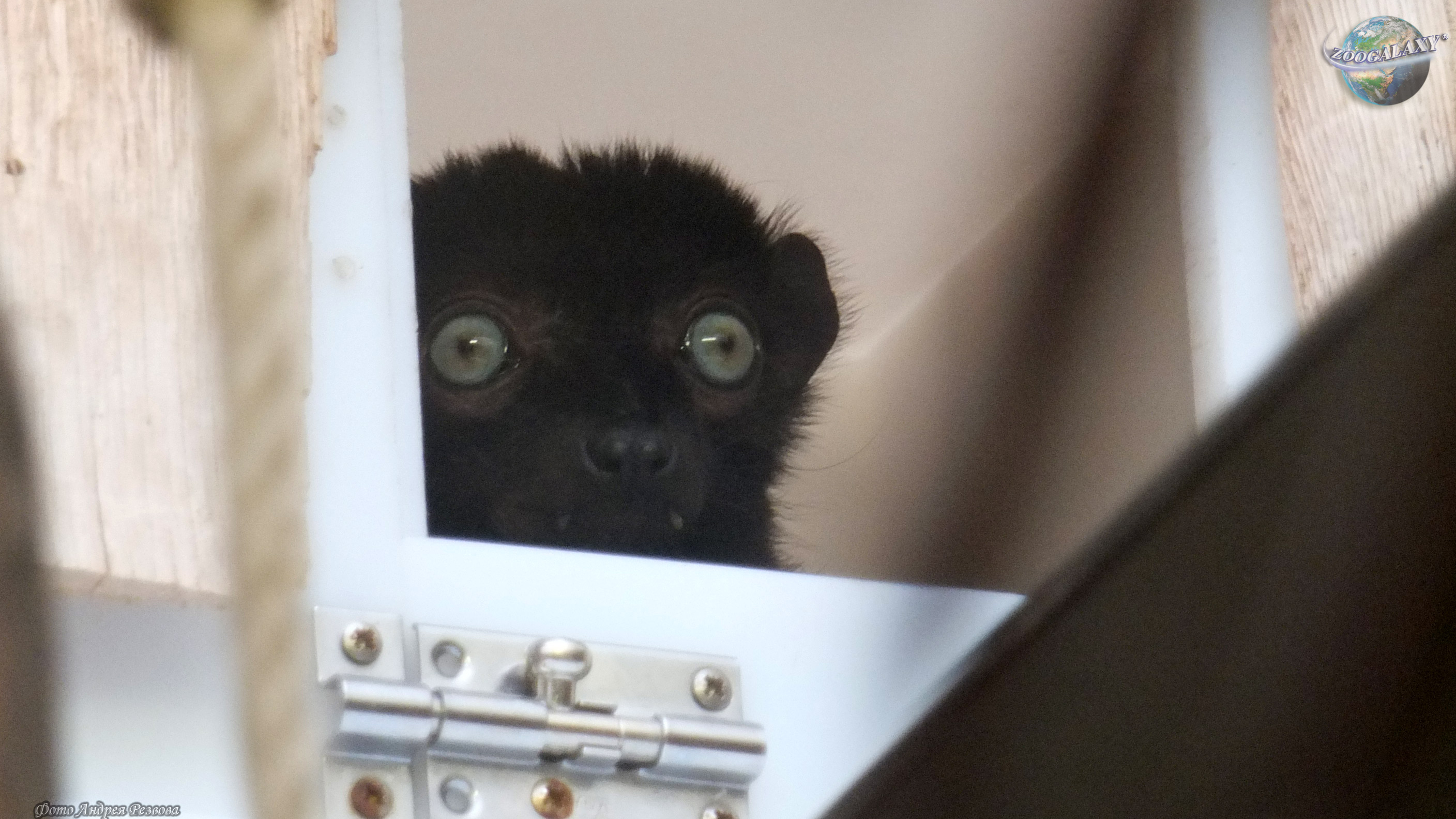
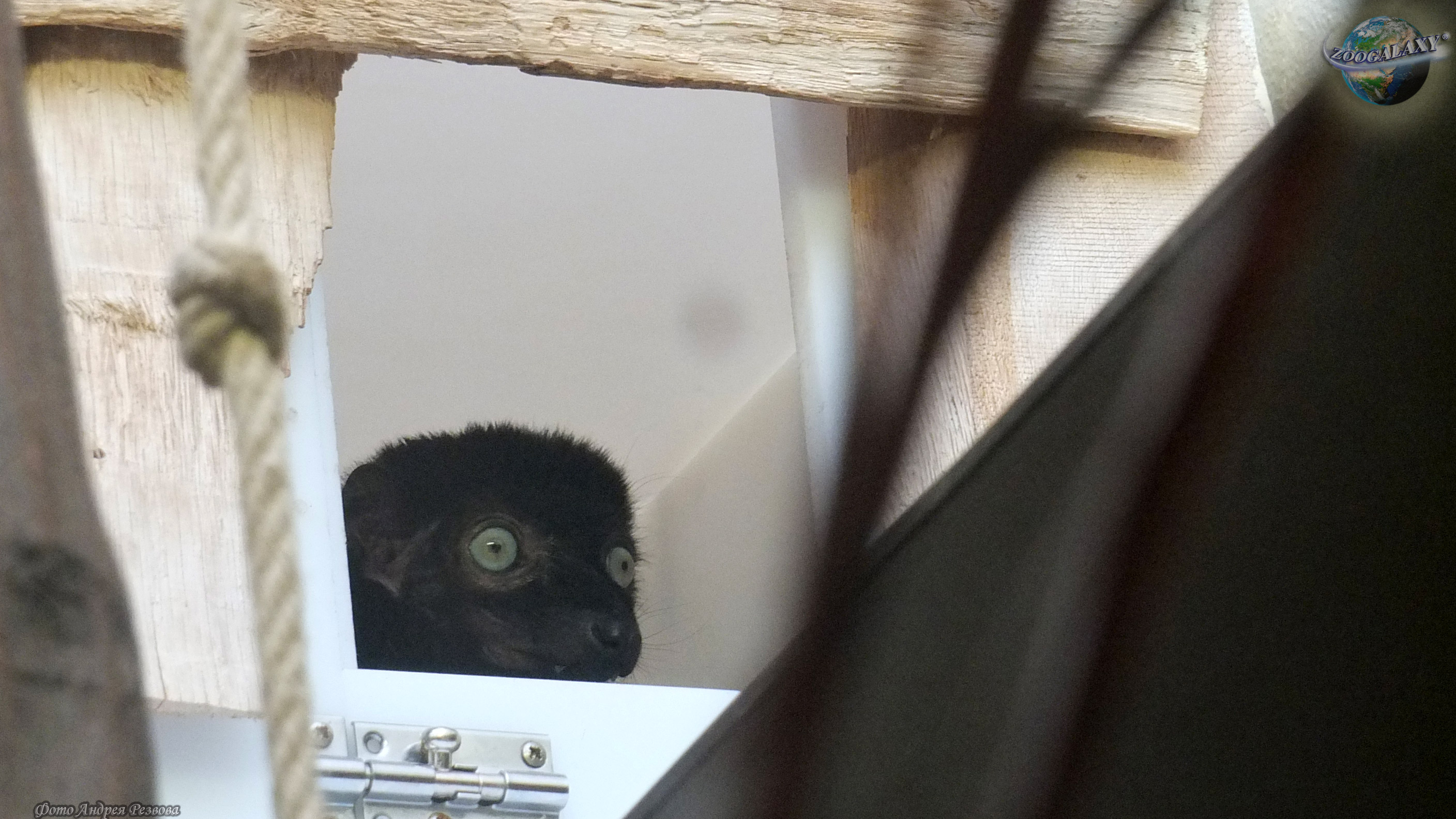

The blue-eyed black lemur (Eulemur flavifrons), also known as the Sclater's lemur, is a species of true lemur.
Appearance and habitat
Eulemur flavifrons is a species of primate mammal in the family Lemuridae.
Eulemur flavifrons is a small animal about the size of a cat. It is found south of Sambirano in northeastern Madagascar. Other populations are found south of the Andranomalaza River near Moromandia and south of the Sandrakota River near Befotak.
This lemur species inhabits western dry forests and coffee and citrus plantations, which are interspersed with wooded areas.
Its body length reaches 40 cm, its tail up to 55 cm and it weighs 2.4 kg.
It resembles the black lemur in its lifestyle and behaviour, but differs from them in the colour of its fur: while males are completely black, females vary in colour from reddish brown to grey.
A distinctive feature of the species is also the blue-green eyes, which are not found in other primates.
Social behaviour
Eulemures flavifrons live in groups of 2 to 15 individuals (7 to 10 on average). Females lead the family and have an advantage in the choice of food and mating partners. Eulemures flavifrons spend a lot of time grooming and grooming their fur, thus expressing their loyalty and sympathy to other members of the group. The tooth structure of their lower jaw resembles a comb, which is used for grooming.
Reproduction
Sexual maturity occurs in eulemures flavifrons at the age of 2 years. The mating season for eulemures flavifrons is from June to July. Pregnancy lasts 126 days and the single calf is born in September-November. It clings to its mother's fur and stays with her on her chest for the first three weeks.
From three weeks of age, the calf takes its first independent steps and tastes the main food given to it by its mother or other members of the group.
At 5 to 6 months of age it becomes fully independent.
The life expectancy of eulemures flavifrons is 20-25 years.
Adult eulemures flavifrons feed on ripe fruit, leaves, flowers and sometimes insects.
Diet
Fruit, pollen, and nectar make up the bulk of this lemur's diet. During the dry season when food is scarce it may eat leaves, seeds and berries and rarely insects. It may also raid farmlands and eat some of the crops, which may lead to it being shot by farmers.
The blue-eyed black lemur helps propagate many rain forest plants. Since it digests the flesh but not the seeds of the fruits it eats, it spreads the seeds of more than 50 different plant species (deposited in a fresh pile of fertilizer), and some plants may have evolved specifically to be dispersed by this lemur. The blue-eyed black lemur also pollinates many plants while it eats nectar and pollen from the plants' flowers.
Conservation
Humans have cut down almost all of this species' habitat to clear farm land. As a result, the blue-eyed black lemur is nearly extinct in the wild. The blue-eyed black lemur is listed on Appendix I of CITES, and is critically endangered. As few as 1,000 individuals are thought to remain in the wild, largely due to slash and burn habitat destruction, as well as a mild threat from hunting problems.