














The eastern lesser bamboo lemur (Hapalemur griseus), the gray bamboo lemur, the gray gentle lemur, and the Mahajanga lemur
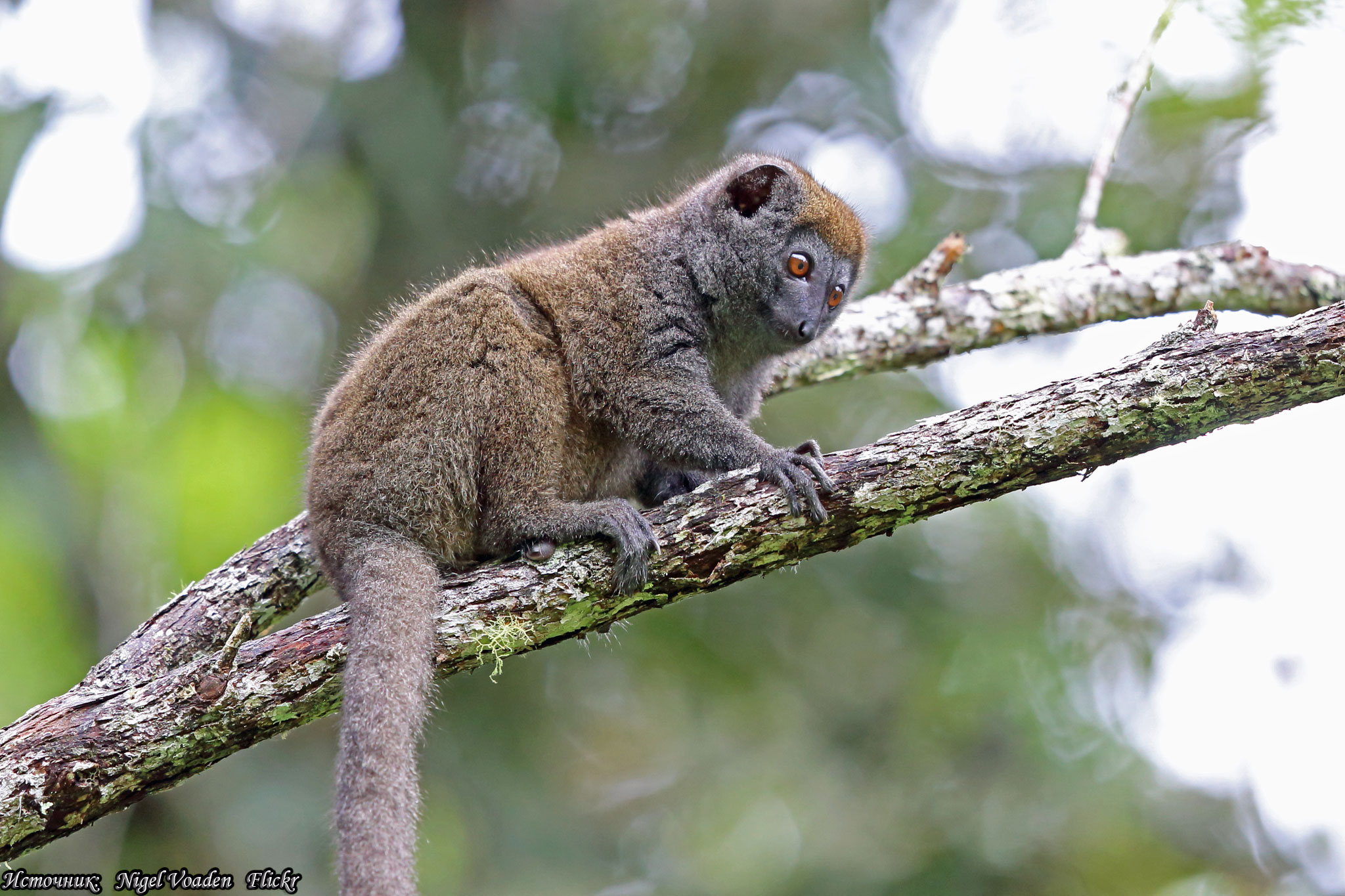

The eastern lesser bamboo lemur (Hapalemur griseus), also known as the grey bamboo lemur, soft grey lemur and Mahajanga lemur, is a small lemur endemic to Madagascar, with three known subspecies. As its name suggests, the eastern bamboo lemur feeds mainly on bamboo. Lemurs of the genus Hapalemur have more manual dexterity and hand-eye coordination than most lemurs. They are upright climbers and jump from stem to stem in dense bamboo forests.
Distribution and lifestyle
Hapalemur griseus is a species of strepsirrhine primate in the family Lemuridae. Endemic to Madagascar. It feeds mainly on bamboo. These animals are very agile and well coordinated. They climb trees and bamboo stems very well and can move quickly in bamboo groves by jumping from stem to stem.
Description and subspecies
The coat colour is grey, often with a reddish mark on the head. It averages 28.4 cm in length and has a long tail of 36.6 cm.
In 1795, the subspecies Hapalemur griseus griseus was described. In 2007, another subspecies of tame lemur, Hapalemur griseus gilberti, was described, but was recognised as a separate species in 2008. However, in 2010, molecular research showed that Hapalemur gilberti should be considered a subspecies of the tame lemur. This subspecies only occurs in Ranumafana National Park.
A third subspecies of tame lemur is Hapalemur griseus ranomafanensis.
Subspecies
The eastern lesser bamboo lemur (Hapalemur griseus griseus), also known as the grey bamboo lemur, eastern grey bamboo lemur or grey tame lemur, was the original species described in 1795 by Johann Heinrich Friedrich Link. It is grey in colour, sometimes with a red spot on the head. It has an average length of 284 mm, a tail of 370 mm and a mass of 0.8 kg. Based on data from more than 100 transect surveys conducted between 2004 and 2009, the population is estimated to be declining. There are an estimated 818 individuals in Ranomafana National Park and the decline in numbers is due to hunting and habitat loss. It is listed in Appendix 1 of the Convention on International Trade in Endangered Species of Wild Fauna and Flora (CITES) and is considered vulnerable by the IUCN.
Gilbert's bamboo lemur
Gilbert's bamboo lemur (Hapalemur griseus gilberti), also known as Gilbert's tame lemur or Beanamalao bamboo lemur, was described as a subspecies in 2007, but was elevated to species status in 2008. In 2010, it was restored to subspecies status. Its exact distribution is uncertain, but it is known from a small area in east-central Madagascar, in its type locality of Beanamalao, in a small area north of the Nesivolo River and possibly in an area south of the Mangoro and Onive Rivers. This subspecies lives in dense stands of bamboo and areas of bamboo creepers and is threatened by habitat loss and degradation. The subspecies is considered "data deficient" by the IUCN and is listed in Appendix 1 of the Convention on International Trade in Endangered Species of Wild Fauna and Flora (CITES).
Ranomafana bamboo lemur
The Ranomafana bamboo lemur (Hapalemur griseus ranomafanensis), or Ranomafana tame lemur, is the third subspecies and occurs in three widely separated populations. Its exact distribution is unknown, but in the west of the island it is found in the Tsingy forests of Bemaraha, probably as far north as the Betsiboka River, and in the Makay massif in southwestern Madagascar. The eastern population is found in the forests south of the Mangoro River and Onive River in Ranomafana National Park. It lives in dense stands of bamboo and bamboo vines in humid lowland and montane tropical rainforests, and three-quarters of its diet is bamboo. It also eats fig leaves, flowers, fungi, grass stems, small fruits and sugar cane. Due to habitat loss, the IUCN has classified this species as vulnerable. It is listed in Appendix 1 of the Convention on International Trade in Endangered Species of Wild Fauna and Flora (CITES).