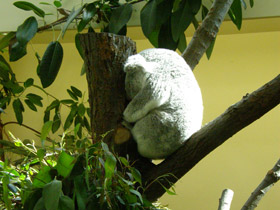















The western lesser bamboo lemur (Hapalemur occidentalis), the northern bamboo lemur, western gentle lemur, or Sambirano lesser bamboo lemur
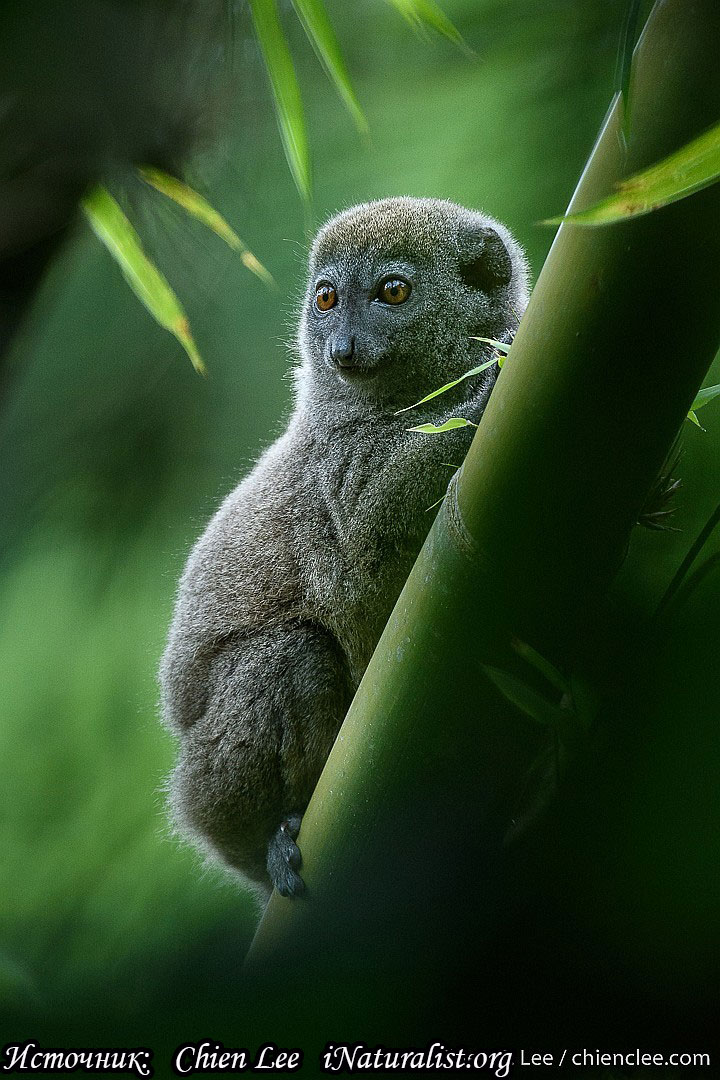

The western lesser bamboo lemur (Hapalemur occidentalis), also known as the northern bamboo lemur, western gentle lemur, or Sambirano lesser bamboo lemur, is a species of bamboo lemur endemic to Madagascar.
Hapalemur occidentalis is a species of strepsirrhine primate in the family Lemuridae. It belongs to the genus Hapalemur, a class of lemurs that possess greater manual dexterity and hand-eye coordination than other lemurs,3 and feed primarily on bamboo.
Description
The fur is pale grey, slightly lighter than that of the sister species Hapalemur griseus. The ears are visible under the fur. The tail is equal to or slightly longer than the length of the body. The total length of the animal with tail ranges from 55 to 67 cm, and the average weight is about 1 kg.
Distribution
The range is divided into several fragments in northern and western Madagascar, including the Ankarana and Analamerana reserves in the north, Sambirana and the Ampasindava peninsula in the northwest, and several areas between the Mahavani and Tsiribihina rivers.
Lifestyle
The lifestyle of this species is rather poorly studied. They prefer bamboo forests, but are also found in secondary forests in the Sambiranu river valley. They are active at night. They form groups of six individuals on average.
Conservation status
The International Union for Conservation of Nature (IUCN) has given the species a conservation status of "vulnerable". The population is estimated to have declined by more than 30% in 27 years (three generations) mainly due to habitat destruction and hunting.