














The small-toothed sportive lemur or small-toothed weasel lemur (Lepilemur microdon)
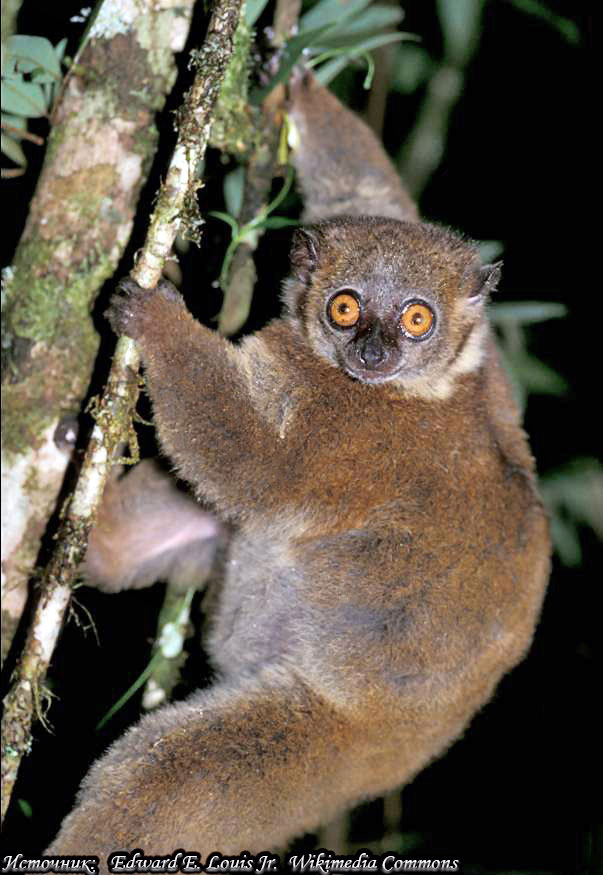

The small-toothed sportive lemur (Lepilemur microdon), or small-toothed weasel lemur, is a primate species in the family Lepilemuridae that-like all extant lemurs-is endemic to Madagascar. The species lives in dense rainforest in southeastern Madagascar, and can be found in Ranomafana and Andringitra National Parks. Described in 1894, it was considered either a subspecies or taxonomic synonym of the weasel sportive lemur (Lepilemur mustelinus) throughout most of the 20th century. Phylogenetic studies not only support its species status, but also suggest that it is the only eastern Malagasy sportive lemur that is more closely related to western than to other eastern species.
Distribution
Lepilemur microdon is a species of lemur of the slender-bodied lemur family found in Madagascar.
Lepilemur microdon is distributed in a small area of southeastern Madagascar. With the discovery of new lemur species, its exact range remains unclear. The natural habitat of the species is rainforest.
Description
Lepilemur microdon is one of the largest members of the family. Its body length varies from 25 to 29 cm, and tail length from 24 to 30 cm. It weighs up to 1.2 kg, sometimes even 1.6 kg. The head is round with large eyes and the hind legs are strong. The coat colour is reddish brown on the back, with a darker stripe running along the ridge of the back. The shoulders and forearms are reddish. The face, throat and belly are light brown, the long tail is darker near the top.
Lifestyle and nutrition
Lepilemur microdon is active at night and stays in trees. During the day, the animals sleep in tree hollows or in nests made of leaves. They move between trees most often by climbing vertically and jumping. They are solitary and territorial. They eat leaves, fruits and flowers.