














Sahamalaza sportive lemur (Lepilemur sahamalaza)
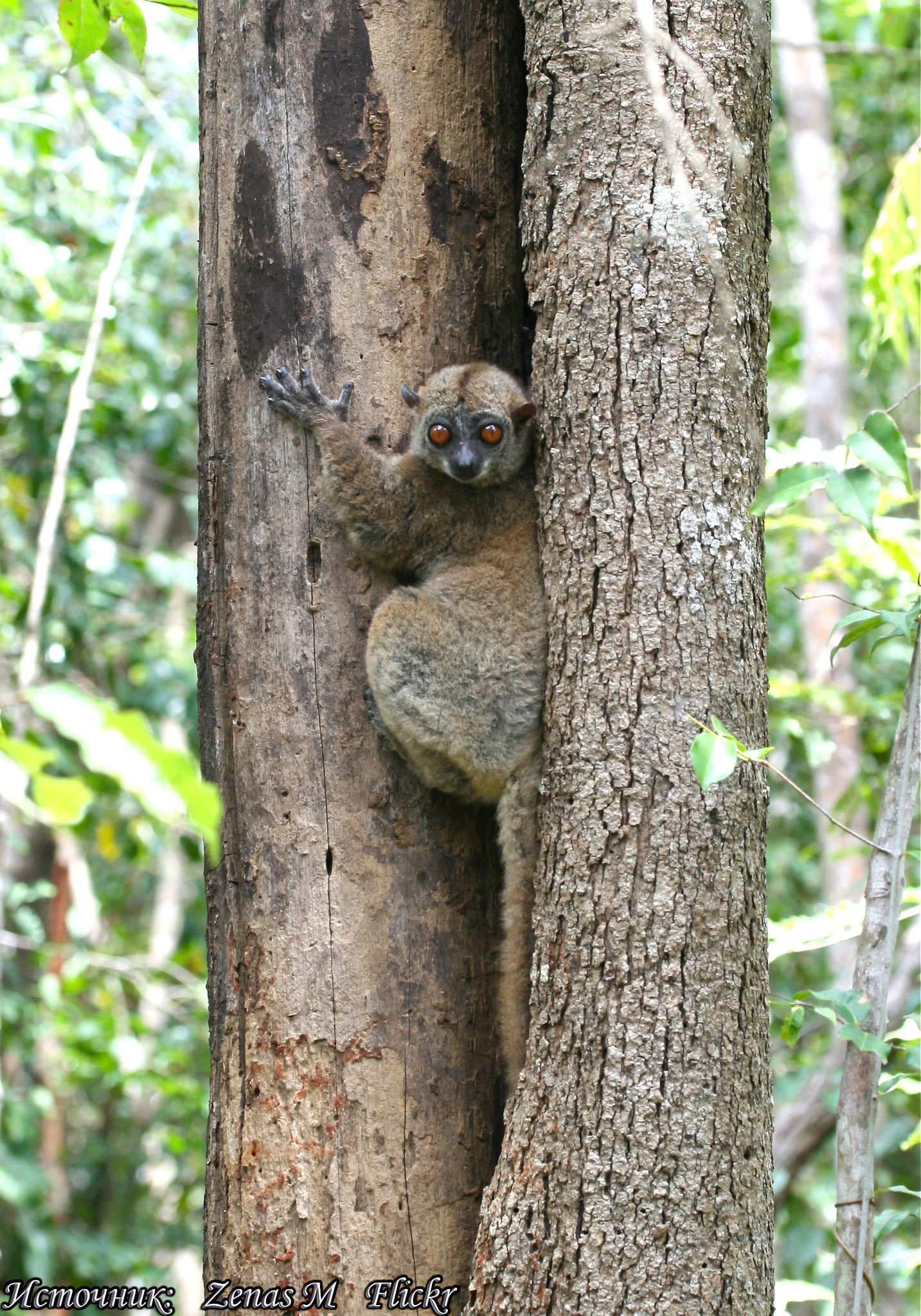

The Sahamalaza sportive lemur (Lepilemur sahamalaza) is a species of sportive lemur endemic to northern Madagascar.
Description
Lepilemur sahamalazensis is a species of strepsirrhine primate in the family Lepilemuridae. A nocturnal animal with keen eyesight. It weighs between 700 and 900 grams, with females weighing on average 200 grams heavier than males. The length of the body from head to tail is about 26 cm, the length of the tail is almost equal to the length of the body. The coat is grey, reddish-brown in places, which changes slightly with age. The coat is lighter on the belly, varying in colour from grey to cream.
Taxonomy
The sportive lemurs (Lepilemuridae) constitute a family with only a single genus, Lepilemur. Relationships within this genus are not yet completely resolved, and genetic analyses continue to suggest reclassifications of current species. L. sahamalaza was split from L. dorsalis in 2006 after the latter taxon was found to be paraphyletic. The 2006 description of this species was considered invalid by ICZN standards, and it was formally described in 2017. In 2017, its name was changed from Lepilemur sahamalazensis to Lepilemur sahamalaza.
Distribution
Endemic to the Sahamalaza peninsula in north-western Madagascar. This peninsula is part of the transition zone between the Sambiranu zone and the deciduous forest zone. The forest on the peninsula has been severely affected by logging, with little or no primary forest remaining, and the forest belt is highly fragmented. The species prefers areas of dense vegetation with abundant natural refuges.
Lifestyle and nutrition
Spends most of its life in trees, moving through the canopy by leaping. Active at night, it spends the day in tree hollows and other natural refuges. But spends 47% of its time resting and only 18% feeding. A solitary animal, it defends its territory from individuals of its own sex, and the territories of females and males may overlap.
Diet consists predominantly of leaves, with some fruits, flowers, bark, tree sap and small invertebrates also part of the diet. Metabolism is slow, with coprophagy characteristic of Lepylemurs.
Threats
The Sahamalaza sportive lemur is preyed on by the Malagasy tree boa while sleeping during the day, as well as by birds of prey when in the open. The main anthropogenic threats to the species are habitat loss from deforestation (mostly logging) and subsistence hunting. The Sahamalaza - Iles Radama Nation Park was created in an effort to help increase the population and recoup habitat losses. Wildfires (May to October) are also believed to have an impact.
Conservation status
The International Union for Conservation of Nature (IUCN) has classified the species as critically endangered, with habitat destruction being the main threat to the species. However, conservation measures taken to conserve the species are considered successful and the population has recently increased.