














The nilgai Boselaphus tragocamelus
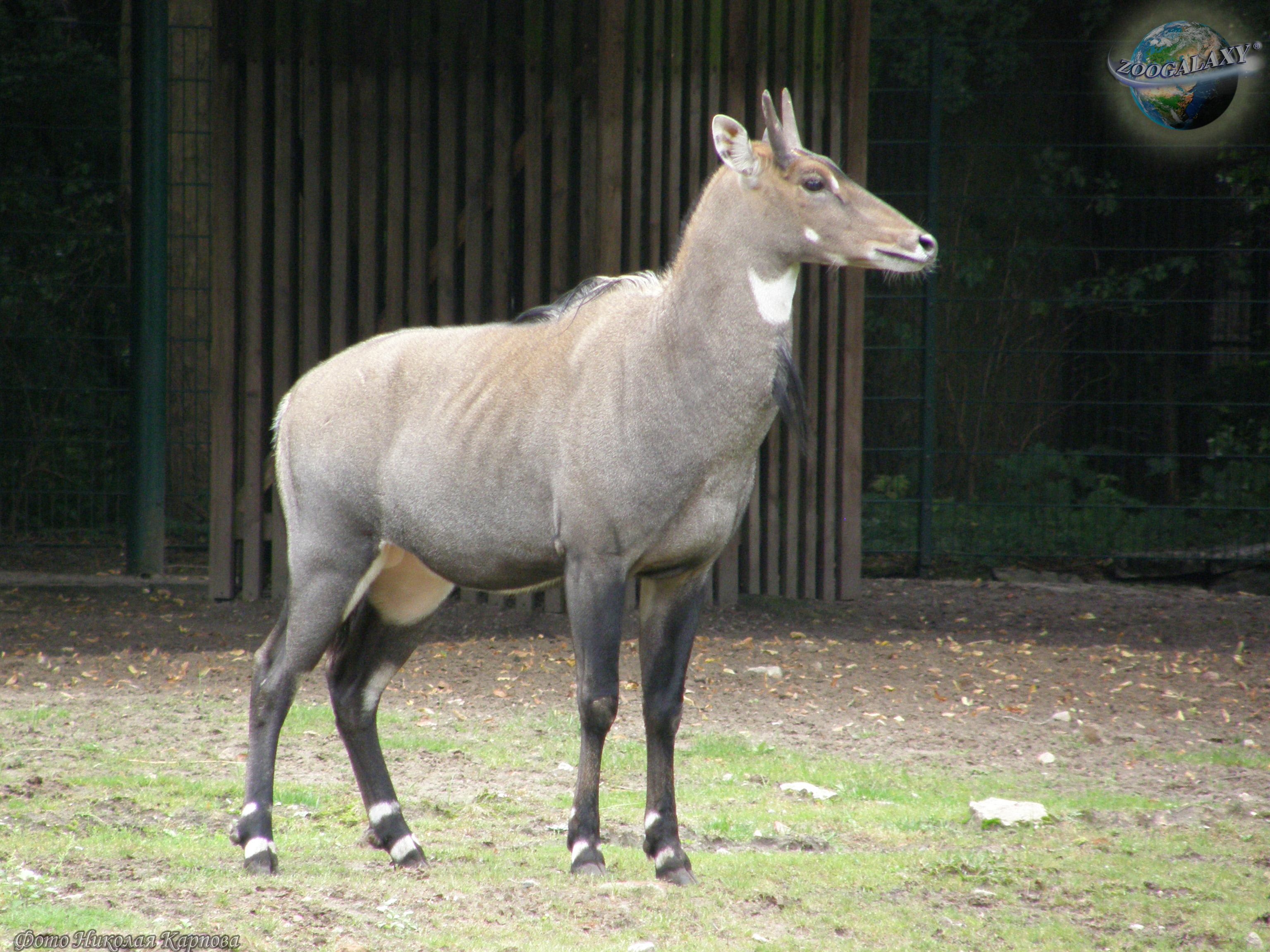
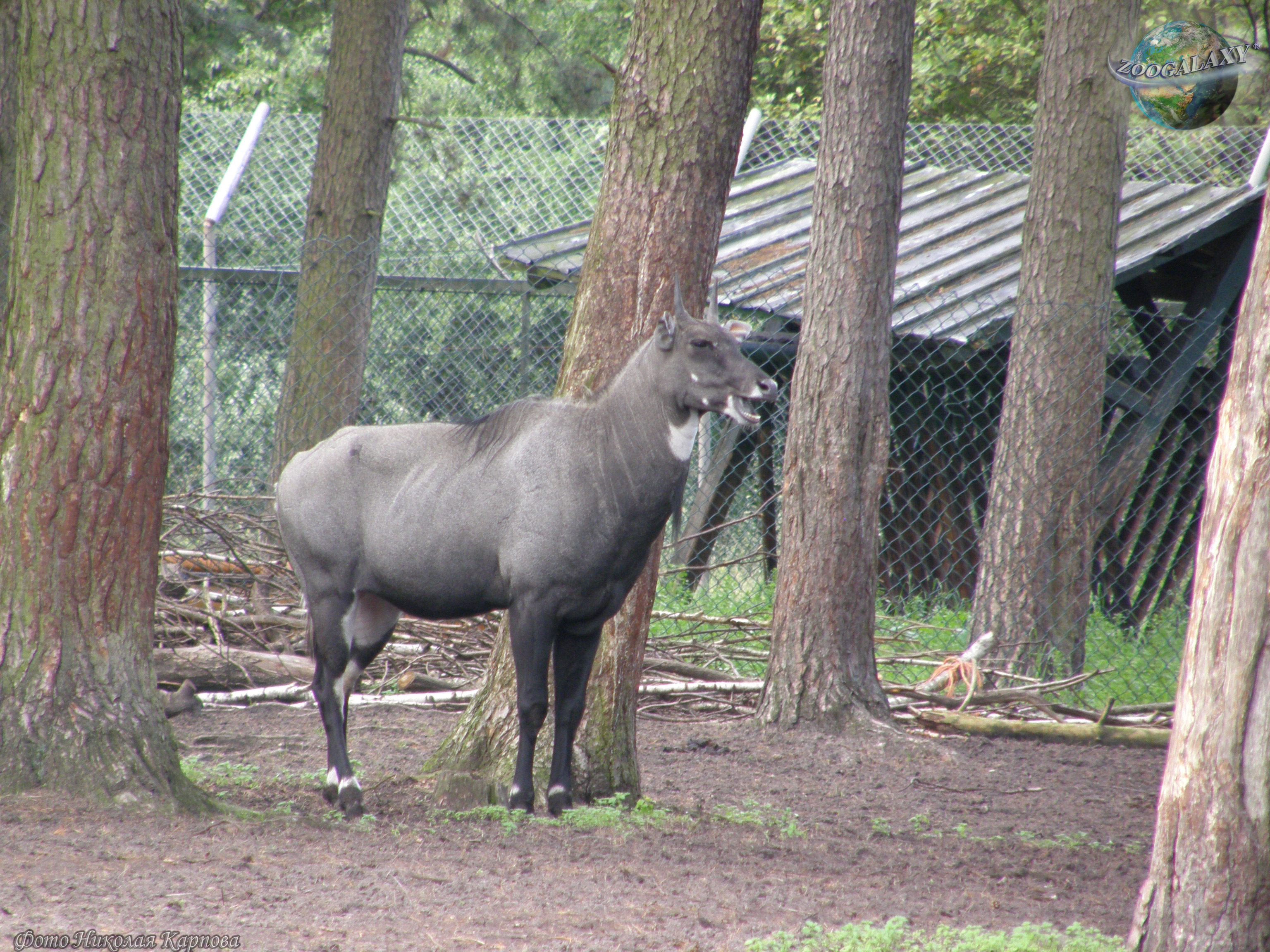
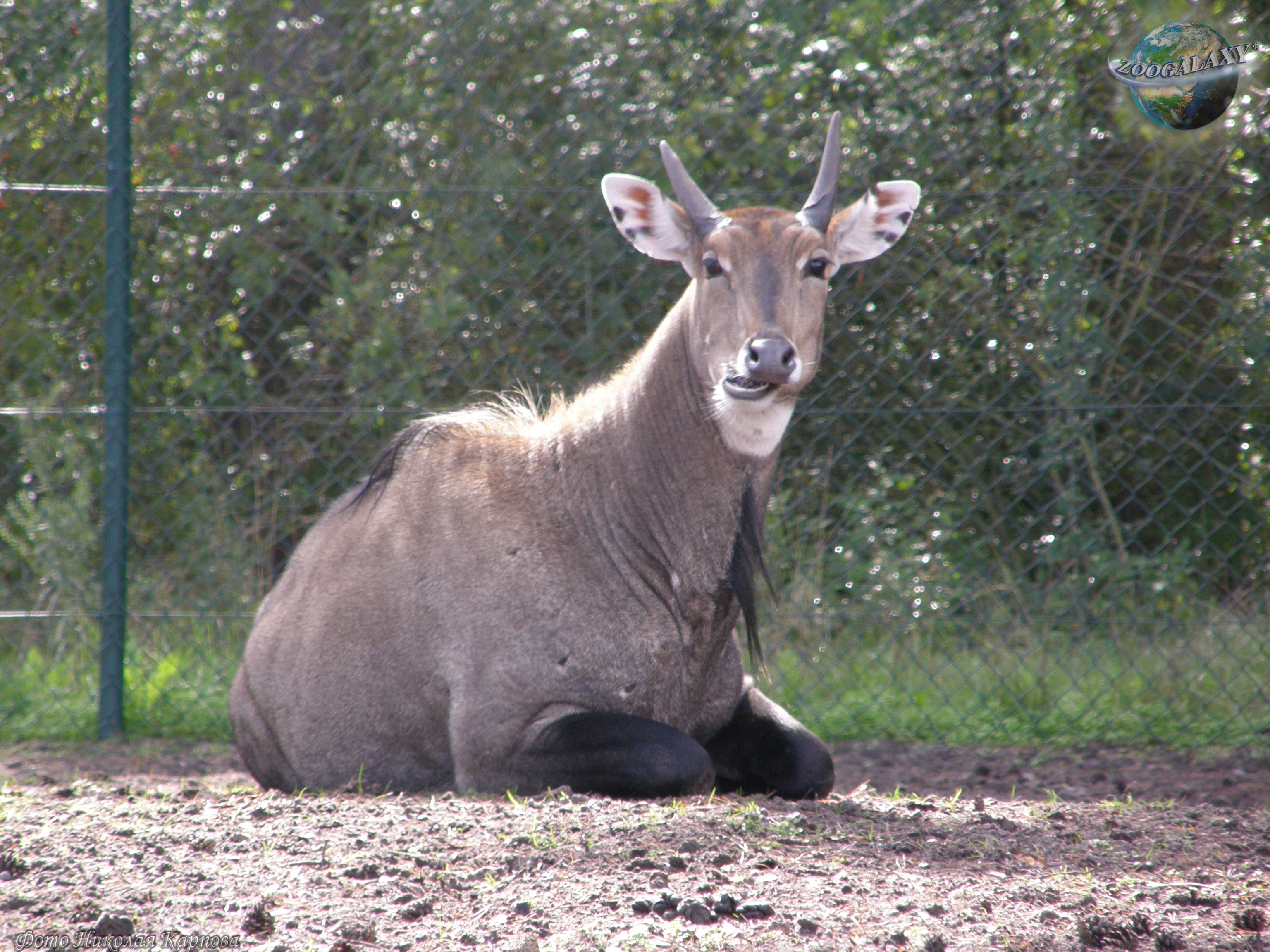
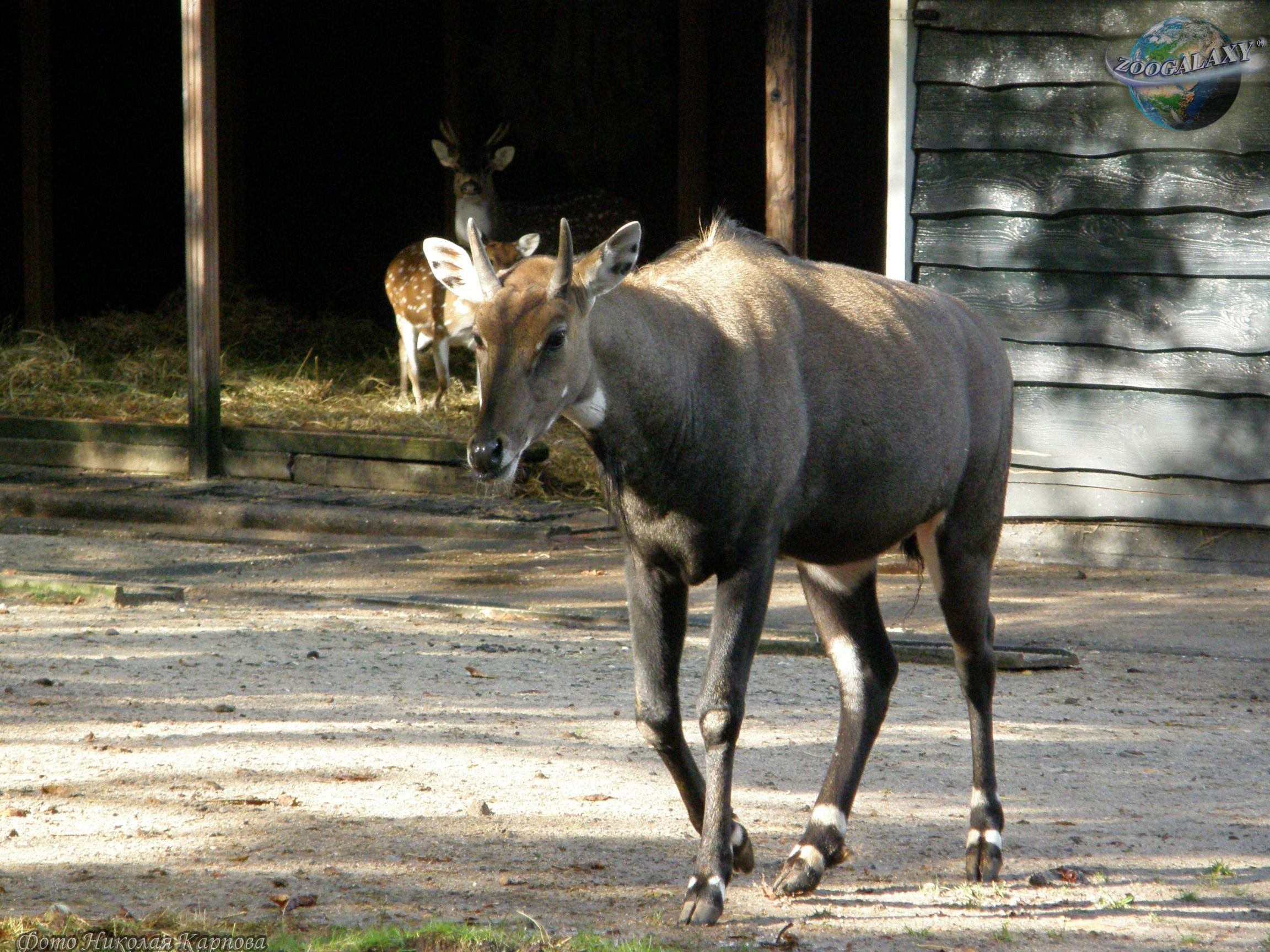
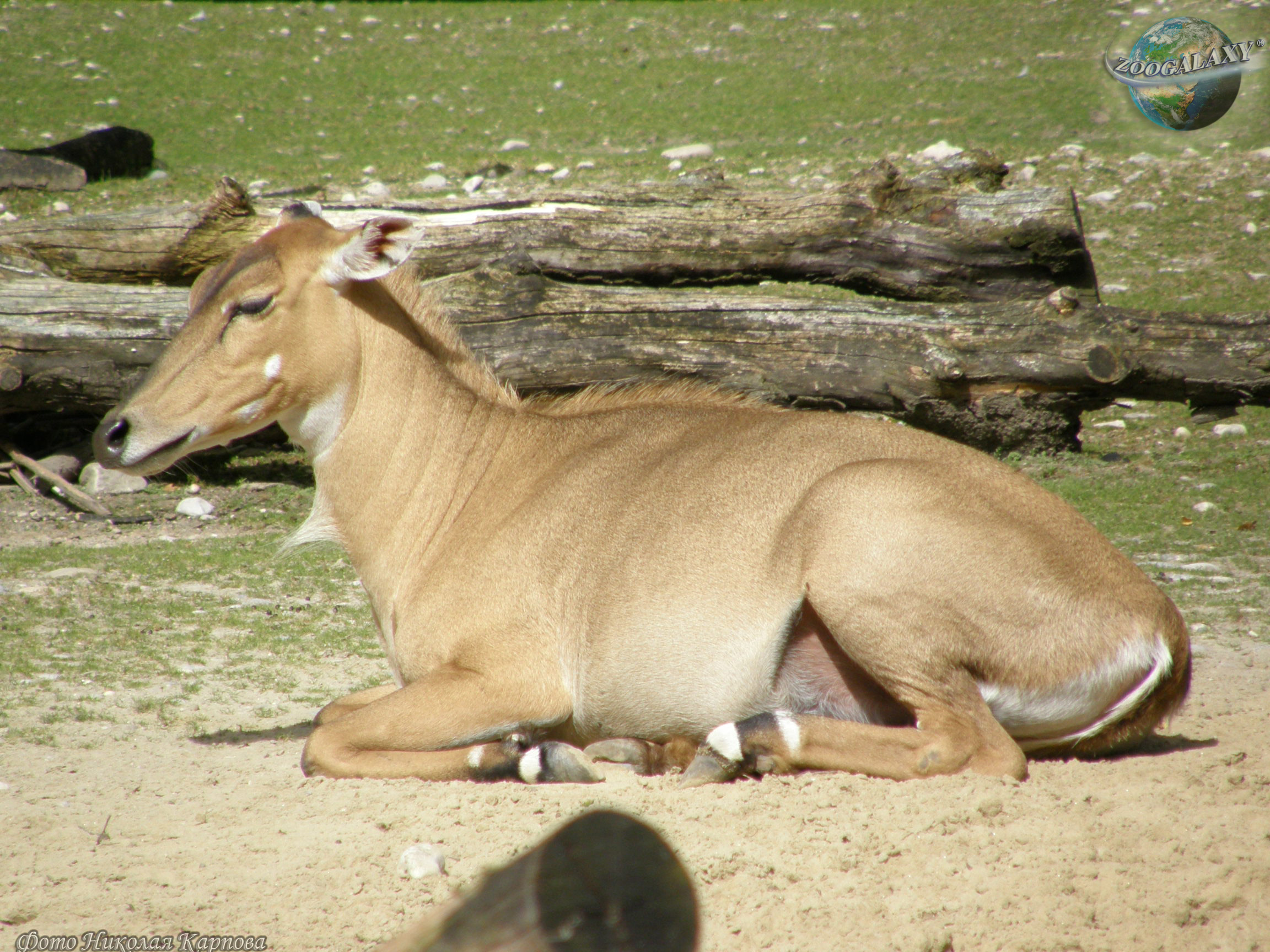
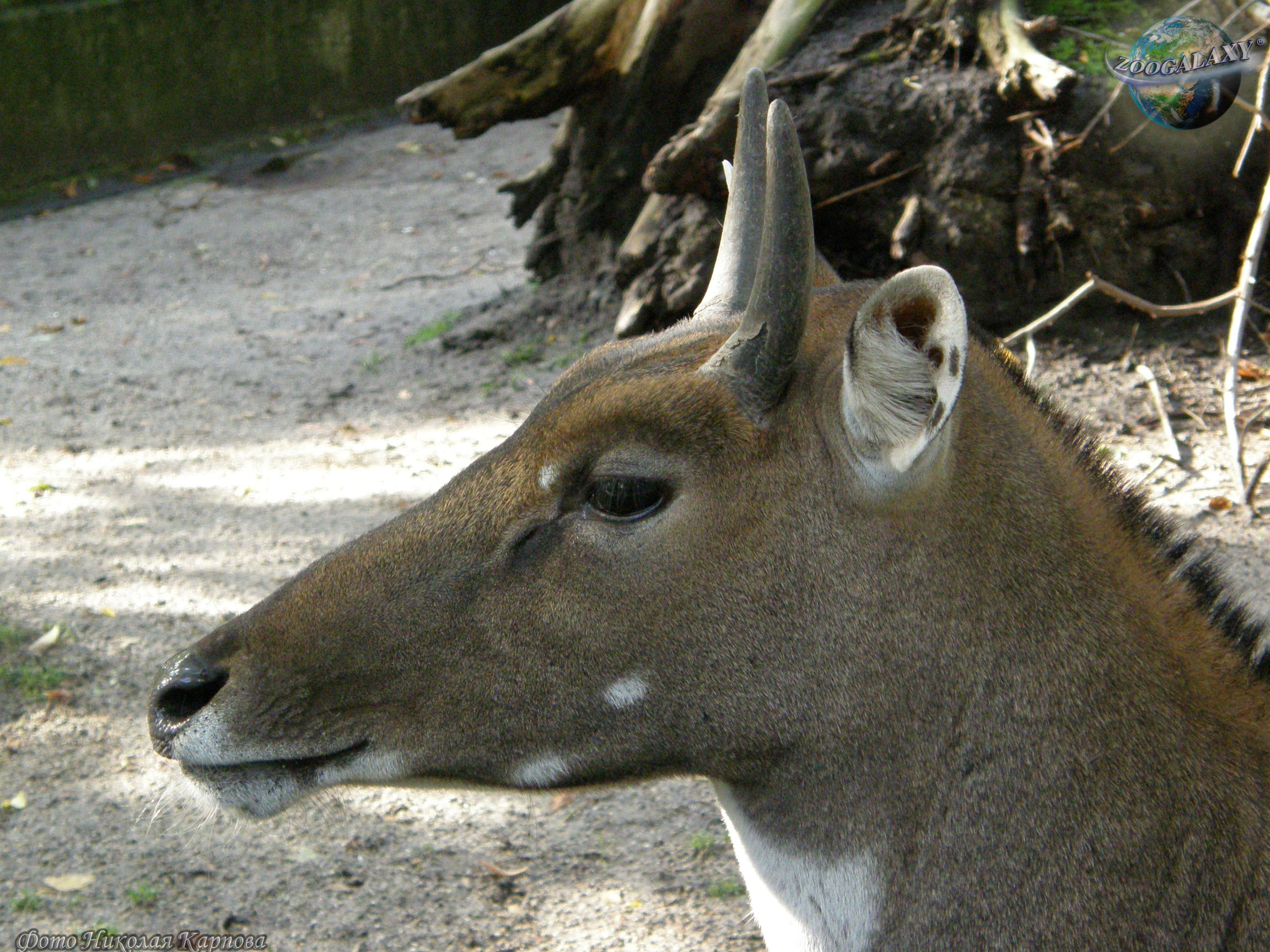
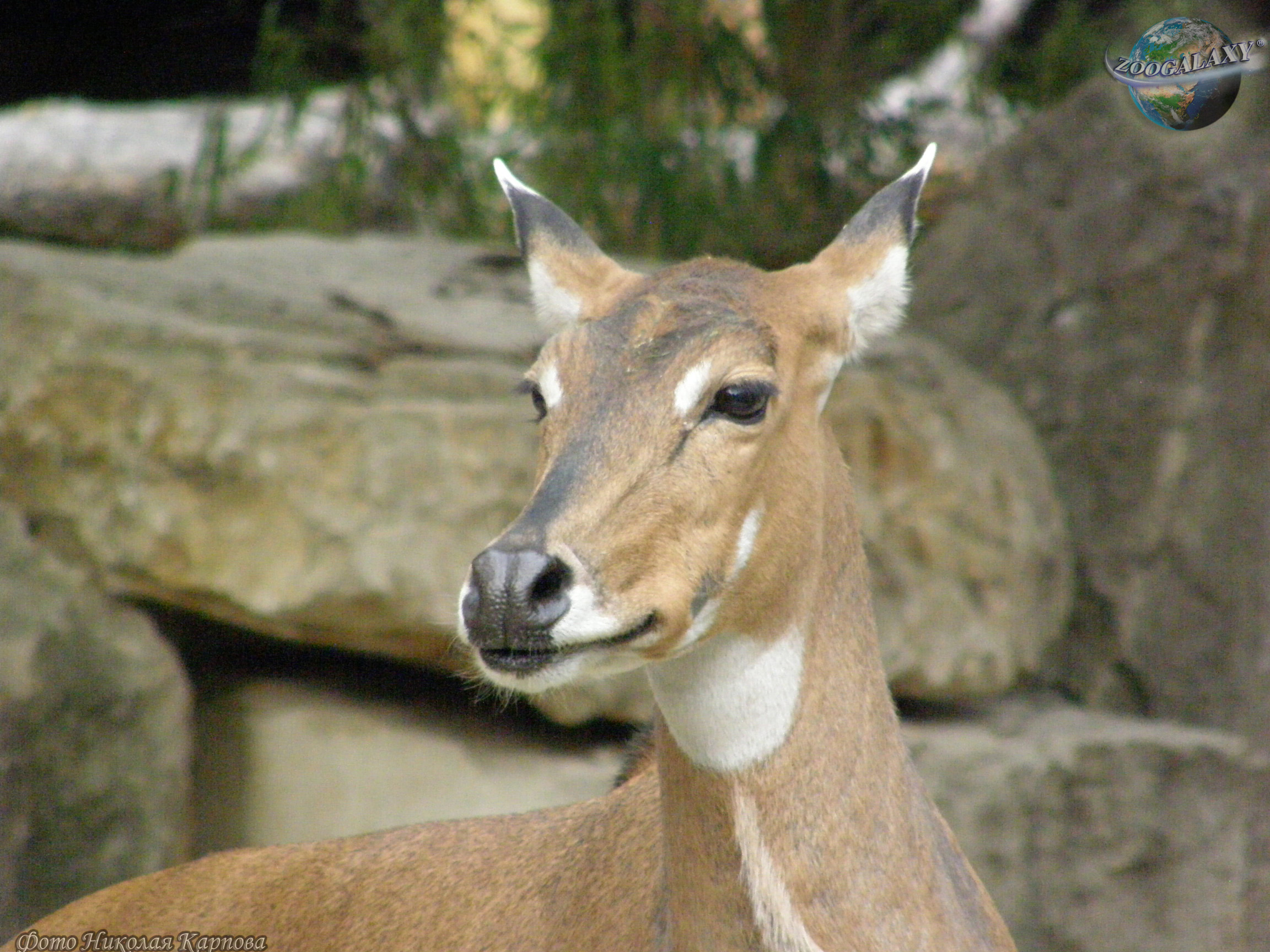
The nilgai is a medium-sized antelope; its body length ranges from 180 to 200 cm, height at the shoulders is 120 to 140 cm and weight, 100 to 200 kilograms. The species name, Boselaphus tragocamelus, reflects bizarre appearance of this animal; it is derived from “bos”, Latin for ox, “elaphos”, Greek for deer, “tragos”, Greek for a male goat, and “kamelos”, Greek for camel. The nilgai is recognized as a member of a special tribe of the family Bovinae, which is most close to buffalos. The nilgai has long, slender legs, thick neck with sagging mane and a tuft of long hairs on the throat, quite short and robust body that slopes down from the shoulders, and a small hump. Males have horns that carry ring-shapes ridges; the horns are black in colour, sharp, and curved; their length reaches about 20 to 25 cm. In contrast to representatives of genus Bos, nilgai females never grow horns. Nilgai antelopes have patches of white on the face, below the chin, and above the hooves. Females’ heads are narrow and elongated, while males have shorter heads with a broad patch of hairless skin on the muzzle. Nilgai antelopes range throughout eastern India, to the south from the Himalayas. They occur in open plains and hilly areas, scrublands, and dry deciduous forests. These antelopes are active mainly in the morning and evening. Nilgai antelopes are usually found in small groups consisting of females and their young but sometimes larger herds of 15 to 20 animals are seen. Adult males are solitary or live in bachelor groups. Nilgai antelopes are feeding on bush leaves and pods; unlike most of other antelopes, nilgai stand up on their hind legs while browsing. They can also consume grass and herbs. Nilgai antelopes do not drink often, relying on the moisture that they obtain from food plants. Breeding season (“rut”) starts in March; males often fight for females during the rut. Fights of the nilgai are peculiar. Short and sharp horns of these animals may be too dangerous if used against the animals of the same species, therefore males rather display to each other by holding their heads forward and necks stretched, with their short manes standing erect. Then the competitors drop to their knees and press their foreheads together, wrestling and pushing against each other with their necks. All those elements are part of the pre-mating display in most of African antelopes belonging to the tribe Tragelaphini. Females also are involved in fighting; they hit the sides of other females with their foreheads which is usually not dangerouos since females do not have horns. Gestation lasts about 8 months and calves are born in December. The females usually give birth to twins, less often to a single calf. In the first days of their lives, the newborns are hiding in the bush tickets.