














The yak Bos grunniens
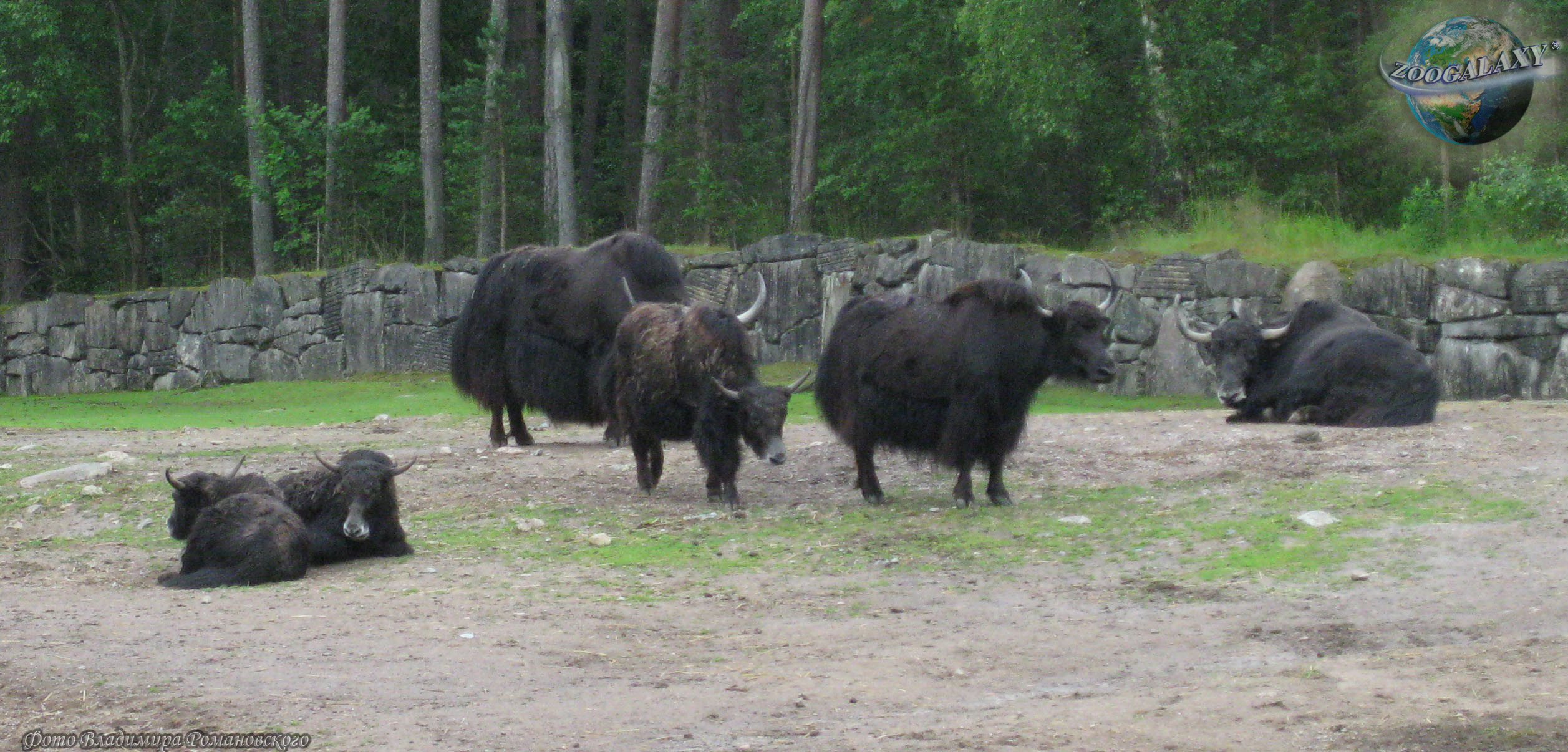
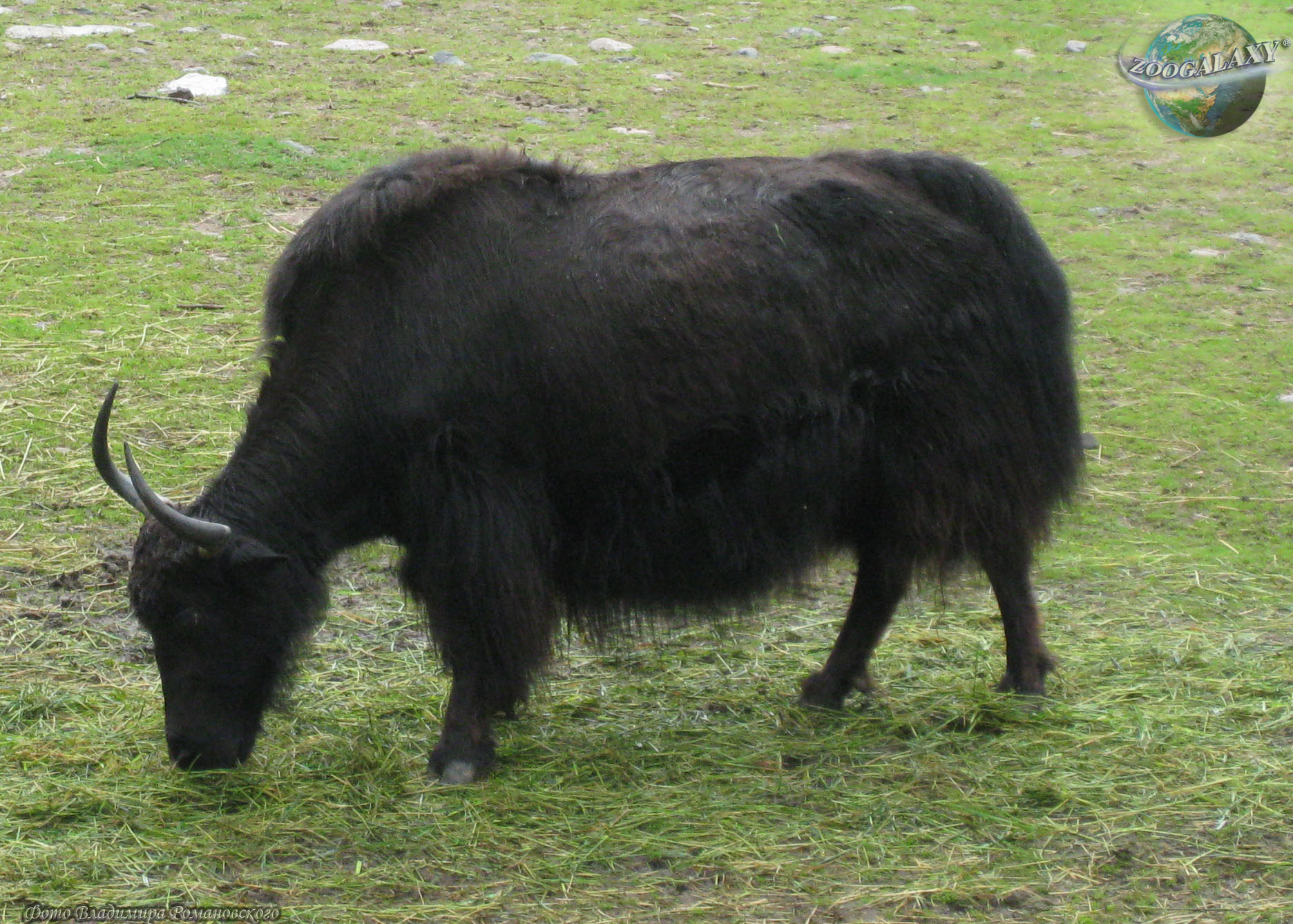
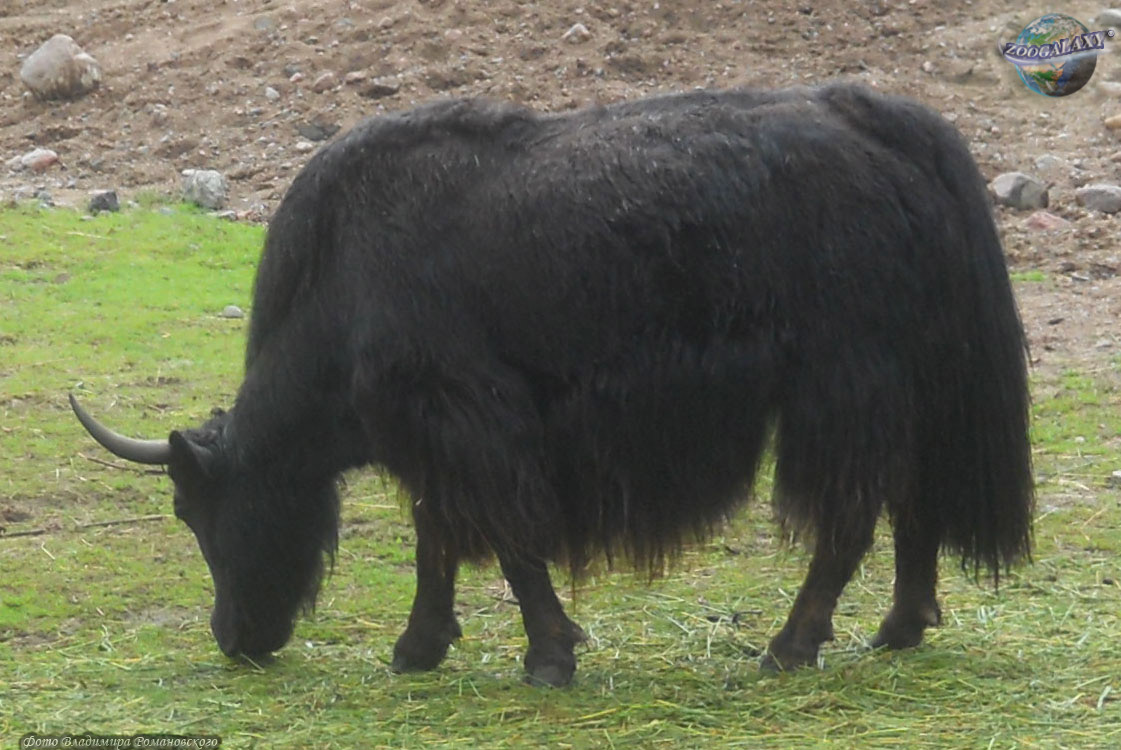
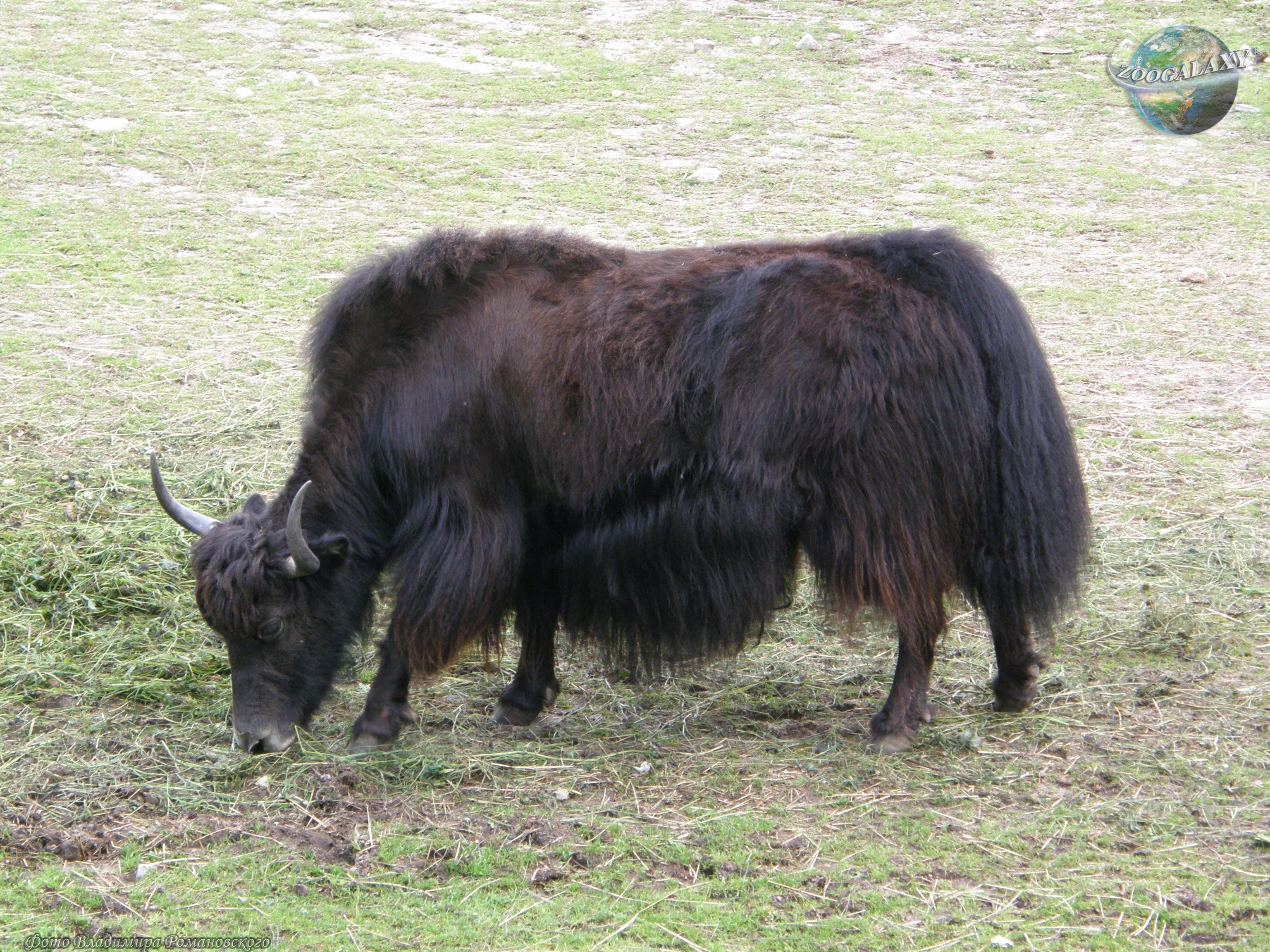
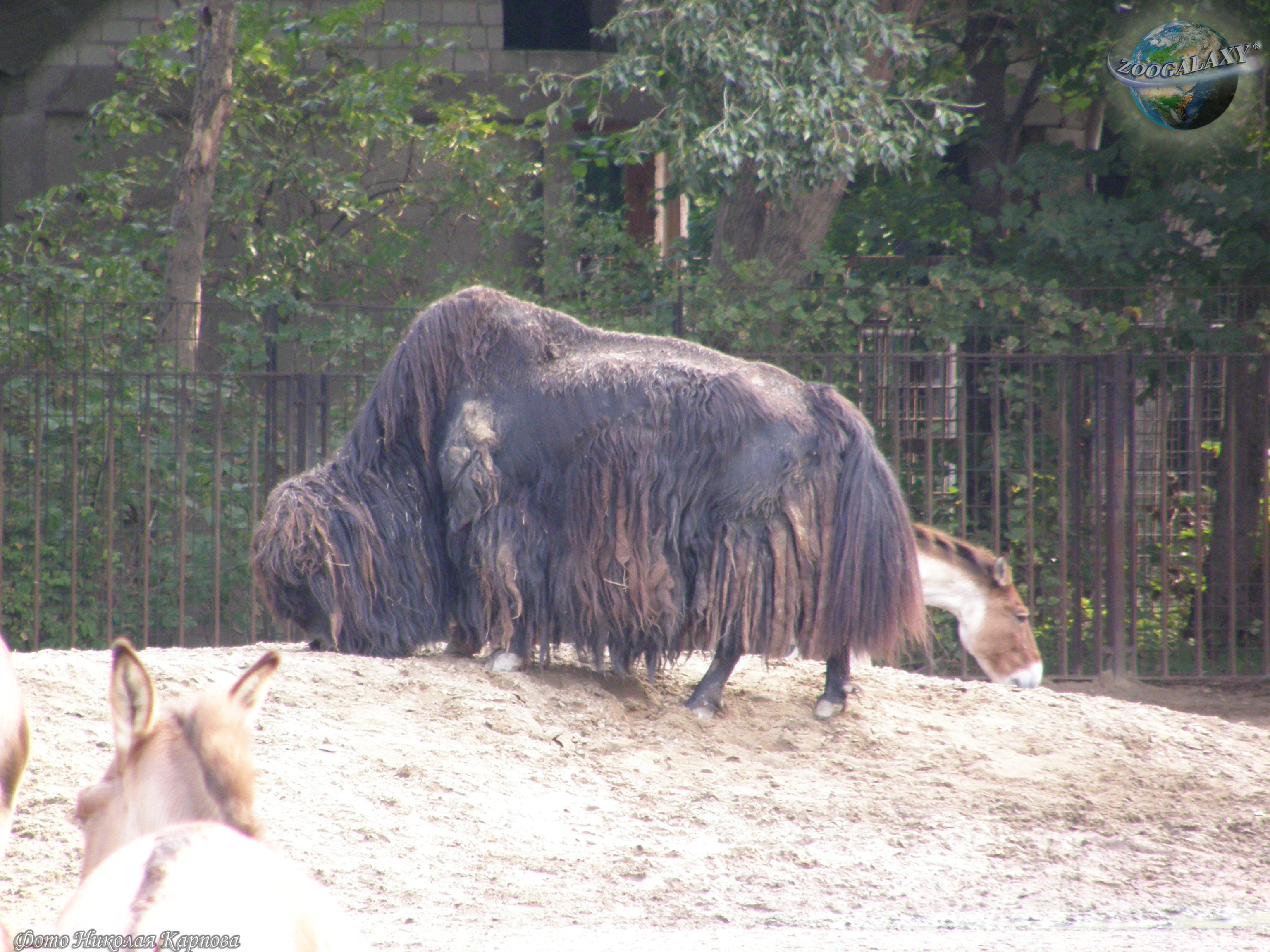
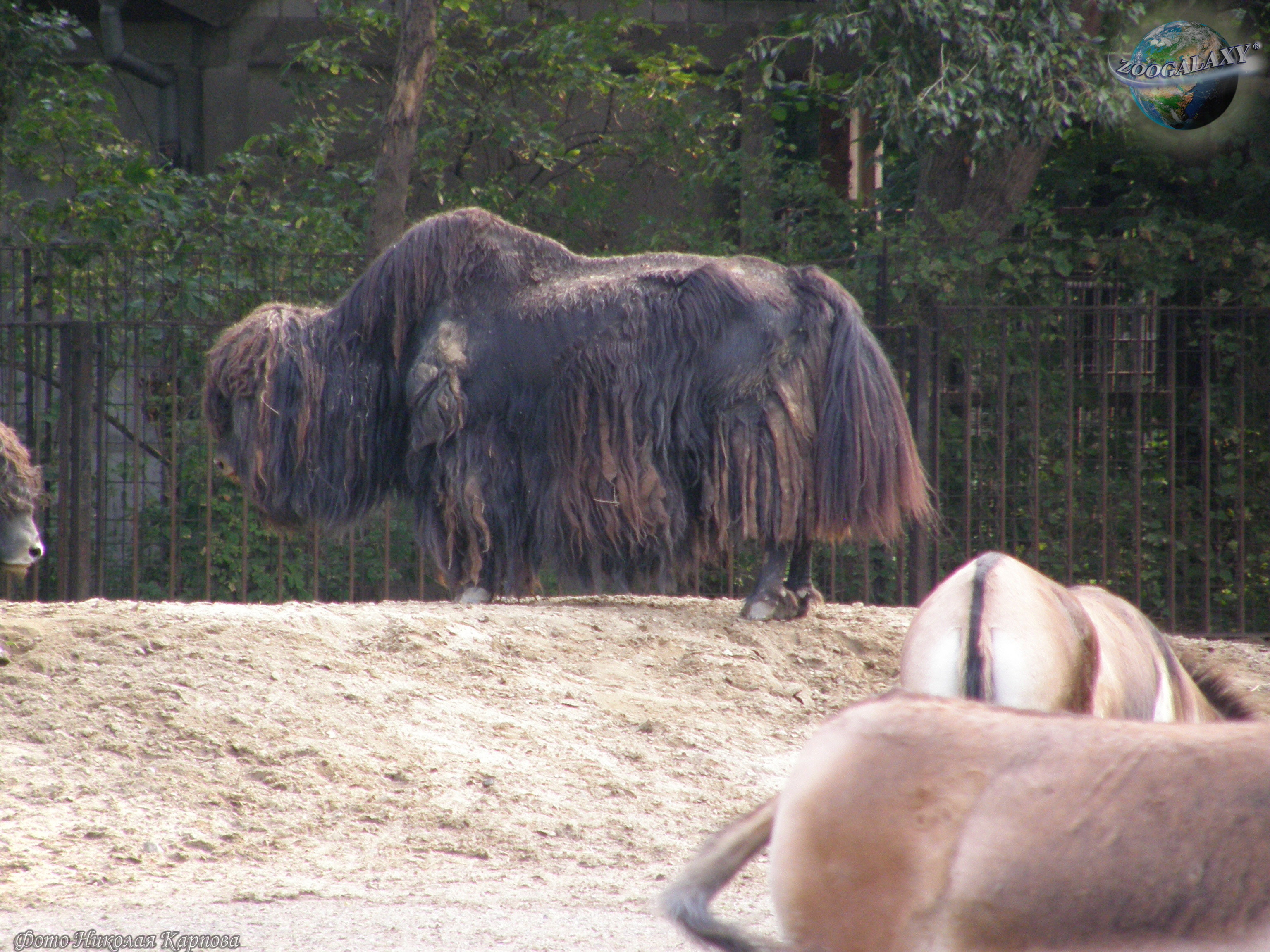
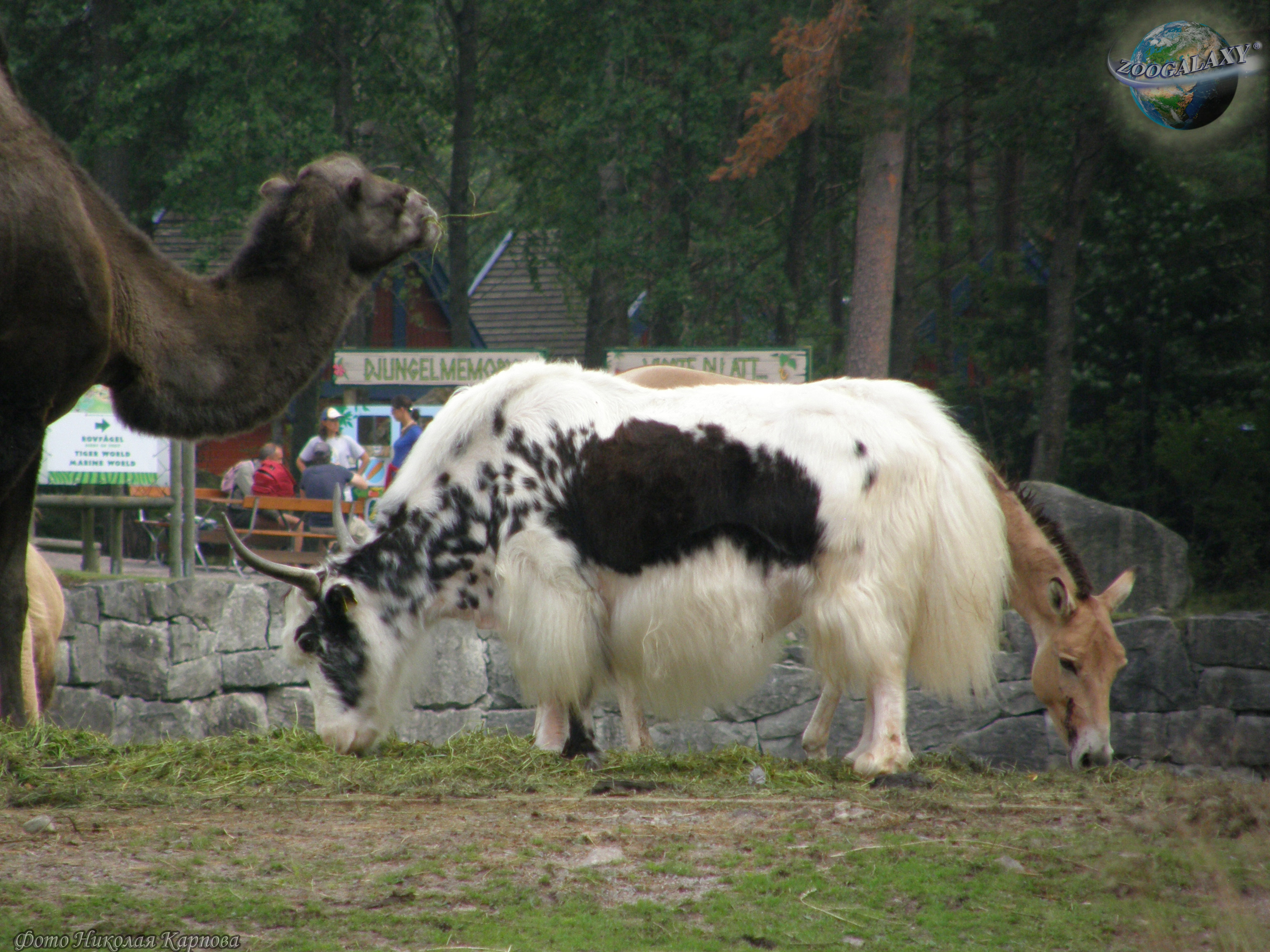
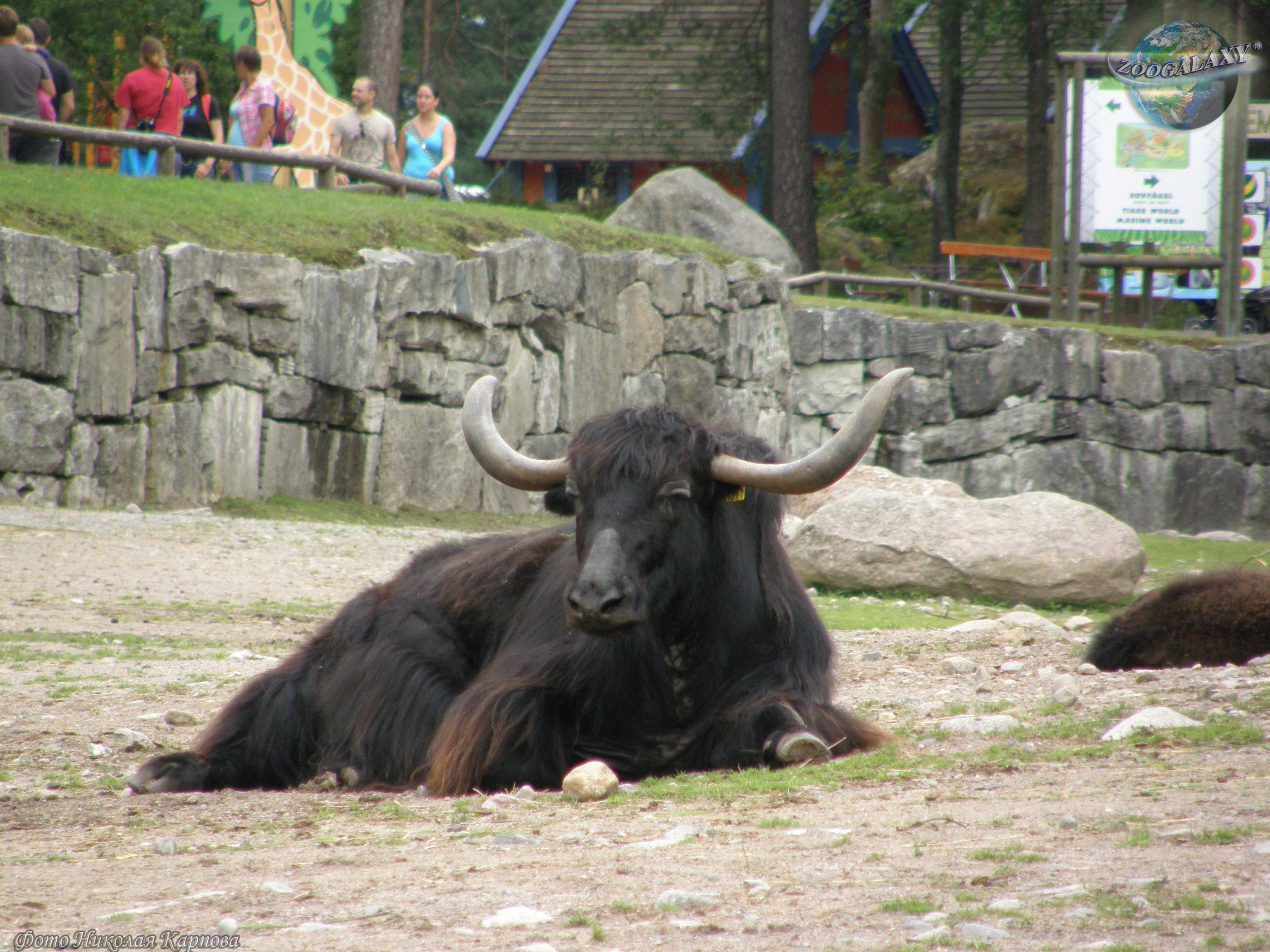
Yaks are very large animals with body length of over 4 meters, sturdy legs with broad, rounded hooves, and heavy, low carried head. The weight of older males can reach one tone, with females being much smaller. The yak has a hump at the shoulders, which makes its back look retreating, and sharp, curved horns measuring 96 to 100 cm in length. The horns are borne by both sexes; in the males, the horns sweep out from the sides of the head, and then curve forward. These animals are found in windy, bitterly cold steppes at altitudes of 5,000 to 6,000 meters above sea level, where the air is thin. Long hair with a dense woolly undercoat protects the yaks from the cold and helps them survive in the harsh climate. The undercoat over the chest, flanks, and thighs form a long "skirt" that can reach the ground (due to this “skirt” yaks can rest on the snow). The yak’s tail also has long, hoarse hair and resembles that of the horse. Yaks have an acute sense of smell but their vision and hearing are less developed. Yaks have narrower muzzle and more mobile lips than cows and sheep, which help them to tear off plants that are not accessible for other cattle species. While grazing in the pastures, especially in winter, yaks eat lower plants that are more nutrient dense than higher grasses (dry sterns). The ability to feed on lower plants is very important for the survival of yaks; it is seemingly an adaptation to scarce, low vegetation of alpine steppes and deserts.
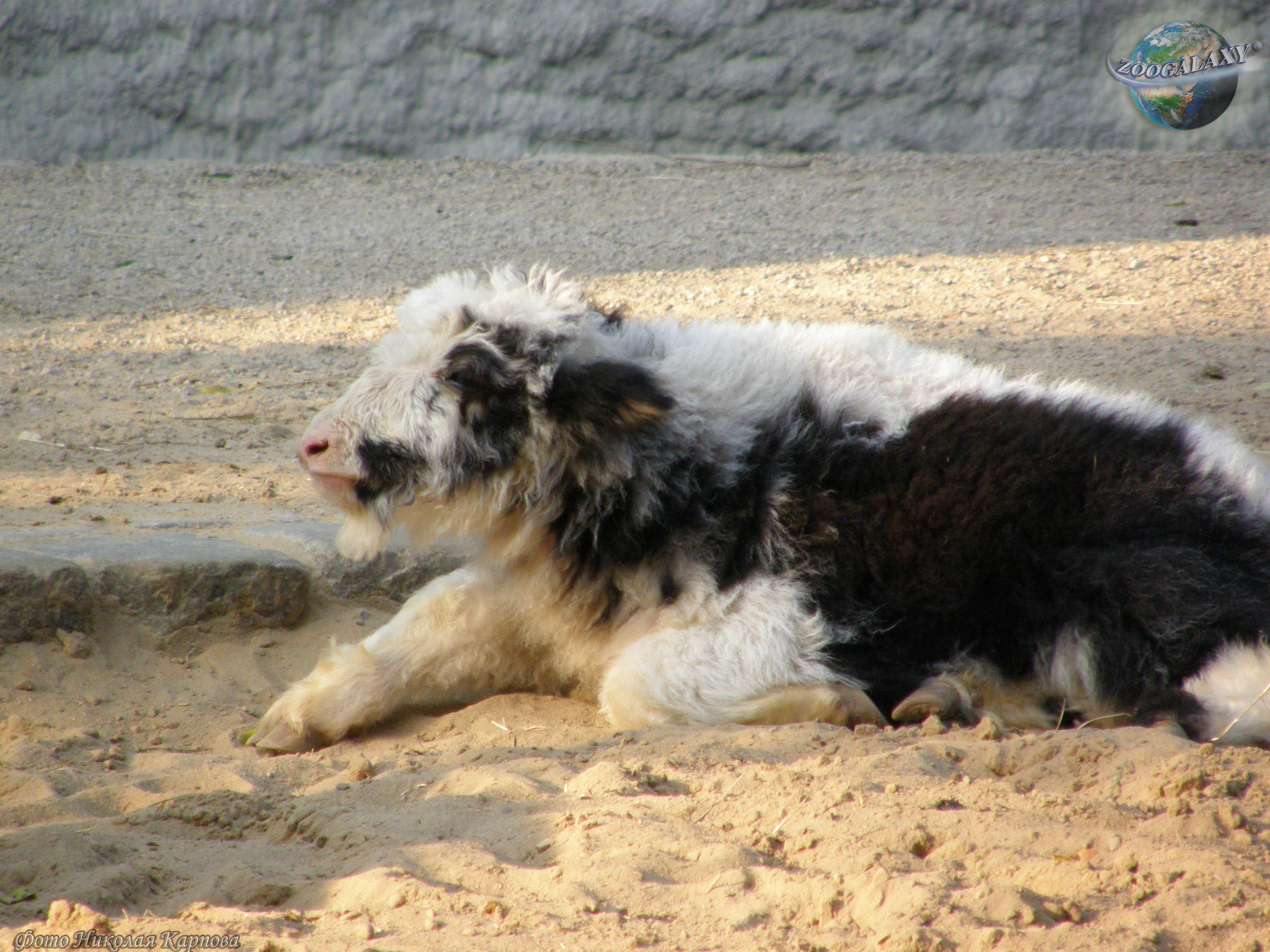
Wild yak was discovered by Nikolai M. Przhewalski as late as in 1883. Unfortunately, wild yaks have limited tolerance for disturbance caused by people and their livestock, therefore their range is reducing and the population is decreasing. The yak is included in the IUCN Red List of Threatened Species as “vulnerable”. At present, this species only occurs in scattered populations on the Tibetan Plateau, at altitudes of 4,000 to 6,000 meters above sea level. The world population of yaks is less than several thousand animals. In August and September yaks move to the high plateaus above the snow line to get away from the heat, spending winter in the valleys where they feed on sparse vegetation, digging food plants from under the snow. These mountain ungulates live in family groups or in small herds of 10 to 12 animals; adult males are solitary or form small bachelor groups. Some reports suggest that in the past, yaks sometimes gathered in very large herds numbering up to 1,000 individuals. During the rut, males regularly fight among each other to establish dominance and try to hit their competitors with their horns. Gestation length is 258, which is 30 days shorter than gestation length in the cows of domestic cattle. Probably, shorter gestation length and lower weight of the newborns are the adaptations to the life in harsh conditions of high mountains. Shortly before calving, yak female separates herself from her herd and finds a dry shelter, where the calf will be born. After the calf is born, the female immediately licks it over, which is important for restoration of the blood circulation and breathing under low temperatures. The newborn is able to stand up in 20 to 25 minutes after the birth and in 3 or 4 days will follow its mother who moves over quite long distances in search of food. The calves stay with their mothers for one year. Since adult yaks are very strong and savage, wolves would only attack them in deep snow, when these carnivores gather in large pack. If it happens, yaks would arrange an all-round defence, with calves staying inside the circle.
Yaks were domesticated as early as in the 1st Millennium BC. There are two recognized species of the yak, wild yak (P. mutus) and domestic yak (P. grunniens); when these species are considered as a single taxon, the Latin name of the domestic yak is used because the domestic yak was described earlier than the wild yak. These animals are still ridden and used as beasts of burden. Strong and hardy, yaks easily walk along mountain paths and snowy mountain ridges, carrying 120 to 140 kilograms of burden. People also use milk, fur, and meat of yaks. Yak milk is very thick and reach in proteins and fat (fat content is 3.8% to 10.8%). Annual shear of yak fur is about 3 kilograms; the fur of the adult animals is used in making blankets, tents, etc. Besides, in some areas where firewood is particularly sparse, the yak dung is used as an important fuel.