














African buffalos Syncerus caffer
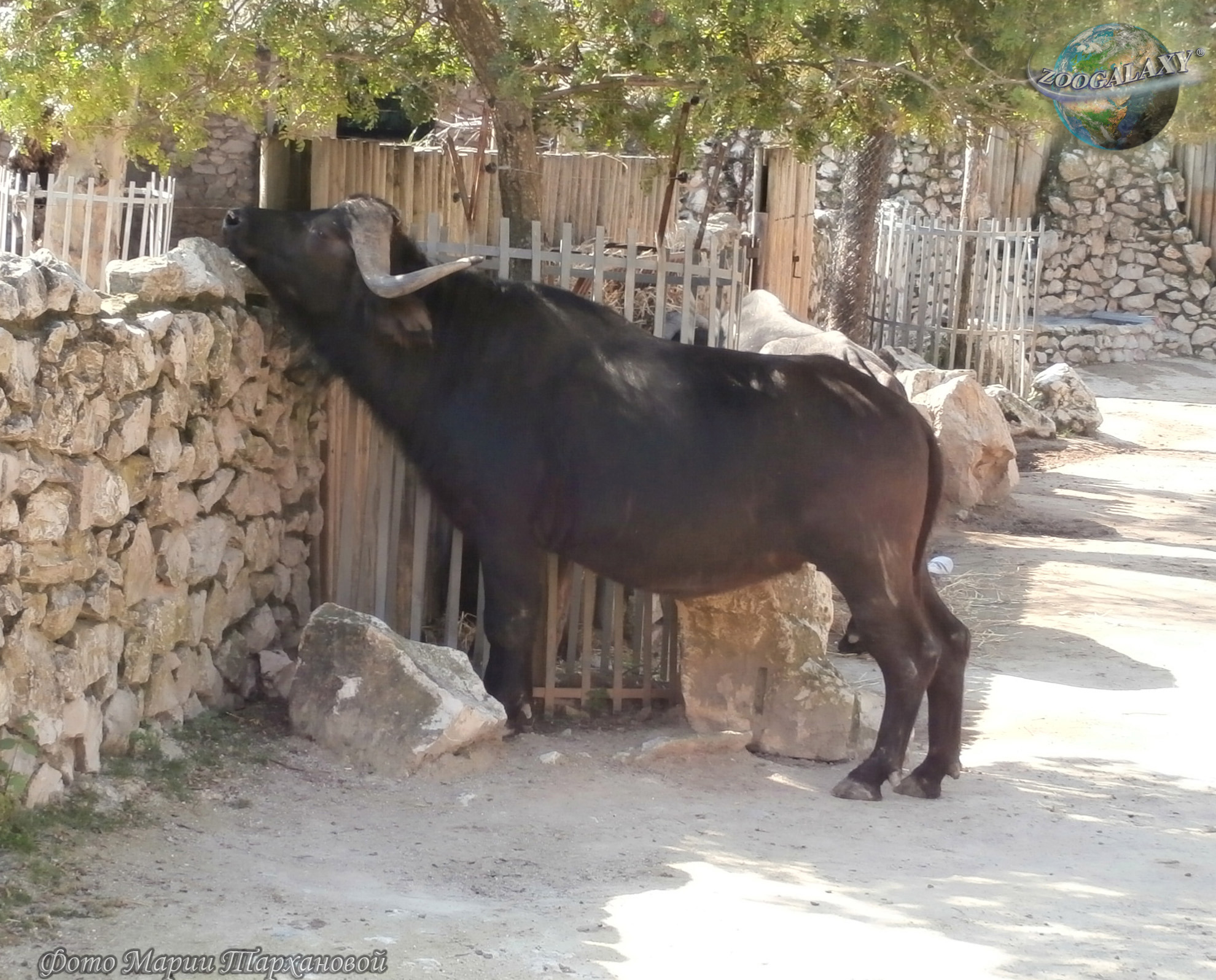
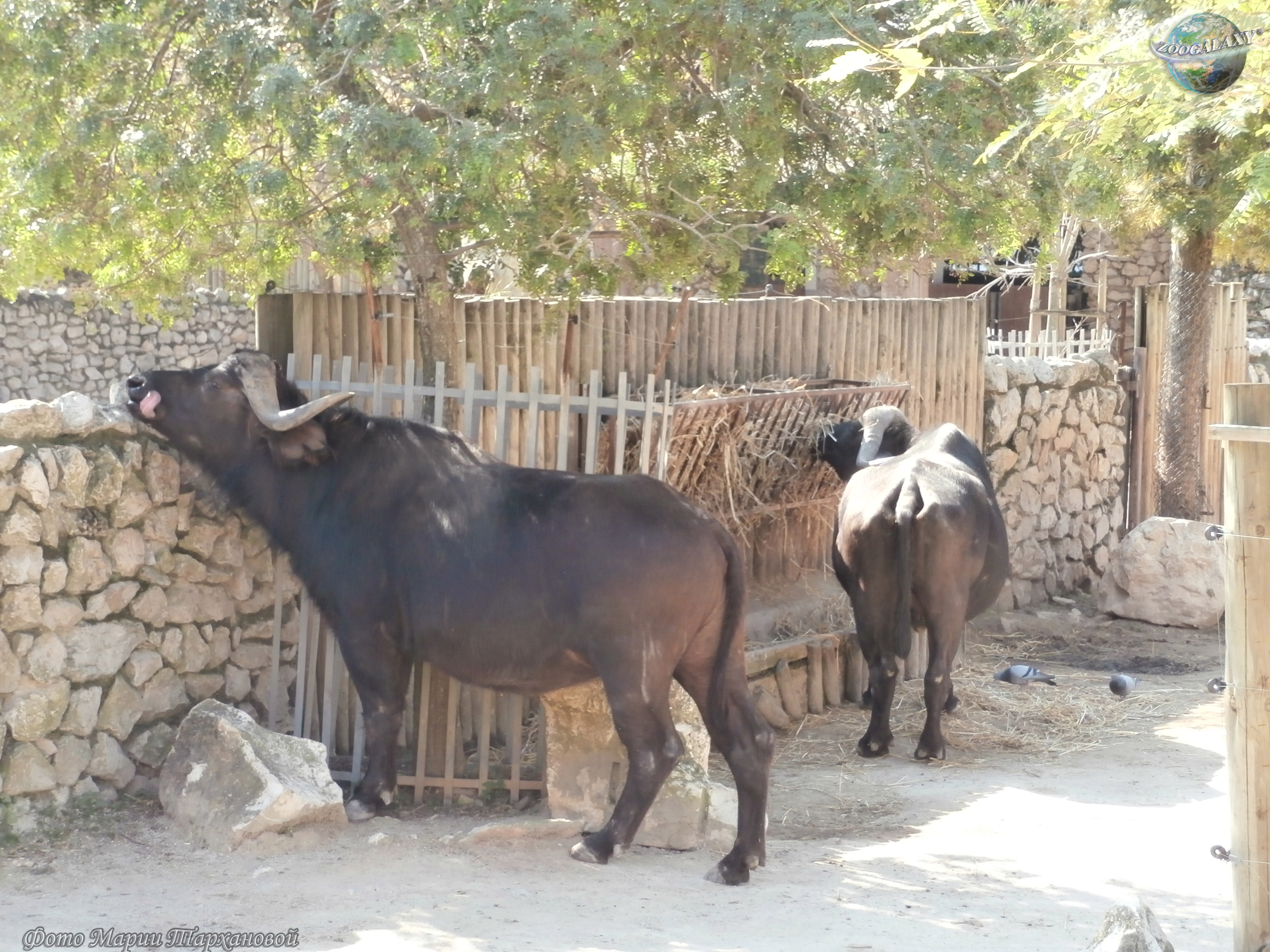
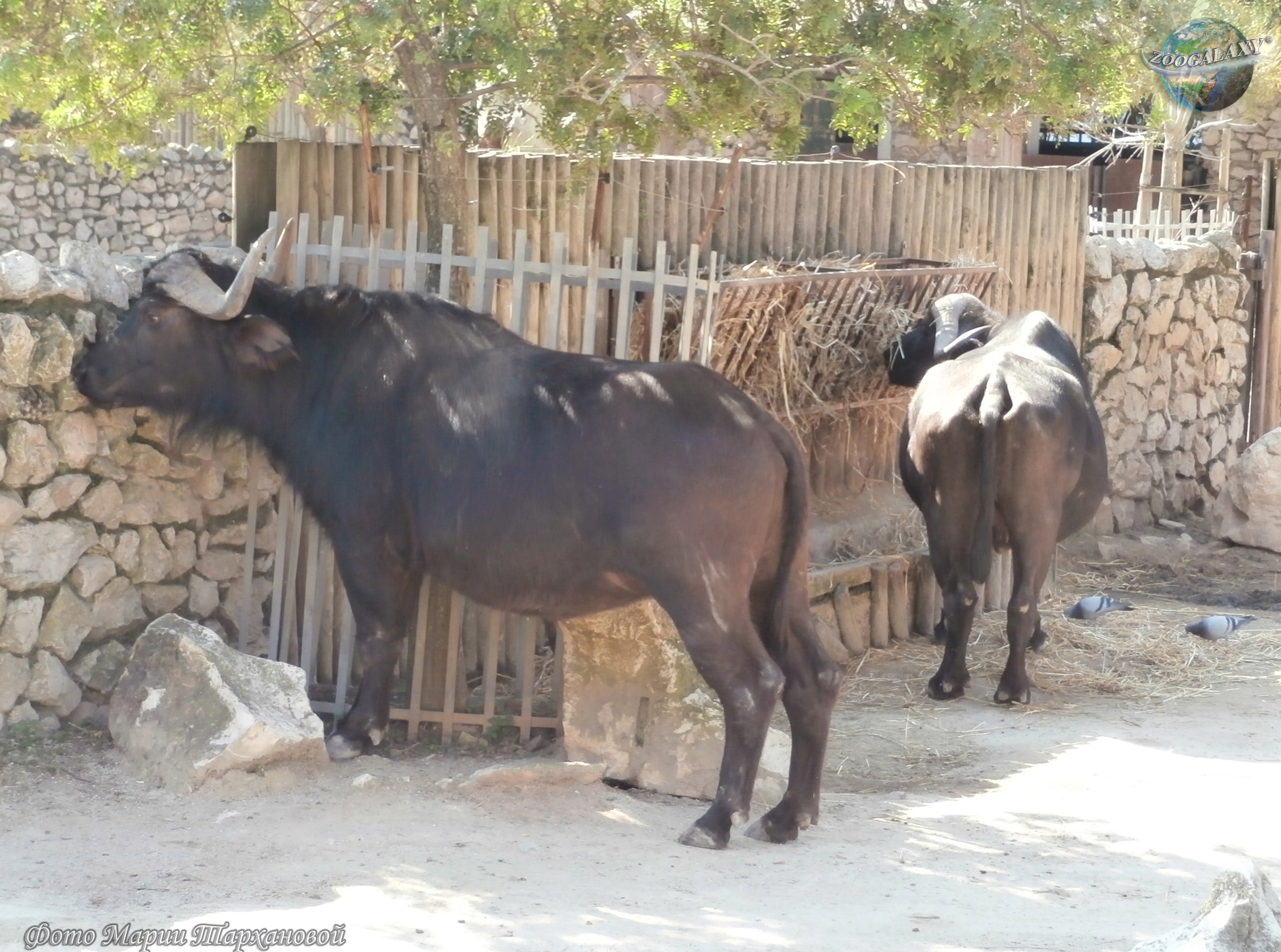
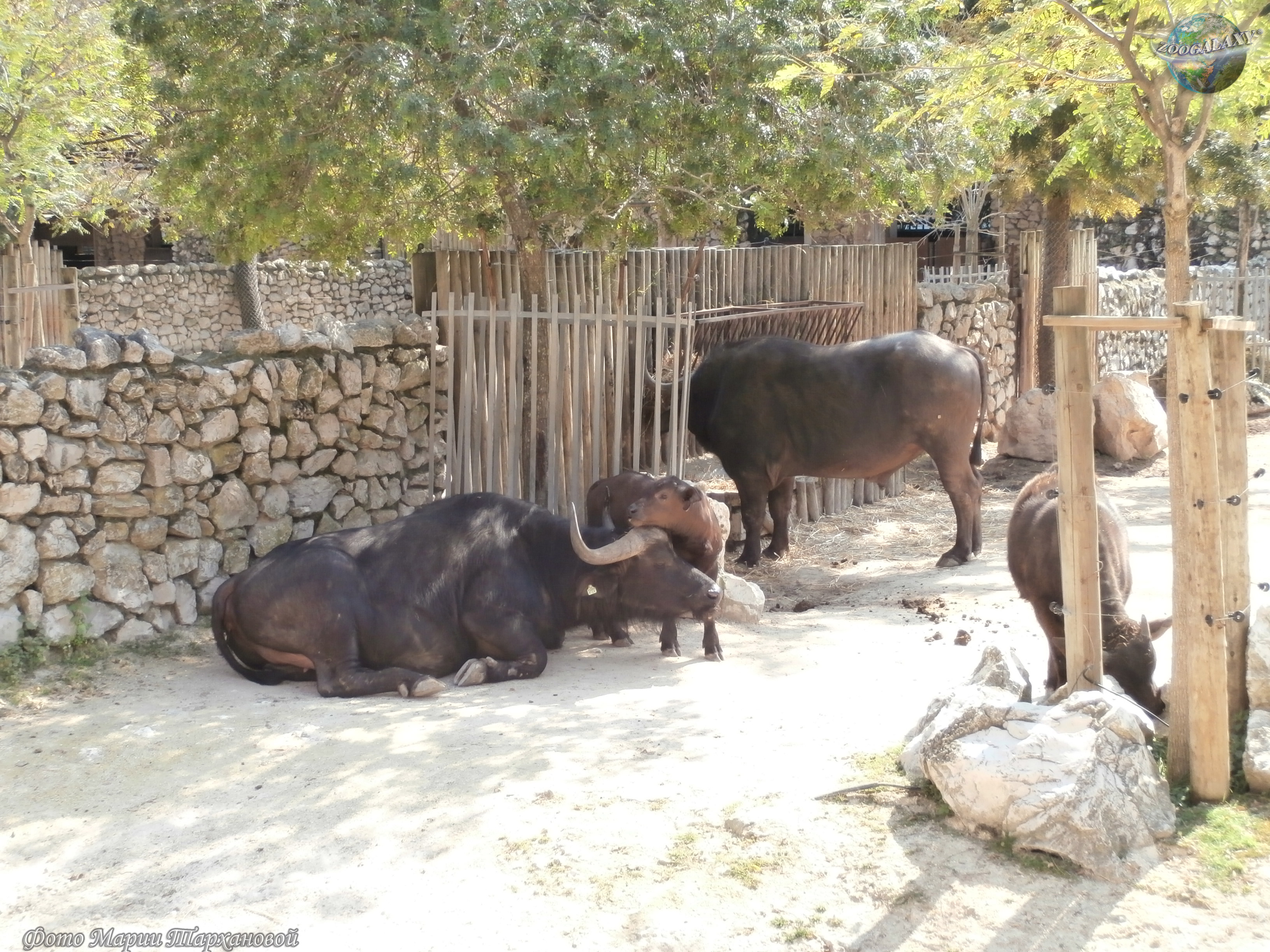
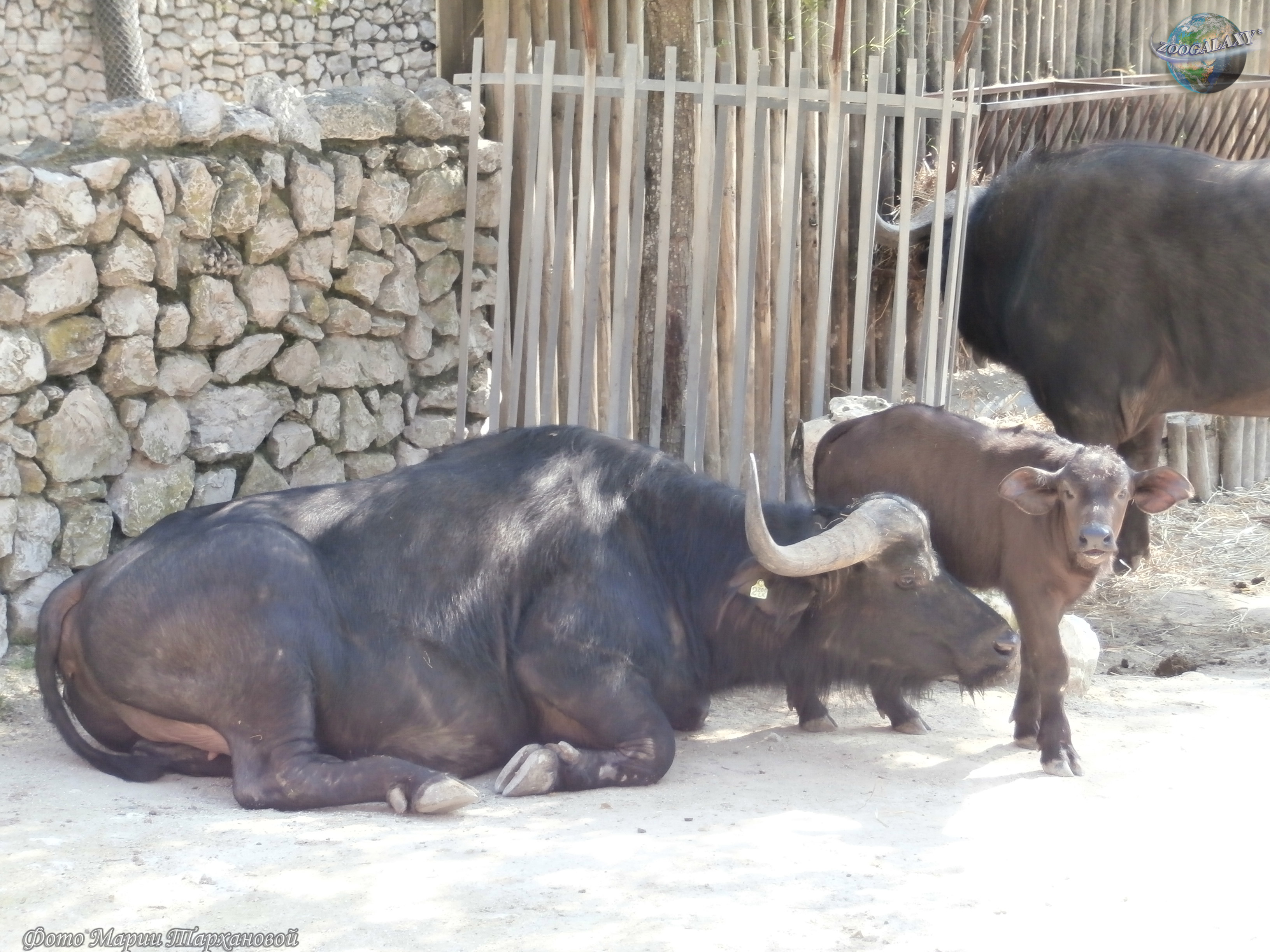
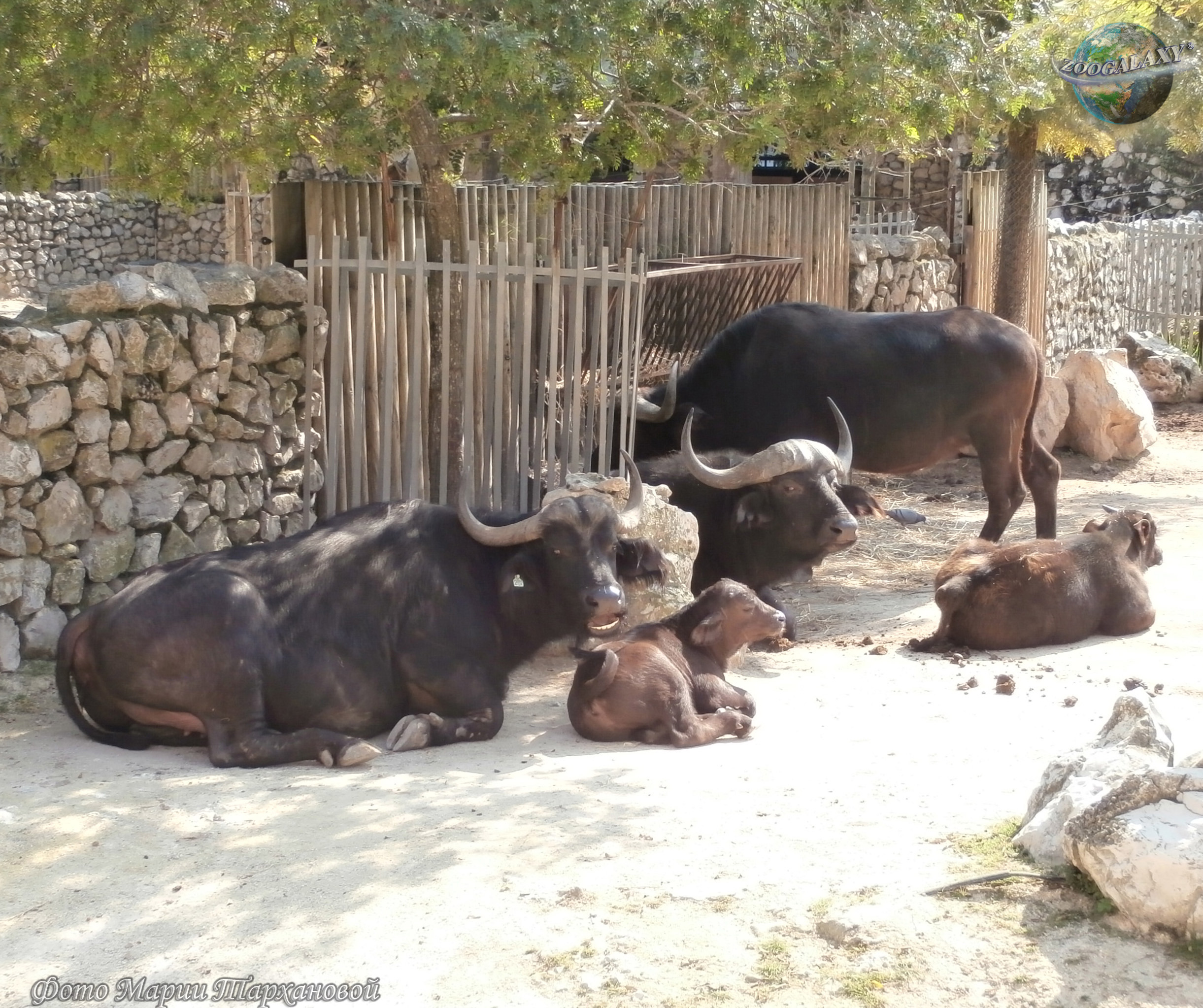
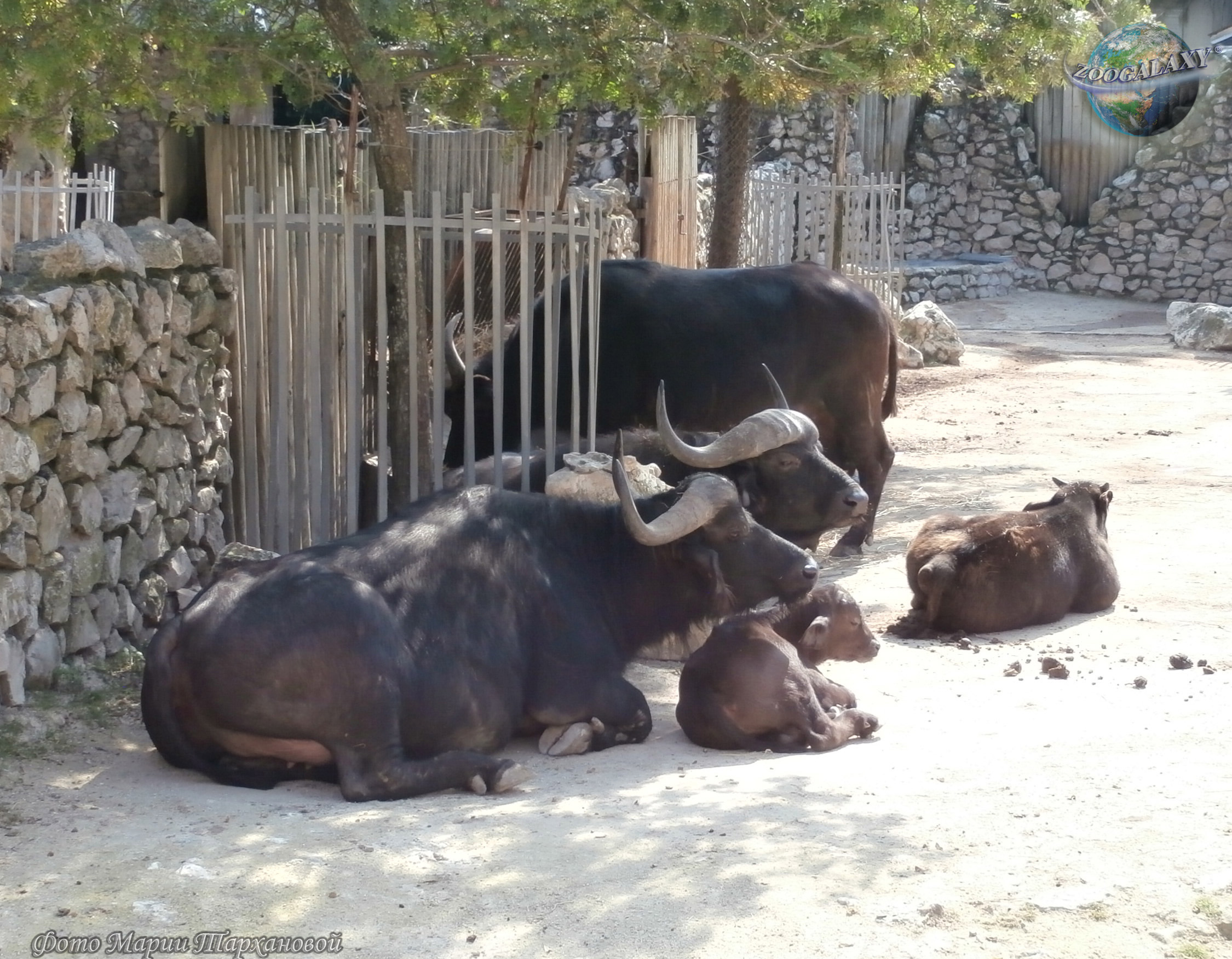
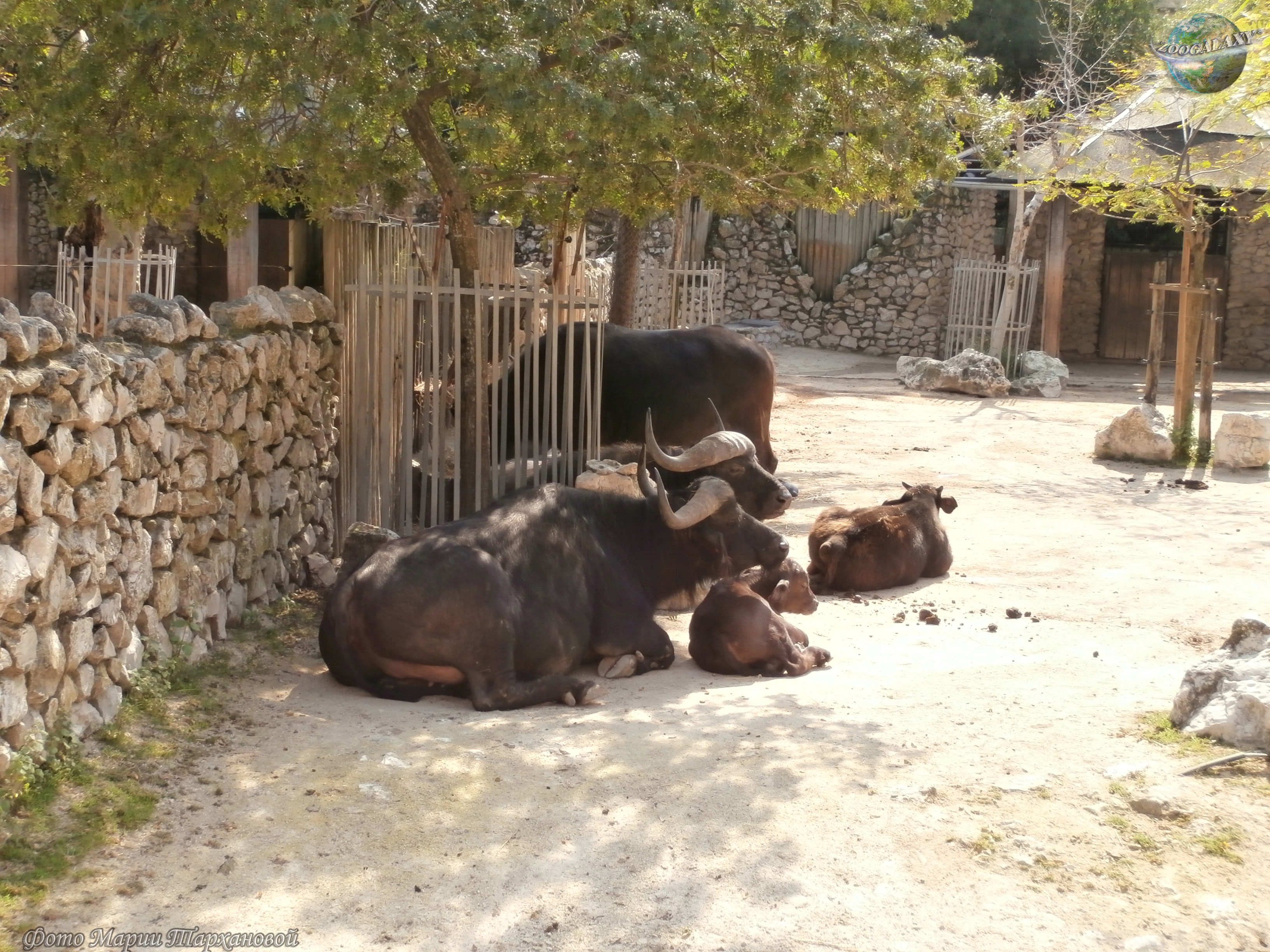
The African buffalo, or the Cape buffalo, is widespread in Africa. It is the largest of all African Bovids; the weight of adult males reaches 900 to 1,000 kg, and some old bulls may weigh as much as 1,200 kg. These giants stand 1.8 meters at the shoulders and have body length of 3 to 3.4 m. The African buffalo has stocky body with the hindquarters slightly higher than the shoulders. Its head is carried low, with the top being located below the backline. The front hooves of the buffalo are wider than the rear, which is associated with the need to support the weight of the front part of the body that is heavier and more powerful than the back. The Cape buffalo has a long tufted tail and large ears covered with long hairs. The horns of the African buffalo are very peculiar; the horns of adult animals have fused bases, forming a continuous bone shield, which can not always be penetrated even by a rifle bullet. From the base, the horns diverge, then bend down, and then smoothly curve upwards and outwards. The distance between the ends of the horns of large bulls may be more than a metre. The horn bone shield in the young buffalos forms fully only after the animals reach the age of five to six years. In cows, the horns are, on average, 10–20% smaller, and the bone shield is usually absent. The African buffalo has rather weak vision and therefore relies on its strongly developed sense of smell and hearing.
The Cape buffalo is adapted to various biotopes, from dense rain forests to open savannahs and mountains. Most numerous populations are found in the savannahs with perennial availability of lush grass and shrubs. The Cape buffalo is selective grazer that requires a wide selection of grasses with high fibre content. These animals prefer feeding on a number of grass species and switch to different foods only when the preferred grasses are not available. Shrub leaves and browses comprise 15% of the total amount of food. The African buffalo depends on water and avoids arid areas. These social animals usually occur in herds of 20 to 30 individuals but in periods of droughts, they may form herds consisting of up to several thousand individuals. There are different types of African buffalo herds. Mixed herds comprising both bulls and females with their calves are most common. Besides, the bulls can gather in separate bachelor herds consisting of either males aged four to seven years, or of the bulls older than 12 years. African buffalo herds are usually stable communities that can live in the same territories for dozens of years. An average size of the African buffalo herd living in the Kafue River valley is about 450 individuals.
During the breeding season, the males demonstrate fighting displays, which rarely result in severe injuries. At the beginning, the bull will try to scare his competitor by approaching him with raised head, roaring, snorting, and digging ground with his hooves. Then the bulls stand at some distance from each other. If the demonstration does not work, they clash the bases of their horns. After a number of blows, the weaker bull surrenders and runs away, with the winner almost never chasing the loser. During the rut, the bulls become ferocious and can attack other animals or humans.
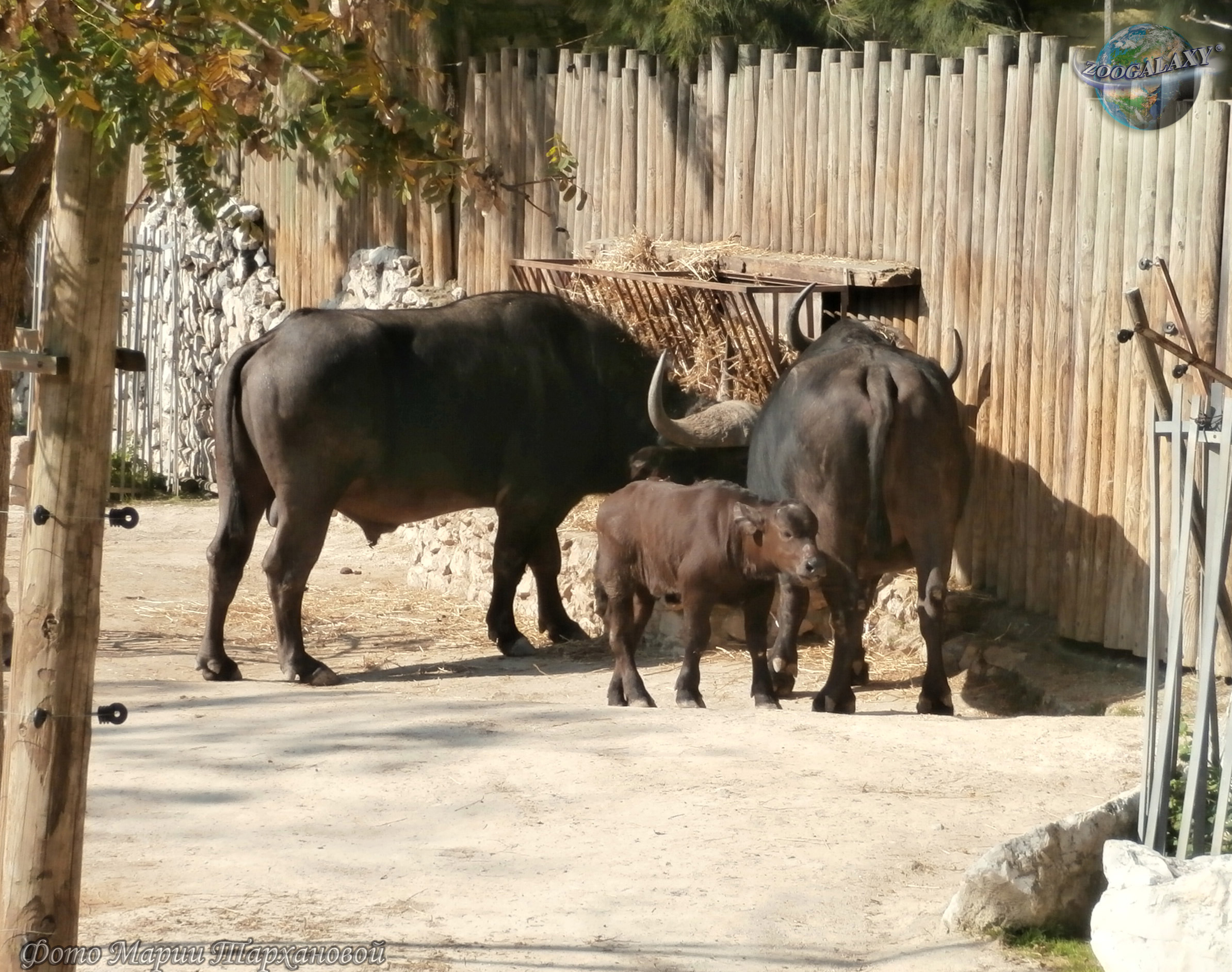
Gestation lasts 10 to 11 months and usually results in the birth of a single calf; the calf has reddish-brown coat that serves a perfect camouflage on the background of the orange soils of African savannahs and forests. The newborn weighs about 40 kg and is able to follow its mother in 15 minutes after birth. In the first days of its life, the calf consumes about 5 liters of milk per day. The calves are not weaned until they are six months old but they start grazing on grass at the age of one month. The calves grow quickly although they are fully grown only by the age of 10 years. Females reach sexual maturity at 3 years of age but their first calf is born after the females are 5 years old. Males separate from their mothers when they are two to four years old; females stay in their family herd for all of their lives.