














North American river otter (Lontra canadensis), the northern river otter and river otter

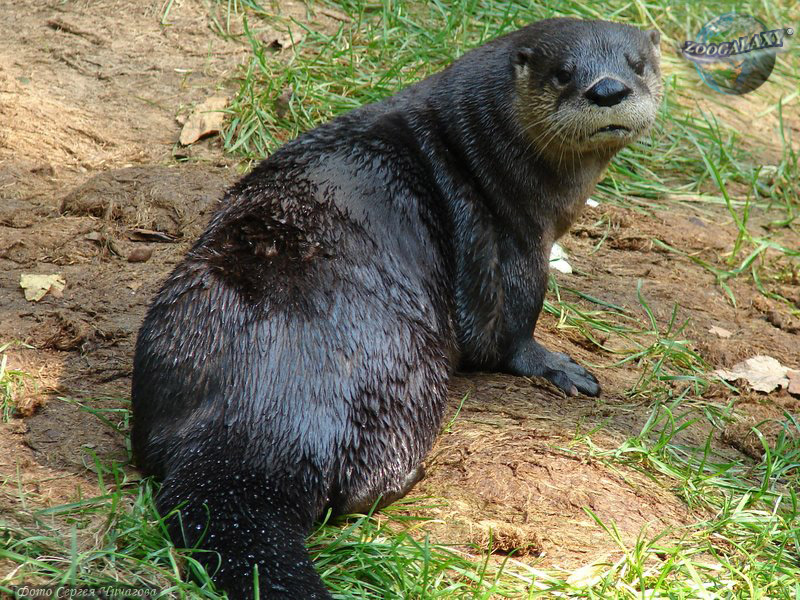
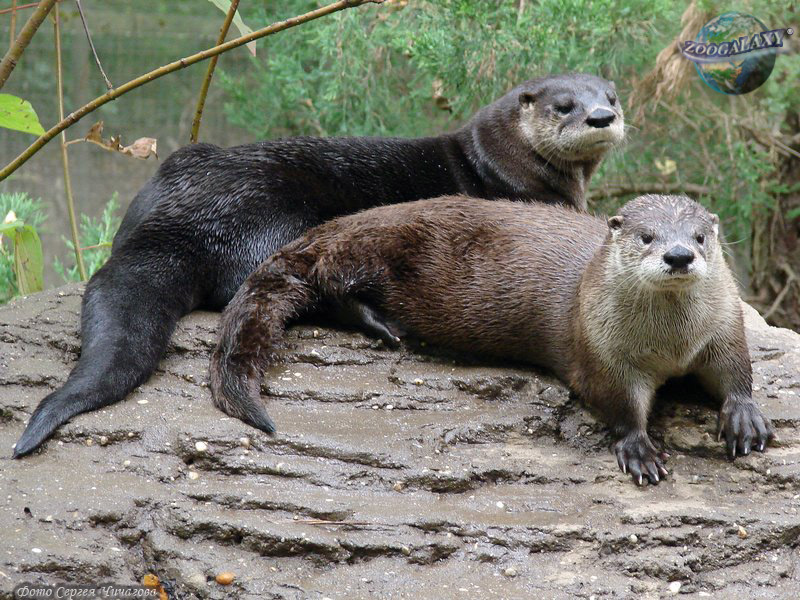
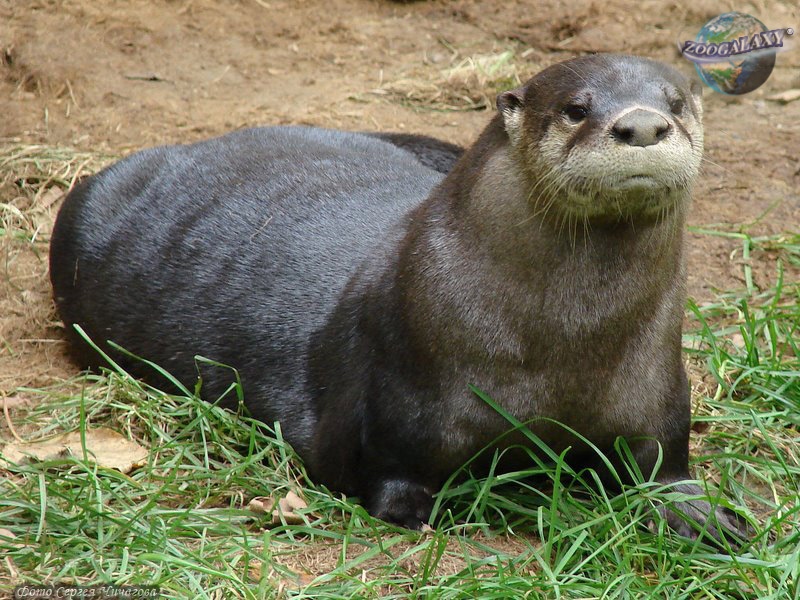
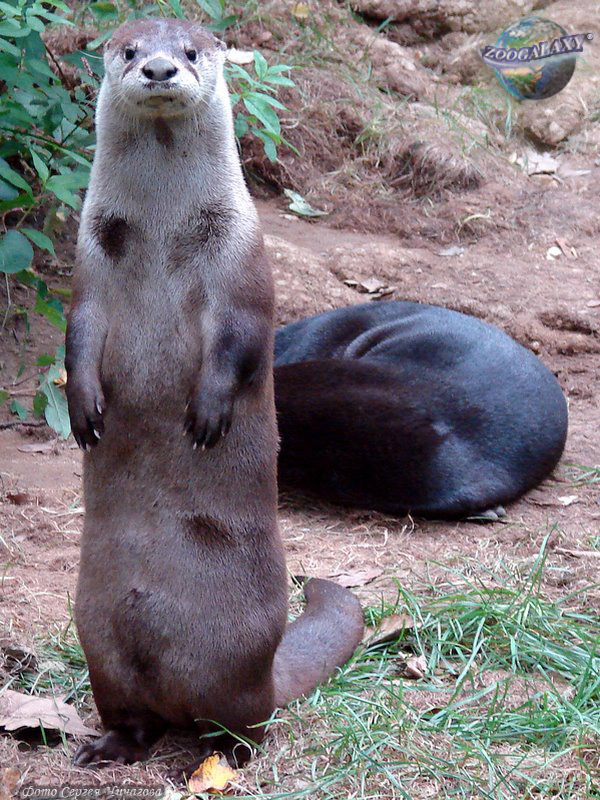
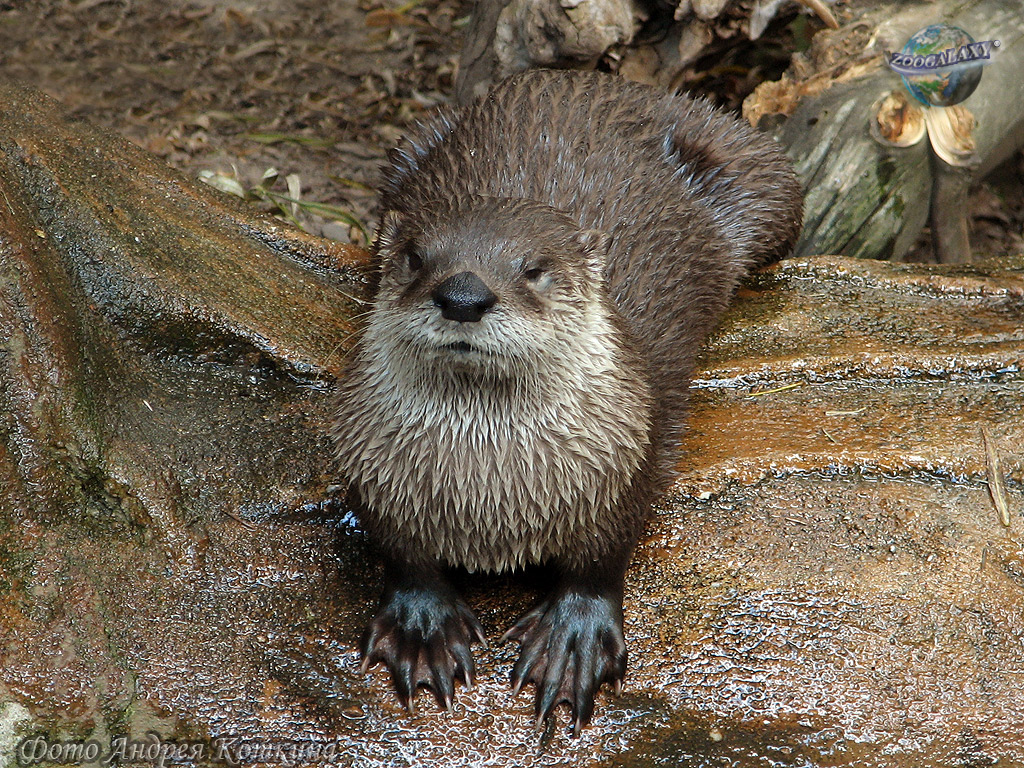
The North American river otter (Lontra canadensis), also known as the northern river otter and river otter, is a semiaquatic mammal that lives only on the North American continent, along its waterways and coasts.
Description and habitat area
Lontra canadensis or Lutra canadensis is a species of carnivorous mammal in the family Mustelidae.
Lontra canadensis occurs in North America from Alaska and Canada throughout most of the United States, except for the arid areas of Texas, Arizona, Nevada and California in southern Mexico.
Externally, it is a typical otter with a dense, cylindrical, oblong body and short, strong, webbed feet. However, it is larger than the common otter (body length 90-120 cm, tail length 32-46 cm, weight up to 14 kg) and its skull structure has some peculiarities.
The coat of Lontra canadensis is short and fluffy; it is usually black, reddish or greyish brown on the back and light grey on the belly. Its undercoat is soft and its hair is stiff and glossy. The structure of the coat allows Lontra canadensis to keep the undercoat dry when the animal is wet. The otter has no fat reserves, and the fur is its only way to maintain body temperature in cold water. A special fat gives it water-repellent properties. But for the fur to retain its properties, it needs thorough care, to which Lontra canadensis devotes a certain amount of time. Its head is round and flat and its ears are small, round and set low on the sides of the head. The muzzle is short and broad, with long sideburns; the neck is thick and short; the eyes are small, round, set high, with good visibility. The eyes have a transparent third eyelid (blinking net), which protects them from damage under water. Ears and nostrils flatten when submerged. The otter's keen sense of smell helps it find food in the water. Its tail is thick, sharp and muscular.
Lifestyle
Lontra canadensis usually settles within a hundred metres of a water source, but is unpretentious in any climate or terrain. When searching for new habitats, Lontra canadensis move along rivers or streams rather than travel overland. Only in spring do young Lontra canadensis, in search of their own territory, also travel overland. About 80% of the total diet of Lontra canadensis consists of aquatic organisms: it eats fish, amphibians, lobsters and other crustaceans and molluscs; it preys on waterfowl and small mammals. If no other food is available, otters eat berries (especially blueberries) and fruits.
Lontra canadensis has a semi-aquatic lifestyle. Their front legs are shorter than their hind legs, which allows them to swim well. When swimming slowly, they paddle with all four legs. When swimming or diving quickly, Lontra canadensis presses its short front legs to the sides of its body and starts to work its strong hind legs and tail in a waving motion. With its muscular tail, Lontra canadensis can make pronounced turns, although the legs and neck play an important role in controlling and regulating movements. Lontra canadensis can dive up to 18 m deep. Its eyes are adapted for hunting underwater. In murky water, when visibility is poor, otters hunt with their sensitive whiskers, which sense the vibration of the water by potential prey.
Lontra canadensis are very efficient predators. They grab prey with their jaws, not their paws.
Social behaviour and reproduction
Lontra canadensis occur singly or in pairs, but sometimes otters are found in small groups. These groups are usually a family consisting of a mother and her cubs. Animals in these family groups are very playful and enjoy sliding through mud or snow. The hunting grounds of Lontra canadensis are extensive and often include several kilometres (sometimes up to 40-50 km) of riverbank, which the animals regularly visit while hunting. The average population density is 1 Lontra canadensis per 4 km of river. Males have larger patches than females. Lontra canadensis are territorial but very tolerant of outsiders, and try to avoid the company of others by marking the boundaries of the site with their scent (secreted by a gland at the base of the tail, urine and faeces).
The breeding season for these animals is between March and April. The female builds a nest in a burrow made of thin twigs of grass. The burrow is usually located in dense vegetation near water and has entrances both under and above water. Pregnancy in Lontra canadensis is very long, 10 to 12 months. The eggs divide after fertilisation for some time, but do not touch the uterine wall, and only two months before parturition do they come into contact with the mother's body and complete their development.
The female gives birth to 2-4 blind pups which are completely covered with hair. Their eyes do not open until 3-4 weeks later. At two months of age, the pups begin to swim. Lactation lasts up to seven weeks.
Until 6 months of age, the female takes care of the young alone, then the father sometimes starts to take care of the young as well.
Young Lontra canadensis in the family group learn to swim, dive and hunt. By the age of one year, they are fully self-sufficient and reach sexual maturity at about two years of age. The young leave their mother when she is ready to give birth to her next litter. Only half of the offspring survive to 2 or 3 years of age. Lontra canadensis live 12-15 years in the wild and up to 23 years in captivity.
Taxonomy and evolution
The North American river otter was first described by German naturalist Johann Christian Daniel von Schreber in 1777. The mammal was identified as a species of otter and has a variety of common names, including North American river otter, northern river otter, common otter and, simply, river otter. Other documented common names are American otter, Canada otter, Canadian otter, fish otter, land otter, nearctic river otter, and Prince of Wales otter. The North American river otter was first classified in the genus Lutra. Lutra was the early European name (from Latin), and the specific epithet canadensis means "of Canada".
In a new classification, the species is called Lontra canadensis, where the genus Lontra includes all the New World river otters.
Molecular biological techniques have been used to determine when the river otter and the giant otter (Pteronura brasiliensis) of South America diverged. These analyses suggest they diverged in the Miocene epoch 23.03 to 5.33 million years ago (Mya), which is "much earlier" than indicated in the fossil record. Fossils of a giant otter dating back 3.5 Mya (during the Pliocene) have been found in the US Midwest; however, fossils of the modern river otter did not appear in North America until about 1.9 Mya. The New World river otters originated from the Old World river otters following a migration across the Bering Land Bridge, which existed off and on between 1.8 million and 10,000 years ago. The otters migrated to North America and southwards again across the Panamanian Land Bridge, which formed 3 Mya.
Subspecies
In alphabetical order:
- Lutra canadensis canadensis canadensis (Schreber, 1777) - (eastern Canada, USA, Newfoundland);
- Lutra canadensis kodiacensis (Goldman, 1935) - (Kodiak Island, Alaska);
- Lutra canadensis lataxina (Cuvier, 1823) - (USA);
- Lutra canadensis mira (Goldman, 1935) - (Alaska, British Columbia);
- Lutra canadensis pacifica (J. A. Allen, 1898) - (Alaska, Canada, northern USA, southern to central California, northern Nevada and northeastern Utah);
- Lutra canadensis periclyzomae (Elliot, 1905) - (Queen Charlotte Islands, British Columbia);
- Lutra canadensis sonora (Rhoads, 1898) - (USA, Mexico).
Threats
Cases where otters have been ambushed and consumed by grizzly bears (Ursus arctos horribilis) and polar bears (Ursus maritimus) have also been reportedly witnessed near the Arctic region.
Conservation status
Lontra canadensis is listed in Appendix II of the Convention on International Trade in Endangered Species of Wild Fauna and Flora (CITES). They have been virtually eliminated through many parts of their range, especially around heavily populated areas in the midwestern and eastern United States. Appendix II lists species that are not necessarily threatened with extinction currently, but may become so unless trade is closely controlled.
The North American river otter is considered a species of least concern according to the IUCN Red List, as it is not currently declining at a rate sufficient for a threat category. By the early 1900s, North American river otter populations had declined throughout large portions of their historic range in North America. However, improvements in water quality (through enactment of clean water regulations) and furbearer management techniques have permitted river otters to regain portions of their range in many areas. Reintroduction projects have been particularly valuable in restoring populations in many areas of the United States. However, North American river otters remain rare or absent in the southwestern United States. Water quality and development inhibit recovery of populations in some areas. The species is widely distributed throughout its range. In many places, the populations have re-established themselves because of conservation initiatives. Reintroduction of river otters may present a problem in that it may contaminate the genetic structure of the native population.