














The Neotropical otter or Neotropical river otter (Lontra longicaudis)
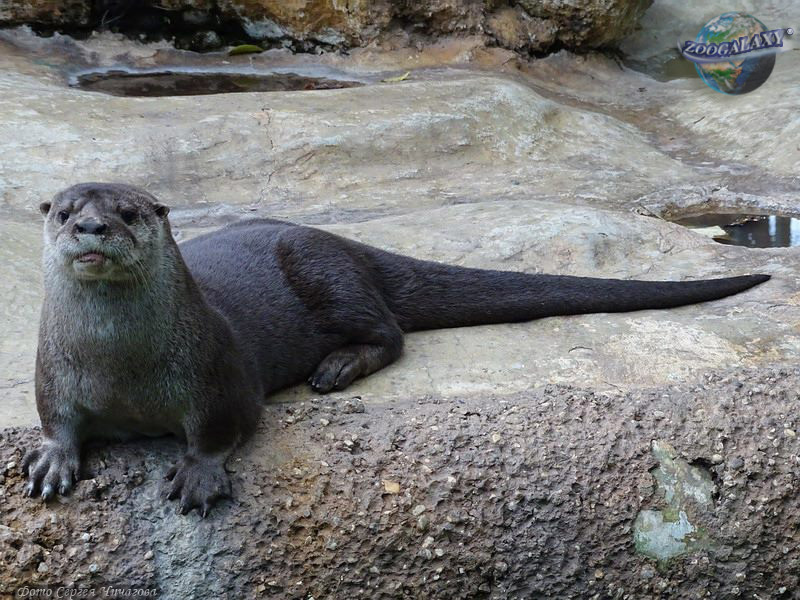
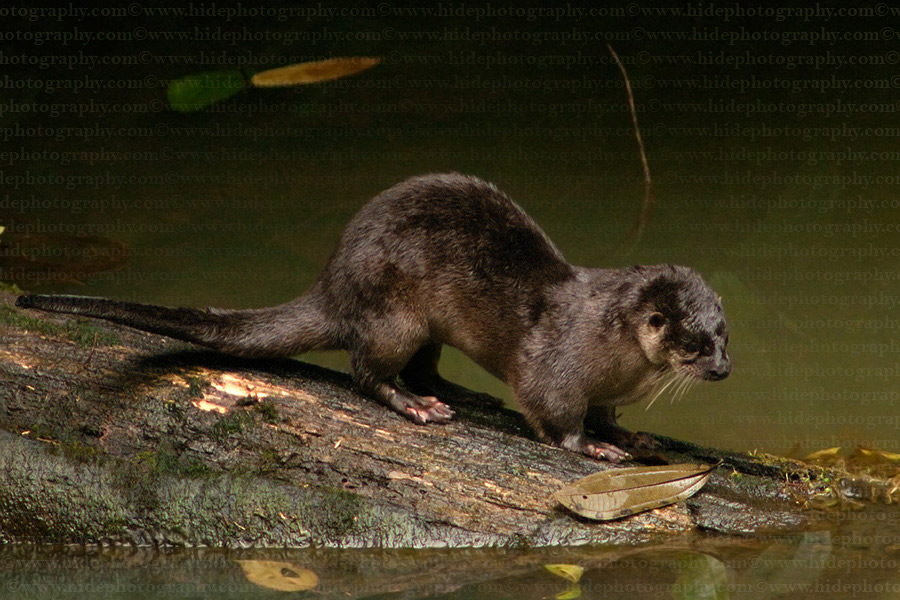
The Neotropical otter or Neotropical river otter (Lontra longicaudis) is an otter species found in Mexico, Central America, South America, and the island of Trinidad. It is physically similar to the northern and southern river otter, which occur directly north and south of this species' range. Its head-and-body length can range from 36–66 centimetres (14–26 in), plus a tail of 37–84 centimetres (15–33 in). Body weight ranges from 5–15 kilograms (11–33 lb). Otters are members of the family Mustelidae, the most species-rich (and therefore diverse) family in the order Carnivora.
This otter is found in many different riverine habitats, including deciduous and evergreen forests, savannas, llanos and pantanal. It prefers to live in clear fast-flowing rivers and streams. It is a relatively solitary animal and feeds mostly on fish and crustaceans.
Taxonomy
The taxonomy of the genus Lontra has been debated, but the use of Lontra rather than Lutra for New World otters is generally supported. The Neotropical otter has a very wide range, covering a large portion of South America, so it is not surprising there are geographical structures separating some populations. One such geographical isolation is the Cordillera Mountains. Additionally, the river in the Magdellena river valley flows north, away from the mountains, decreasing the likelihood that otters in the northern tip of South America will mix with otters elsewhere in the continent.
Neotropical otters have an unusual phylogenic relationship to other otter species. They are most similar to marine otter (Lontra felina) and southern river otter (Lontra provocax), which is not surprising considering these two species are found in South America. However, Neotropical otters are relatively distantly related to giant otter (Pteronura brasiliensis), which is surprising considering they have nearly identical ecological niches and home ranges.
Subspecies
In one study, otters within a 1,600 square mile area in southern Brazil showed low nucleotide variation, but high haplotype diversity compared to other otter species and other carnivores. The study made the conclusion that otters may be undergoing a recent increase in diversity. The results also show interrelatedness of otters nearby and give reason to separate the species into subspecies:
- Lontra longicaudis annectens;
- Lontra longicaudis colombiana;
- Lontra longicaudis enudris;
- Lontra longicaudis incarum;
- Lontra longicaudis longicaudis;
- Lontra longicaudis raferrous.
Habitat
The otter (Lontra longicaudis), also known as the northwestern otter, neotropical otter, water dog (plains of Colombia and Venezuela), pisua or mallu-puma, is a mustelid of the subfamily Lutrinae.
Lontra longicaudis inhabits lakes, rivers, marshes and lagoons in a variety of habitats in deciduous and evergreen forests and savannah. These predators prefer to live in clear, fast-flowing rivers and streams. Lontra longicaudis have been reported from irrigation ditches in rice paddies and sugar cane fields in Guyana. Of all South American otters, this species has the widest range, occurring in Mexico and in South America, in Uruguay, Paraguay, Bolivia, Brazil and northern Argentina.
Appearance
Lontra longicaudis is a medium-sized animal, smaller than the Canadian river otter. Like all river otters, it has a dense, cylindrical, oblong body and short, strong legs. The fur of Lontra longicaudis is short and fluffy, dark brown, while the belly and the area around the mouth are light, almost white. The undercoat is soft and the hair is hard and glossy. The structure of the coat allows Lontra longicaudis to keep its undercoat dry while immersed in water. Lontra longicaudis has no fat reserves, and the coat is its only means of maintaining body temperature in cold water.
The head of Lontra longicaudis is round and flat, with small round ears on the sides of the head; the snout is short and broad, with long sideburns; the neck is thick, short, as wide as the head; the tail is thick, tapered, muscular from base to tip. The eyes are small and rounded, set high and offer good visibility; the paws are webbed, each with five strong claw-like toes. The forelegs of Lontra longicaudis are shorter than the hind legs, allowing them to swim well. When swimming slowly, otters paddle with all four legs; during fast swimming or diving, they press their short front legs to the sides of the body and work with their strong hind legs and tail, which act like a propeller. The ears and nostrils of Lontra longicaudis are flattened when diving.
Nutrition and lifestyle
Lontra longicaudis feeds on fish, molluscs and crustaceans, often insects, and less frequently on small reptiles, birds and terrestrial animals.
Lontra longicaudis is a diurnal and solitary species. Some individuals have adapted to nocturnal activity in areas where humans disturb them. Lontra longicaudis mark hunting sites with gland secretions, urine and faeces, which they leave in an elevated area near water (e.g. on bridges and logs). It is believed that otters use this method to declare their sexual identity. This species (like other otters) spends much of its time playing.
Lontra longicaudis dig burrows in the ground near bodies of water, often in the roots of riparian trees. They may also use caves away from water for shelter (but not for breeding). The paths otters regularly use and their hunting grounds are marked with gland secretions, urine and faeces. The marks are left on conspicuous elevations such as logs, root systems, rocks, sand barchans and even revetment boards under bridges. These markings apparently serve to advertise the species and to indicate its sex.
Reproduction
Lontra longicaudis does not have a defined breeding season. Like other otters, it may have delayed embryonic development. Newborns are born with fur, but their eyes are closed and do not open until day 44. At 52 days of age, pups begin to emerge from the den and wander around. At 74 days of age, they begin to help their mother hunt in the water. Males do not participate in rearing the young. They only join the females for mating, which occurs one day a year.
Conservation
The Neotropical otter is listed as Near Threatened by the IUCN. The species is currently protected in Argentina and many other South American countries. Heavy hunting for its fur in the 1950s–1970s resulted in much local extinction over the otter's range. Illegal hunting, habitat destruction through mining and ranching, and water pollution still affect the population of the Neotropical otter. Although there have been attempts at captive breeding, these attempts have been largely unsuccessful.
In captivity
One male and one female Neotropical otter were captured near Caucasia, Colombia and taken to Santa Fe Zoological Park in 1994 and 1996, respectively. Zoo staff observed the pair mating in the water, then separated the animals. The female had three births; one was successful. The infant deaths may have been unintentionally caused by the mother. One idea suggested the mother's enclosure was too small and she had no access to water, as she would have had in the wild. The mother's gestation period was 86 days for two separate breeding events recorded at this zoo. An 86-day gestation period is much longer than the previously accepted belief that gestation lasts around 60 days. Two possible explanations are: differences might exist between different subspecies or a later copulation may have occurred and not been observed. Also, this otter species might display short-term variation in gestation periods.