














The smooth-coated otter (Lutrogale perspicillata)
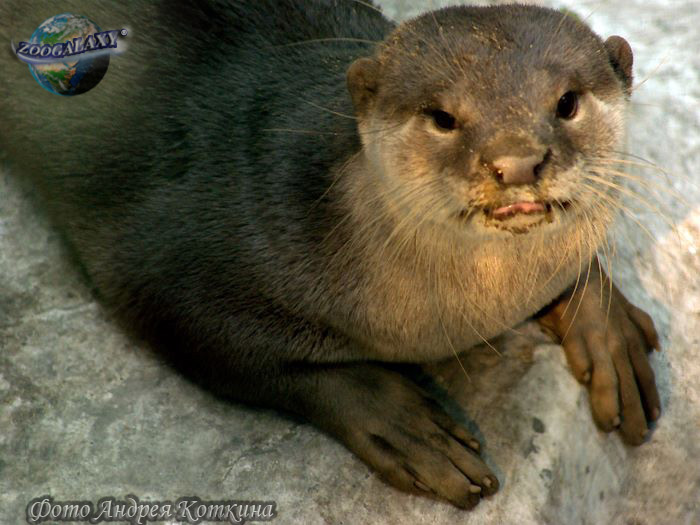
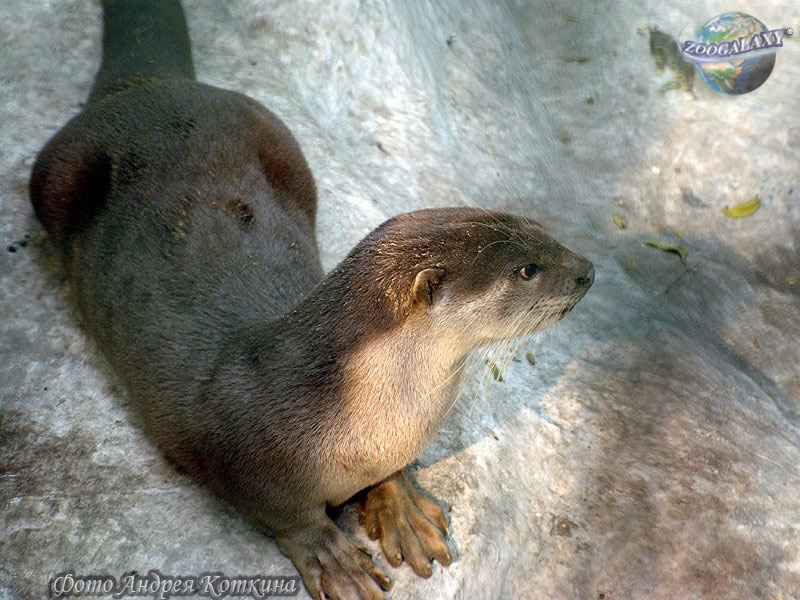
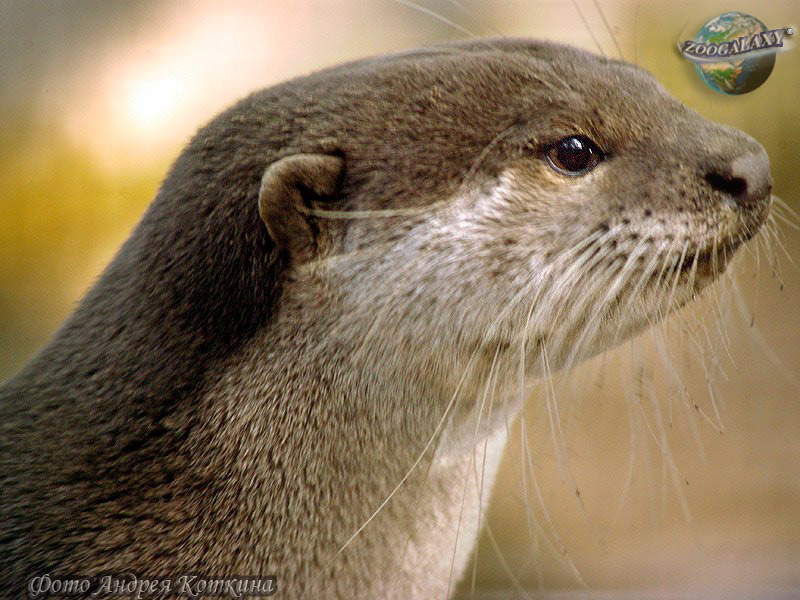
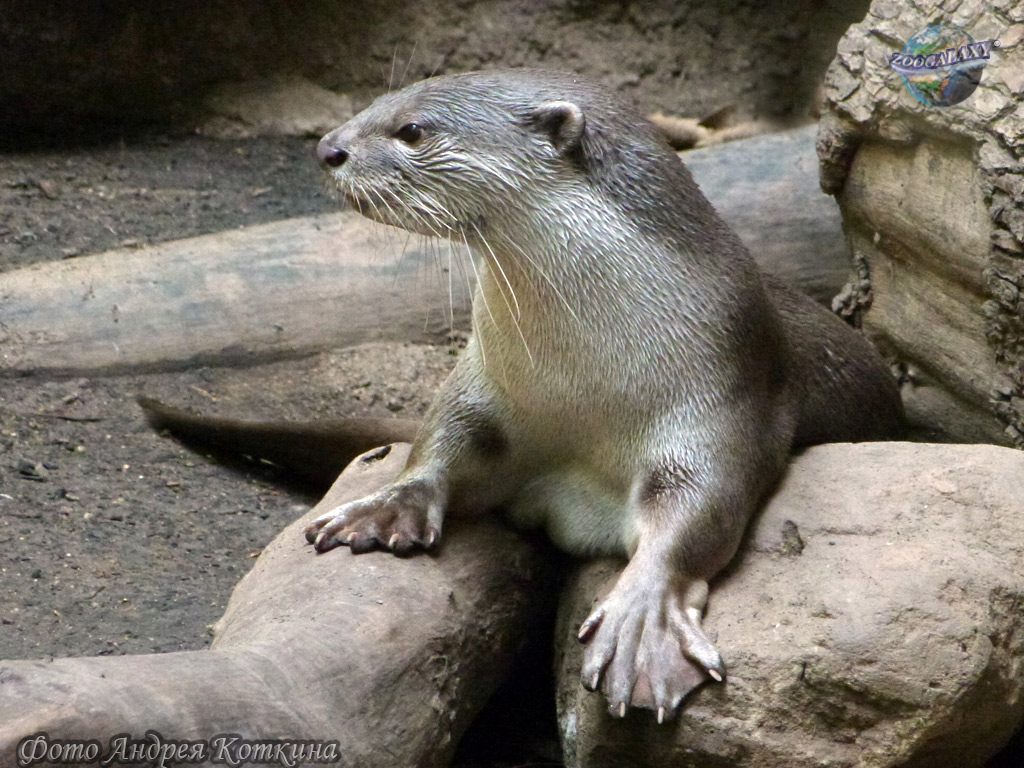

The smooth-coated otter (Lutrogale perspicillata) is an otter species occurring in most of the Indian subcontinent and Southeast Asia, with a disjunct population in Iraq. It is listed as Vulnerable on the IUCN Red List since 1996 and is threatened by habitat loss, pollution of wetlands and poaching for the illegal wildlife trade. As its name indicates, its fur is smooth and shorter than that of other otter species.
Taxonomy
Lutra perspicillata was the scientific name proposed by Isidore Geoffroy Saint-Hilaire in 1826 for a brown otter collected in Sumatra. Lutrogale was proposed as generic name by John Edward Gray in 1865 for otters with a convex forehead and nose, using perspicillata as type species. In the 19th and 20th centuries, several zoological specimens were described, including:
- Lutrogale perspicillata sindica proposed by Reginald Innes Pocock in 1940 were seven pale skins of smooth-coated otters collected in the Sukkur and Khairpur Districts in Pakistan's Sindh Province.
- Lutrogale perspicillata maxwelli proposed by Robert William Hayman in 1957 was a dark brown adult male smooth-coated otter collected on the bank of the Tigris River in Iraq.
- The smooth-coated otter is the only living species in the genus Lutrogale. Three subspecies are recognised:
- Lutrogale perspicillata perspicillata occurs in most of India, Nepal, southwestern Yunnan, most of Southeast Asia, Sumatra and Java.
- Lutrogale perspicillata sindica occurs in Pakistan's Khyber Pakhtunkhwa, Punjab and Sindh Provinces.
- Lutrogale perspicillata maxwelli occurs in Iraq.
The smooth-coated otter groups with the Asian small-clawed otter and the African clawless otter into a sister clade to the genus Lutra. The smooth-coated otter and the Asian small-clawed otter genetically diverged about 1.33 ± 0.78 million years ago. Hybridisation of smooth-coated otter males with Asian small-clawed otter females occurred in Singapore. The resulting offspring and their descendants bred back into the smooth-coated otter population, but maintained the genes of their small-clawed otter ancestors. Today, a population of at least 60 hybrid otters exists in Singapore.
Habitat
The smooth otter (Lutrogale perspicillata) is a species of carnivorous mammal in the family Mustelidae.
Lutrogale perspicillata is distributed from eastern India to Southeast Asia, and is also found in parts of Iraq. These animals make their home in areas where there are many bodies of water: peat bogs, large forest rivers, lakes and rice fields. They are well adapted to life near water, but are also comfortable on land and can travel long distances over land in search of suitable habitat.
Appearance
Lutrogale perspicillata is the largest otter in Southeast Asia, weighing 7-11 kg and measuring 1.3 m in length, with males being larger than females. Like other otters, smooth-coated otters have webbed toes and strong legs with sharp claws. The body of Lutrogale perspicillata is long and thick, the legs are short and webbed, with sharp claws; the neck and head are broad; the ears are low set and the eyes are wide apart. Short muzzle, thick whiskers, thick, velvety, double-coated coat. Leaf coat 12-14 mm long, undercoat 6-8 mm. The fur of this otter is shorter and softer than that of other otter species. Its fur is light to dark brown along the back and light brown underneath, sometimes reaching an almost greyish colour. The forelegs of this otter are shorter than the hind legs and the tail is thick and tapered.
Nutrition and lifestyle
Lutrogale perspicillata feeds on insects, worms, crustaceans, frogs, rodents and birds, but prefers fish and reptiles. Fish make up between 75% and 100% of the otter's diet.
Lutrogale perspicillata den in burrows or rock dumps. Some may construct a permanent burrow near water, which is similar to a beaver's dwelling, with an underwater entrance and a tunnel leading to the nest above water.
Social behaviour and reproduction
Lutrogale perspicillata forms strong monogamous pairs. The feeding area of an otter pair or family group covers an area of 7-12 km2 and includes one or more dens with at least one entrance below water level. Territory boundaries are marked by piles of excrement and musky secretion from anal glands located at the base of the tail. Otters use scent to determine site boundaries and as a means of communication: they mark vegetation, flat rocks or the edges of their territory.
Lutrogale perspicillata does not have a defined mating period, but when otters are dependent on the monsoon, breeding occurs between August and December. Pregnancy lasts 61-65 days, after which two to five young are born. The newborns are blind and helpless, but after 30 days their eyes open and after another 60 days the cubs can swim. The female feeds her young with milk for a long time, up to 3-4 months. It is only at about one year of age that the young animals leave the family group and start an independent life. Unlike other otters, Lutrogale perspicillata form family groups. The male joins the group after the young are weaned, at which time he helps to provide food for them. Lutrogale perspicillata reach sexual maturity at two years of age.
Conservation status
Lutrogale perspicillata is listed as Vulnerable on the IUCN Red List. The range and abundance of the smooth-tailed otter are declining due to wetland depletion, poaching and pesticide pollution of waterways.
Threats
The smooth-coated otter is threatened by poaching, loss and destruction of wetlands, as these are converted for settlements, agriculture and hydroelectric projects; water courses are being polluted by pesticides such as chlorinated hydrocarbons and organophosphates. These factors lead to a reduced prey base. Otters are indiscriminately killed especially at aquaculture sites. Trapping of otters is prevalent in India, Nepal, and Bangladesh.
Along the Chambal River in India, smooth-coated otters are most vulnerable during winter when they rear young. During this season, they are disturbed by humans harvesting crops and removing wood along rocky stretches of the river.
Six juvenile smooth-coated otters were discovered in a bag left at Bangkok International Airport in January 2013. This was the first case of smooth-coated otters thought to have been destined for the illegal pet trade. At least seven smooth-coated otters were offered for sale through websites by traders in Thailand and Malaysia between 2016 and 2017.
Conservation
The smooth-coated otter is a protected species in most range countries and listed globally as a vulnerable species. It had been listed on CITES Appendix II since 1977. Since August 2019, it is included in CITES Appendix I, thus strengthening its protection in regards to international trade.
Cultural significance
In southern Bangladesh, smooth-coated otters are used for commercial fishing. They are bred in captivity and trained to chase fish into fishing nets. By 2011, this fishing technique was used by about 300 fishermen, with an additional 2,000 people indirectly dependent on the technique for their livelihood.