














The Japanese badger (Meles anakuma)
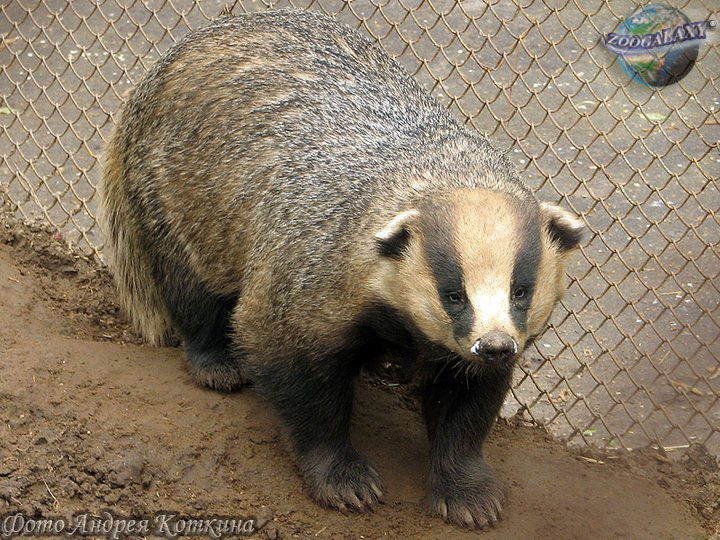
The Japanese badger (Meles anakuma) is a species of carnivoran of the family Mustelidae, the weasels and their kin. Endemic to Japan, it is found on Honshu, Kyushu, Shikoku, and Shōdoshima. It shares the genus Meles with its close relatives, the European (M. meles) and Asian (M. leucurus) badgers. In Japan it is called by the name anaguma (穴熊) meaning "hole-bear", or mujina (むじな, 狢).
Habitat and appearance
Meles anakuma is endemic to Japan and is found in Honshu, Kyushu, Shikoku and Shodoshima. Genetic studies show that there are significant differences between Meles anakuma and Melogale moschata, but Japanese badgers are genetically homogeneous. There are also morphological differences between them.
Meles anakuma is smaller (mean length is 79 cm for males and 72 cm for females) and sexual dimorphism (except for tusk size) is less pronounced. The tail length of the Japanese badger varies from 14 to 20 cm and its weight varies from 4 to 8 kg. The forelegs of this predator are equipped with powerful digging claws; the claws on the hind legs are smaller. The upper body of Meles anakuma is covered with long grey-brown hairs; the abdominal hairs are short and black. Its facial markings are not as contrasting as those of Meles meles, and its skull is smaller.
Nutrition
Meles anakuma feeds on earthworms from spring to autumn in the subalpine zone, evergreen forests and suburbs of Tokyo. They also eat berries, beetles and persimmons. Meles anakuma are nocturnal and their activity almost ceases in January and February. Unlike Meles meles, only the females are dedicated to raising cubs in the suburbs of Tokyo.
Breeding
From two years of age, Meles anakuma females mate and give birth to two or three young in spring (March-April). They mate again soon after, but implantation is delayed until the following February.
Threat to existence
Meles anakuma numbers are declining due to habitat degradation and competition from imported raccoons is a threat. Hunting of this species is legal, but has declined considerably since 1970.
Threats
Although it remains common, the range of M. anakuma has shrunk recently. Covering an estimated 29 per cent of the country in 2003, the area had decreased 7 per cent over the previous 25 years. Increased land development and agriculture, as well as competition from introduced raccoons are threats. Hunting is legal but has declined sharply since the 1970s.
In 2017, concern was raised by an upsurge in badger culling in Kyushu. Apparently encouraged by local government bounties and increased popularity of badger meat in Japanese restaurants, it is feared the culling may have reached an unsustainable level.