














The long-tailed weasel, the bridled weasel, masked ermine, or big stoat (Neogale frenata)
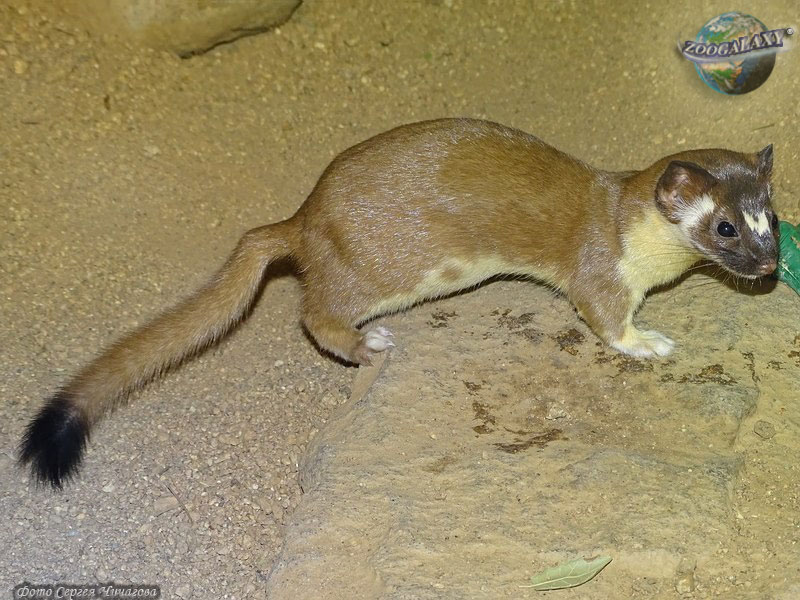
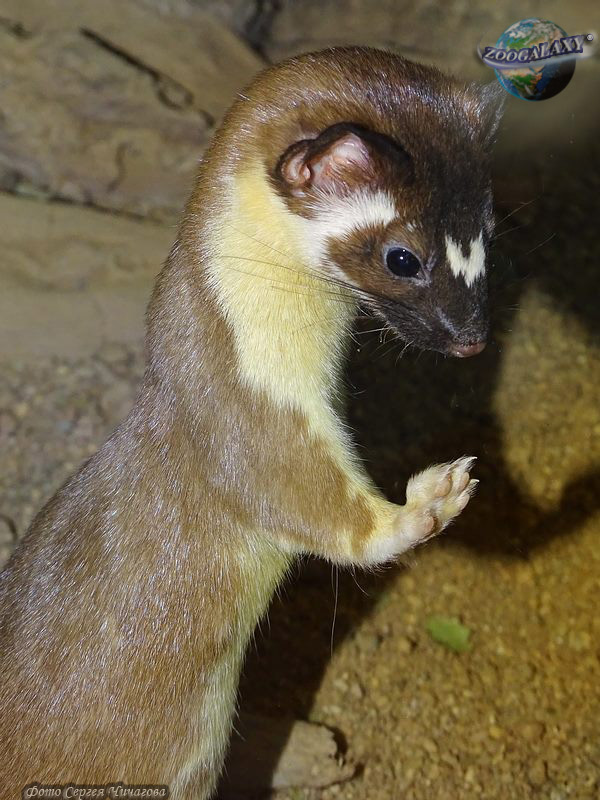
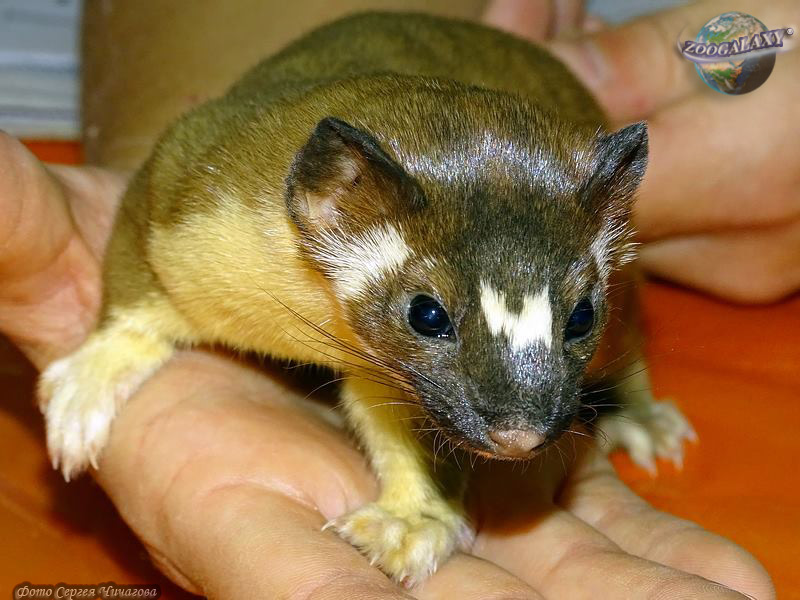
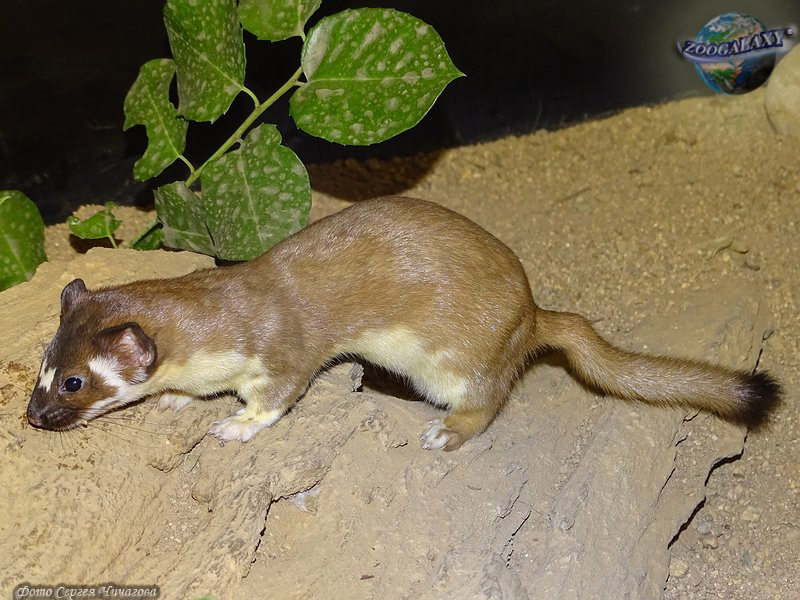
The long-tailed weasel (Neogale frenata), also known as the bridled weasel, masked ermine, or big stoat, is a species of mustelid distributed from southern Canada throughout all the United States and Mexico, southward through all of Central America and into northern South America. It is distinct from the short-tailed weasel (Mustela erminea), also known as a "stoat", a close relation in the genus Mustela that originated in Eurasia and crossed into North America some half million years ago; the two species are visually similar, especially the black tail tip.
Taxonomy
The long-tailed weasel was originally described in the genus Mustela with the name Mustela frenata by Hinrich Lichtenstein in 1831. In 1993, the classification, Mustela frenata, was accepted into the second edition of the Mammal species of the world: a taxonomic and geographic reference, which was published by the Smithsonian Institution Press. The species, with classification and name Mustela frenata, was accepted into the Global Biodiversity Information Facility. Later, in a study published in 2021 in the Journal of Animal Diversity, Bruce Patterson et al. reclassified the long-tailed weasel into the genus Neogale along with 2 other former Mustela species, as well as the two species formerly classified in Neovison.
Common names
Depending on its location, this species of weasel has the following names:
- Hurón, onzita, oncilla, comadreja (Mexico);
- Sabin (Maya);
- Comadreja, chucuro, chucur (Colombia);
- Lince (Panama);
- Chucurillo, chucuri, chucur (Ecuador);
- Unchuchuco (Peru);
- Long-tailed Weasel (Long-tailed Weasel in North America).
Habitat area and appearance
The long-tailed weasel (Mustela frenata or Mustela frenata latirostra) is a carnivorous mammal of the family Mustelidae.
Mustela frenata latirostra is widely distributed in North, Central and South America. It is found from southern Canada through the United States and Mexico to southern Central America and northern South America.
Mustela frenata latirostra is one of the largest members of the genus Mustela in North America: female body length is 28-35 cm (males 33-42), and female body weight varies from 80-250 g (males 160-450 g).
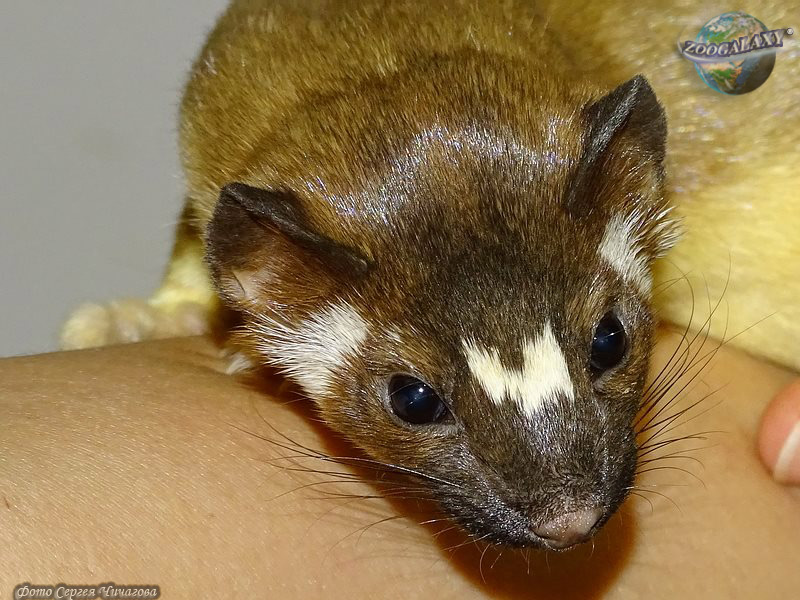
The eyes of this animal are black during the day, but glow emerald green at night. The coat on the back of Mustela frenata latirostra is brown in summer, while the underside is whitish with a yellowish tinge. Its tail has a pronounced black tip. In northern areas, in winter, the coat of Mustela frenata latirostra turns white, sometimes with yellowish tints, but the tail retains its black tip. Mustela frenata latirostra moult twice a year: in autumn (October to mid-November) and in spring (March-April). Each moult lasts about 3-4 weeks. Unlike Mustela erminea, whose plants are densely covered with hairs all year round, the plants of Mustela frenata latirostra are bare in summer. This elegant predator has well-developed anal glands that produce a strong, musky odour.
Lifestyle and nutrition
Mustela frenata latirostra takes refuge in burrows in the ground, under stones or stumps. As a general rule, it does not dig its own burrows and often uses holes abandoned by squirrels.
Mustela frenata latirostra is a fearless and aggressive hunter that can attack animals much larger than itself. It also hunts small prey, such as mice, pouncing on them and killing them with a bite to the head. The main prey of the Mustela frenata latirostra are mice, rats, squirrels, chipmunks, shrews, moles and rabbits. It may sometimes capture small birds, reptiles, amphibians and fish, but does not reject bird eggs, earthworms and some insects.
Reproduction
Mustela frenata latirostra mates in July and August, but due to the delayed development of the fertilised egg, the gestation period lasts about 10 months. In fact, embryonic development only occurs during the last four weeks of this period, and the young are born in spring, when food is plentiful for Mustela frenata latirostra.
The nesting chamber is usually about 60 cm in diameter and is lined with straw and prey skins. In April-May, females give birth to 4-5 young that are able to forage for food on their own after 12 weeks.
The young are born partially naked, blind and weighing about 3 grams. The young grow rapidly and by three weeks of age they have a thick coat and begin to eat meat. At this time they weigh between 21 and 27 grams. At five weeks of age, they open their eyes and become very active. At this time, the female stops feeding them with milk and, after another week, they begin to leave the nest and hunt with their mother. In autumn, the young separate. Females can breed from 3-4 months of age, but males do not reach sexual maturity until 15-18 months.
Conservation status
In the 2008 IUCN Red List Mustela frenata is listed as a species of Least Concern (LC). It was included in this category because it is widely distributed and relatively common in its range. It tolerates moderate land use and may even benefit from human presence. However, its populations generally fluctuate and may disappear locally in response to changes in prey numbers.
List of subspecies
There are 42 subspecies:
- Neogale frenata affinis;
- Neogale frenata agilis;
- Neogale frenata alleni;
- Neogale frenata altifrontalis;
- Neogale frenata arizonensis;
- Neogale frenata arthuri;
- Neogale frenata aureoventris;
- Neogale frenata boliviensis;
- Neogale frenata costaricensis;
- Neogale frenata effera;
- Neogale frenata frenata;
- Neogale frenata goldmani;
- Neogale frenata gracilis;
- Neogale frenata helleri;
- Neogale frenata inyoensis;
- Neogale frenata latirostra;
- Neogale frenata leucoparia;
- Neogale frenata longicauda;
- Neogale frenata macrophonius;
- Neogale frenata munda;
- Neogale frenata neomexicanus;
- Neogale frenata nevadensis;
- Neogale frenata nicaraquae;
- Neogale frenata nigriauris;
- Neogale frenata notius;
- Neogale frenata noveboracensis;
- Neogale frenata occisor;
- Neogale frenata olivacea;
- Neogale frenata oregonensis;
- Neogale frenata oribasus;
- Neogale frenata panamensis;
- Neogale frenata peninsulae;
- Neogale frenata perda;
- Neogale frenata perotae;
- Neogale frenata primulina;
- Neogale frenata pulchra;
- Neogale frenata saturata;
- Neogale frenata spadix;
- Neogale frenata texensis;
- Neogale frenata tropicalis;
- Neogale frenata washingtoni;
- Neogale frenata xanthogenys.