














The American mink (Neogale vison or Mustela vison)
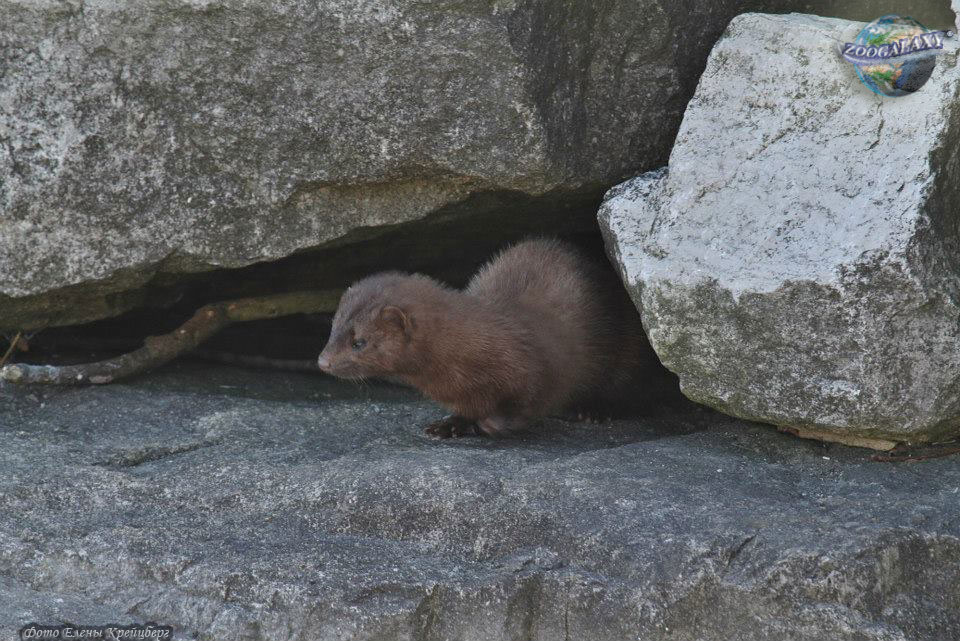
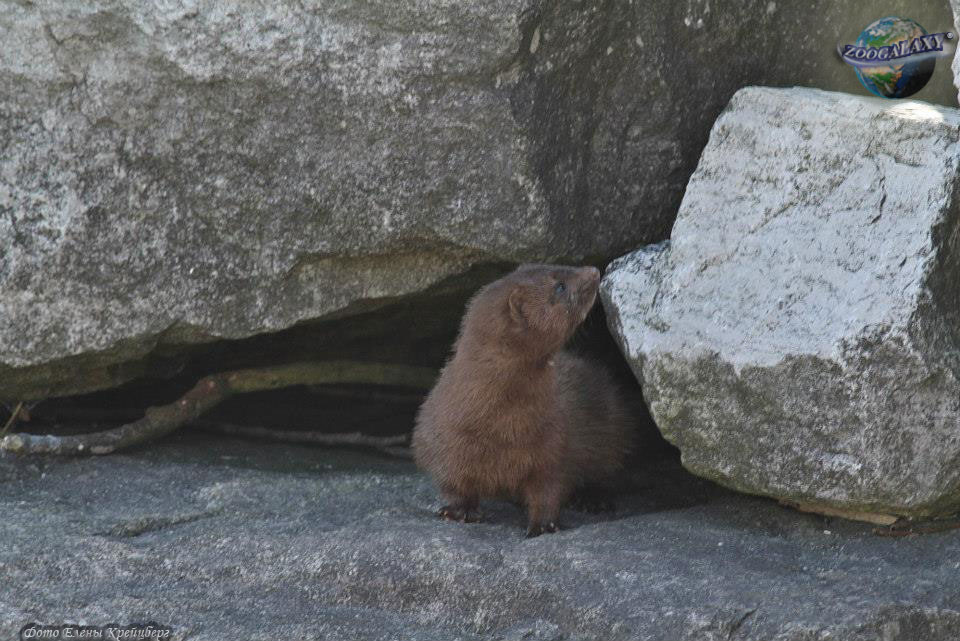
The American mink (Neogale vison) is a semiaquatic species of mustelid native to North America, though human introduction has expanded its range to many parts of Europe, Asia, and South America. Because of range expansion, the American mink is classed as a least-concern species by the IUCN. The American mink was formerly thought to be the only extant member of the genus Neovison following the extinction of the sea mink (Neogale macrodon), but recent studies, followed by taxonomic authorities, have reclassified it and the sea mink within the genus Neogale, which also contains a few New World weasel species. The American mink is a carnivore that feeds on rodents, fish, crustaceans, frogs, and birds. In its introduced range in Europe it has been classified as an invasive species linked to declines in European mink, Pyrenean desman, and water vole populations. It is the animal most frequently farmed for its fur, exceeding the silver fox, sable, marten, and skunk in economic importance.
Appearance
Neovison vison is a carnivorous mammal of the mustelid family that resembles the marten.
Mustela vison was previously considered to be a close relative of Mustela lutreola, but subsequent genetic studies have shown that, despite considerable similarities, the European species is close to the columnaria, and the American species to the sable and marten. On this basis, Mustela vison has recently been identified as a separate genus, Neovison.
Externally, Mustela vison is very similar to the European species, as it has evolved under similar conditions. It is only slightly larger (body length up to 50 cm and weight up to 2 kg). Unlike Mustela lutreola, Mustela vison has poorly developed swimming membranes and its size is only slightly larger than that of the black polecat.
Habitat area
The natural habitat of Mustela vison covers most of North America. Since the 1930s, in the course of extensive acclimatisation in many parts of the USSR, about 4,000 animals were released in 15 years.
Later, when Mustela vison began to be bred on fur farms in different European countries, the escaped animals established stable populations in England, the Scandinavian Peninsula and Germany. The range of this species in the Old World is now only slightly less than its original range in America. In the new territory, within a few decades, Mustela vison has become even more numerous than the aboriginal Mustela lutreola. And in the host sites, the American caterpillar actively competes with the smaller "European", displacing it from its native habitat.
Lifestyle
Mustela vison does not differ much from the European in its way of life. It inhabits small water reservoirs in dense forests, but is less attached to rivers and is equally common on the shores of lakes and marshes. This predator prefers rivers with a lot of wormwood and "empty spaces", i.e. the empty space between the water surface and the ice fields that form during the freezing of the "high" water in early winter.
Mustela vison dens are found in a narrow strip along the coast. It makes its shelters close to the water. The terrestrial burrows, which this predator "borrows" from muskrats, usually have several chambers and winding corridors up to 3 m long. Due to its poorly developed leg membranes, Mustela vison mainly uses undulating body and tail movements when swimming. It can swim up to 30 m underwater and dive to a depth of 4-5 m.
Nutrition
The main foods of Mustela vison, like the European Mustela, are rodents, fish, amphibians and crustaceans, but its larger size allows it to eat larger prey. Thus, while Mustela lutreola rarely attacks a rodent larger than the water vole, Mustela vison can kill twice the size of the muskrat. However, it is not always able to defeat this rodent: a large muskrat can drive a small rodent from its lair.
When food is plentiful, Mustela vison move very little, but in years of poor harvests they lead a semi-nomadic life, moving up to 4-5 km a day. Like Mustela lutreola, Mustela vison makes provisions for the cold season. In case of acute shortage of its usual forage, this raptor, driven by hunger and desperation, raids the pens and can kill up to ten chickens and ducks at a time.
Breeding
Mustela vison breed in spring: the mating season lasts from February to April; young are born in late April or May. Pregnancy usually occurs with a slight (up to 30 days) delay in embryonic development, the diapause. The fecundity of Mustela vison is quite high: a litter may contain up to 10 young, in special cases up to 16, but more often 5-6 young. Females of this year reach adult size at 4 months and sexual maturity at the end of the first year of life. The development of males is more protracted: they reach adult size at one year of age and become sexually mature at one and a half years. The longevity of Mustela vison is up to 10 years.
The fur of Mustela vison is valued more highly than that of Mustela lutreola. This animal has long been one of the main commercial species in North America. Today, however, mink farms, rather than natural populations, have become the main source of fur. Due to the ease of breeding Mustela vison on farms, it has spread to many countries. As a result of the breeding work, colour variations not found in nature have been obtained: black, white, platinum, blue. Artificial mink breeding produces much more fur than collection from the wild.
Subspecies
- Neogale vison vison;
- Neogale vison aestuarina;
- Neogale vison aniakensis;
- Neogale vison energumenos;
- Neogale vison evagor;
- Neogale vison evergladensis;
- Neogale vison ingens;
- Neogale vison lacustris;
- Neogale vison letifera;
- Neogale vison lowii;
- Neogale vison lutensis;
- Neogale vison melampeplus;
- Neogale vison mink;
- Neogale vison nesolestes;
- Neogale vison vulgivaga.
As pets
Wild mink can be tamed if caught young, but can be difficult to handle and are usually not handled bare-handed. In the late 19th century, tame American minks were often reared for ratting, much as ferrets were used in Europe. Some modern ratters have revived this practice using farm-raised mink, sometimes alongside ratting dogs. They are sometimes more effective ratters than terriers, as they can enter rat holes and drive rats from their hiding places.
When mink of wild stock are confined with tame ones, the wild invariably dominate the tamed mink. They have also been known to dominate cats in confrontations. Although intelligent, minks are not quick to learn tricks taught to them by their owners. Because of their fondness for bathing, captive American minks may enter kettles or other open water-containing vessels.
Although domestic minks have been bred in captivity for almost a century, they have not been bred to be tame. Domestic minks have been bred for size, fur quality, and color. However, the U.S. Fur Commission claims "mink are truly domesticated animals", based on the number of years they have been kept on fur farms.