














The common wallaroo (Osphranter robustus), also known as the euro, hill wallaroo, or simply wallaroo
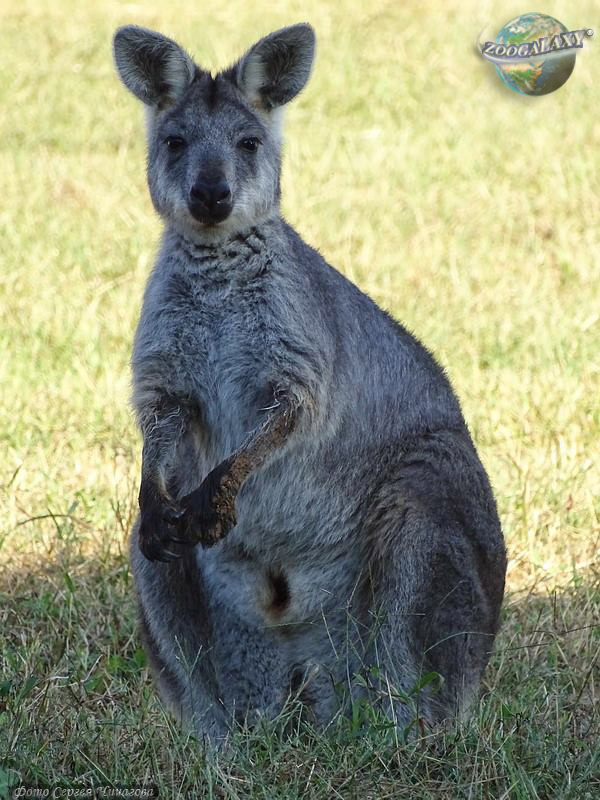
The common wallaroo (Osphranter robustus), also known as the euro, hill wallaroo, or simply wallaroo, is a species of macropod. The word euro is particularly applied to one subspecies (Osphranter robustus erubescens).
The eastern wallaroo is mostly nocturnal and solitary, and is one of the more common macropods. It makes a loud hissing noise and some of the other subspecies are sexually dimorphic, like most wallaroos.
Subspecies
There are four subspecies:
- the eastern wallaroo (Osphranter robustus robustus) – found in eastern Australia; males of this subspecies have dark grey fur, almost resembling the black wallaroo (Osphranter bernardus). Females are lighter, being almost sandy in colour.
- the euro or western wallaroo (Osphranter robustus erubescens) – found covering most of the species' remaining range to the west; this subspecies is variable, but mostly brownish, in colour.
- the Barrow Island wallaroo (Osphranter robustus isabellinus) – this subspecies is restricted to Barrow Island in Western Australia and is comparatively small. It is uniformly reddish-brown.
- the Kimberley wallaroo (Osphranter robustus woodwardi) – this subspecies is found in the Kimberley region of Western Australia and in a band roaming through the Northern Territory. It is the palest of the four subspecies and is a dull brown-grey colour. Kunwinjku of western Arnhem Land call this subspecies ngabudj. They also have separate names for male and female, galkibard and wallaar, respectively. A large male is called ganduki. This animal manages well in areas without permanent water and on a diet of nutrient-poor grasses, but it does need shelter.
The eastern wallaroo (Osphranter robustus robustus) — which is dark grey in colour — occupies the eastern slopes of the Great Dividing Range, and the euro (Osphranter robustus erubescens) — which is mostly brownish in colour — occupies the land westward.
Habitat area and appearance
Macropus robustus is a species of marsupial diprotodontid in the family Macropodidae. Macropus robustus are found in dry, mountainous areas throughout Australia, including the harsh central part of the country. They are absent only in Tasmania. This species can survive in low vegetation areas with less than 400 mm of rainfall per year, but prefers rocky and shady areas.
The body length of Macropus robustus varies from 75 to 140 cm, tail length from 60 to 90 cm. Males are significantly larger than females, weighing about 35 kg, while females weigh no more than 15-16 kg. The thick, coarse coat of Macropus robustus is darker than that of most kangaroo species. The upper body is dark grey, almost black; the underside is lighter, the legs and tail are usually dark brown. Like most kangaroos, Macropus robustus has strong hind legs, a muscular tail and short forelegs.
Lifestyle
The lifestyle of Macropus robustus is adapted to the warm climatic conditions of its habitat. They are active at dawn or at night, and during the day they sleep in the shadows of caves or in rock crevices. Sometimes Macropus robustus dig their own burrows, in which they rest upright. The area covered by these kangaroos ranges from 120 to 280 ha. Macropus robustus usually live alone, but groups of several animals may be found if food is plentiful. It is not clear whether they have a territorial behaviour - most kangaroo species do not, but it is possible that Macropus robustus at least protects its resting area from its cage mates.
Eastern wallaroos are mainly nocturnal and solitary. They make a loud noise and some subspecies are sexually dimorphic, like most wallaroos.
Nutrition
Macropus robustus are herbivores and are more adapted than other species to nutrient-poor foods. Their diet consists mainly of shoots (Spinefex) and herbaceous plants. They obtain most of their water requirements from food, and can go without drinking for two to three months. The urine of Macropus robustus is highly concentrated, to minimise fluid loss. Female Macropus robustus can carry water to their young in their own stomach.
Reproduction
Macropus robustus has no specific breeding period and, under favourable circumstances, can breed throughout the year. Females do not become pregnant during dry periods. Pregnancy lasts about 30-38 days. Shortly after the calf is born, the female mates again, but the new embryo only starts to grow when the previous calf has grown large enough to leave the pouch or has died. The calf spends the first 8-9 months in its mother's pouch and receives milk from her for 12-14 months. It reaches sexual maturity at the age of 1.5-2 years. The life expectancy of Macropus robustus can reach 20 years.
Status
The eastern wallaroo as a subspecies is not considered to be threatened, but the Barrow Island subspecies (Macropus robustus isabellinus) is classified as vulnerable.
Taxonomy
In 2019, a reassessment of macropod taxonomy determined that the species should be moved from the genus Macropus to the genus Osphranter. This change was accepted by the Australian Faunal Directory in 2020.