














The colossal Palaeopropithecus Palaeopropithecus ingens
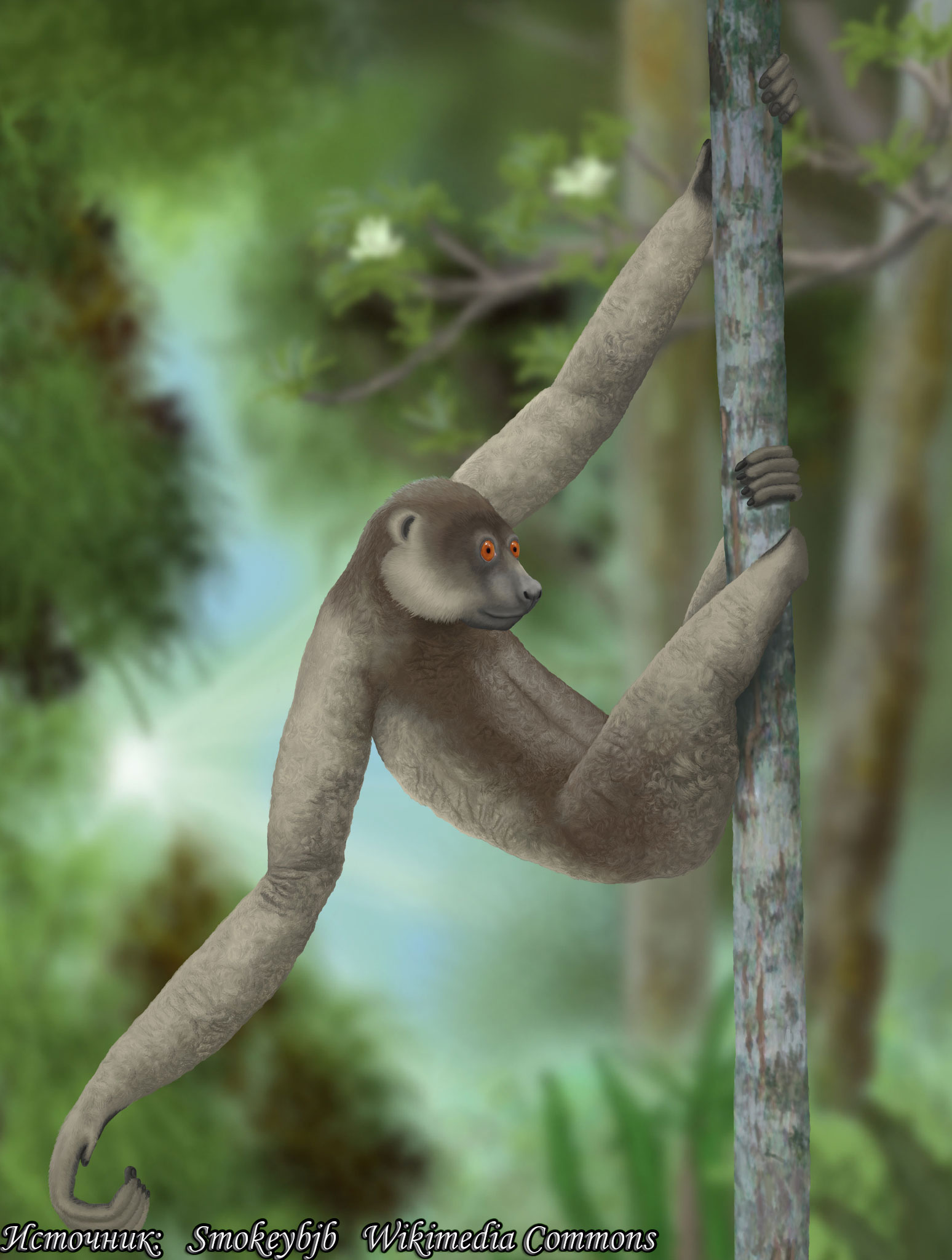
 Palaeopropithecids (Palaeopropithecus ingens) are listed in the IUCN Red List as "extinct species"
The sloth lemurs (Palaeopropithecidae) comprise an extinct family of lemurs that includes four genera. The common name can be misleading, as members of Palaeopropithecidae were not closely related to sloths. This clade has been dubbed the ''sloth lemurs'' because of remarkable postcranial convergences with South American sloths. Despite postcranial similarities, the hands and feet show significant differences. Sloths possess long, curved claws, while sloth lemurs have short, flat nails on their distal phalanges like most primates.
Palaeopropithecus is a genus of subfossil lemurs that inhabited Madagascar from Pleistocene to historic times.
Species are known:
- Family Palaeopropithecidae:
- Archaeoindris;
- Fontoynontii;
- Babakotia;
- Radofilai;
- Mesopropithecus:
- Mesopropithecus dolichobrachion;
- Mesopropithecus globiceps;
- Mesopropithecus pithecoides;
- Palaeopropithecus:
- Palaeopropithecus ingens;
- Palaeopropithecus kelyus;
- Palaeopropithecus maximus.
Appearance
Palaeopropithecines were large primates, as indicated by the Latin name of the first species already discovered, Palaeopropithecus ingens. Representatives of the genus apparently weighed between 40 and 55 kilograms (other sources say up to 60 kilograms). Even P. kelyus, the smallest of the three species, weighed about 35 kilograms, while the largest of the modern lemurs weighs less than ten kilograms.
Palaeopropithecidae were characterised by a massive skull 19-21 centimetres long with a mandibular symphysis, a moderately developed sagittal ridge and prominent facial bones. The mandible lacked canines and the overall structure was similar to that of sifakis. The protruding nasal bones suggest a longer nose than in modern species. Like other members of the family Palaeopropithecidae, Palaeopropithecidae had longer forelimbs than hindlimbs, which distinguishes them from their close relatives, the modern Indriidae; the ratio of forelimb to hindlimb length was greater than that of Hylobatidae and Orangutans. The fingers of the forelimbs and hind limbs are characterised by very long, curved phalanges; the thumbs, on the other hand, are shorter; the joints are flexible and mobile.
Lifestyle
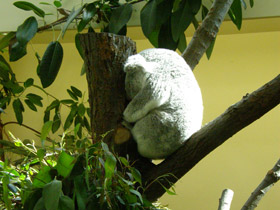
Of all the lemurs, the Palaeopropithecidae were the most specialised because of their arboreal lifestyle. They were apparently almost insensitive to the ground, climbing from branch to branch using all four legs and hanging upside down for long periods, like modern sloths (a special opinion is held by the American anthropologist Phlegl, in 1988, who suggested that Palaeopropithecidae were terrestrial and moved on four legs, and an earlier theory based on fossil misclassification attributed even an aquatic lifestyle to Palaeopropithecidae). The diet of Palaeopropithecidae was strictly plant-based and consisted mainly of leaves, although the mandibular apparatus of P. kelyus indicates that it could chew harder foods than the other two species, including grains.
Distribution and habitat era
The geography of palaeontological finds of Palaeopropithecidae remains is broad (on the scale of Madagascar), and the presumed ranges of the three species do not overlap. P. ingens appears to have inhabited the southwest of the island and P. kelyus the northwest, while the only field where remains of the third species, P. maximus, have been found is in central Madagascar.
Palaeopropycids were still present in Madagascar at the time when humans appeared (the most recent remains from the Ankiliteo site, according to radiocarbon dating, date from the 14th and 15th centuries AD). It is even possible that they survived until the arrival of Europeans on the island. Hunting (some of the recovered remains show evidence of deliberate carving of carcasses) and deforestation, their natural habitat, may have been among the factors that led to their extinction. At the same time, in 1658, the French explorer Etienne de Flacourt still recorded an aboriginal account of a human-like creature called a tratratra (or tretretretret), the size of a two-year-old calf, whose description some authors believe matches the appearance of the Palaeopropithecines.
Taxonomy
Traditionally the family Palaeopropithecidae has been considered most closely related to members of the extant family Indriidae based on morphology. Recently, DNA from extinct giant lemurs has confirmed this, as well as the fact that Malagasy primates in general share a common ancestor. The post-canine teeth of sloth lemurs are similar in number (two premolars, three molars) and general design to living indriids. Babakotia and Mesopropithecus preserve the typical indriid-like toothcomb, but Palaeopropithecus and Archaeoindris have replaced it with four short and stout teeth of unknown functional significance. The vertebrae formation supports the theory that three of the four genera were suspensory/arboreal, while Babakotia was more likely antipronograde.
Extinction
The extinction of Palaeopropithecus (as well as other giant lemurs) has been linked to climate change and the subsequent collapse of ecosystems that come with rapid climate shift. Recent findings also indicate that human hunting is partly responsible for the extinction of giant lemurs. It is likely not the only cause and cannot be applied to the entire island of Madagascar, but does explain patterns in certain regions of human settlement. Long bones have been discovered with cuts characteristic of butchering, either by dismembering and skinning or by filleting. Thorough scrutiny has led scientists to believe these marks to be from hunting by early humans.