














The European water vole or northern water vole (Arvicola amphibius)
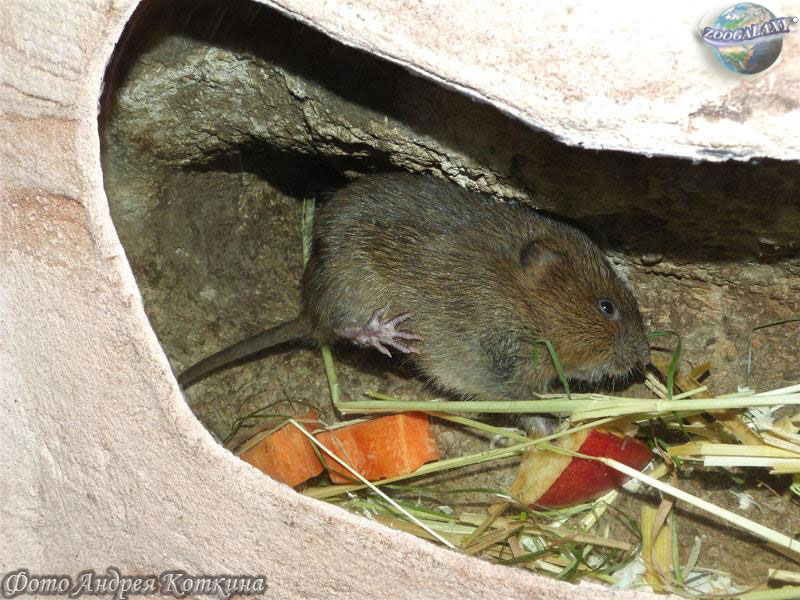
The European water vole or northern water vole (Arvicola amphibius), is a semi-aquatic rodent. It is often informally called the water rat, though it only superficially resembles a true rat.
The range of Arvicola amphibius includes the northern part of the Eurasian continent from the Atlantic coast of Western Europe to central and south-eastern Yakutia; southwards to the northern coast of the Mediterranean Sea, Asia Minor and West Asia, northern Mongolia and north-western China. On the territory of the former USSR it is a widespread species, occupying most of the non-black soil zone of the Russian Federation, Baltic countries, Belarus, Western Ukraine, Northern Caucasus, Lower Volga region, Kazakhstan (except for desert and semi-desert areas) and Siberia (except for the Arctic zone).
Habitat, lifestyle and habits
The most characteristic habitats of Arvicola amphibius are floodplains of rivers, banks of various types of lakes, irrigation canals and other natural and artificial water bodies, upper and floodplain marshes. It settles in meadows, in thickets and swampy small woods, along the banks of forest streams, in fields and vegetable gardens, and even in buildings; it rises to subalpine meadows up to 2800 m above sea level. Seasonal change of habitats is well pronounced, especially in the forest zone, where the animals migrate from the shores of water bodies to floodplain meadows or shrub thickets for winter. In deltaic parts of large rivers with a well-developed floodplain, the change of habitats is particularly influenced by the flood regime. Arvicola amphibius lives in burrows, and in warm season and during floods - in ground and above-ground nests. Permanent (brood) burrows are usually shallow, foraging passages are laid at a depth of 10-15 cm, and chambers, including nesting chambers, are located up to a depth of 1 m. Surface excavations often resemble those of the mole. Autumn and winter period of life is characterised by active digging activity. In the warm season and during floods they make underground or above-ground nests from grass and other plant materials. Before freezing of the upper layers of soil the soil is thrown to the surface during digging, forming, in particular, characteristic snow-covered earth "sausages"; after freezing the unused part of passages is blocked with earth. Arvicola amphibius is the largest of Arvicolinae, second in size in the family only to muskrat. Externally, it somewhat resembles the rat, but has a more valvate body, a shortened muzzle with short ears, a soft silky hair cover and less long legs, which are especially inconspicuous because of the fluffy fur. The tail of Arvicola amphibius, unlike the muskrat, is round in cross-section and, unlike the rat, is covered, though not densely, with hair, ending not with bare skin but with a faint tassel about 0.5 cm long. Its eyes are smaller than those of the rat. The incisors in the middle part are yellow-brown in colour.
Distinctive features
The body size of fully grown individuals varies markedly in different geographical areas both across the range and in different landscapes within the same geographical area. The weight of Arvicola amphibius ranges from 120 to 330 g and body length from 110 to 260 mm. The tail averages 1/2 to 2/3 of the body length.
The hair coat of Arvicola amphibius is well differentiated into a dense fine underfur and relatively coarse awn. Seasonal differences in fur are weakly expressed. The colouration of the top is monochrome, varying from dark brown to almost black; in northern populations the tail end may be white.
Taxonomy
The binomial applied to the European water vole is Arvicola amphibius; it was formerly known by the junior synonym A. terrestris. The confusion stems from the fact that Linnaeus described two species of water vole on the same page of the same work. Those two forms are now universally considered the same species. It has been recognized as A. amphibius (Linnaeus, 1758) because the first source to unite the two forms, which Linnaeus had treated separately, into a single species chose A. amphibius as the valid name. The species is widely known by the synonym A. terrestris, which for many decades was treated as the valid name.
Some authorities consider the southwestern water vole (Arvicola sapidus) to be the same species, but it is now generally considered distinct.
What Arvicola amphibius feeds on
Like other Arvicolinae, Arvicola amphibius is a plant-eating species, but animal food is constantly observed in its diet: remains of mollusks, insects, small fish, etc. Seasonal change of food is well expressed. In warm season it is succulent, green parts of aquatic and coastal plants - reed, cattail, arrowleaf, sedge, lily-of-the-valley, and many species of meadow grasses. In winter Arvicola amphibius switches to feeding on underground parts of plants, as well as bark and shoots of willows, poplars, and cherry trees. The instinct to hoard is less developed in Arvicola amphibius than in many grey voles, and more strongly developed in animals in the north and east of its distribution area. Reed rhizomes and potato tubers from cultivated plants are particularly common.
Breeding
The breeding period of Arvicola amphibius lasts throughout the entire warm season of the year, and in mild winters mass breeding has been recorded as early as February (in the Volga floodplain). During the breeding period, females bear at least 4 and up to 6 litters; in lower reaches of rivers with a spring flood regime, breeding may be interrupted during the period of high flood water levels. The average number of cubs in a litter is 6-8. The duration of gestation is about 40 days.