














The Hispid cotton rat (Sigmodon hispidus)
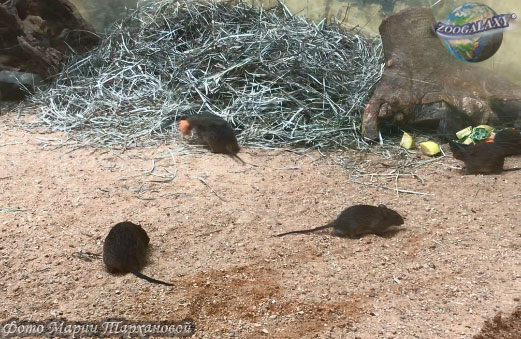
Hispid cotton rat видео
Description
The Hispid cotton rat (Sigmodon hispidus) is very similar in body proportions and general appearance to the common Easterling (grey rat), but is usually slightly smaller. The dorsal coat is of medium length and very stiff, almost bristly. Brown hairs mixed with black hairs give an overall blackish-brown colouration. The ventral side is light grey or white with a yellowish tinge. The almost naked tail is slightly shorter than the body, and the ears are small and rounded.
Distribution
Several dozen known species of this genus are distributed from the southern United States to and including Peru and Venezuela. Hispid cotton rat is a typical representative of the group. The rodent got its name in the southern United States, as it has been repeatedly noted as a pest of cotton fields - it is tempted by the oily seeds of this crop. In different parts of its distribution, Hispid cotton rat species inhabit meadows, swampy grass and shrub thickets, banks of water bodies, and mountainous areas. They avoid only dense forests. They are often very numerous in anthropogenic landscapes.
Taxonomy
The currently accepted scientific name for the hispid cotton rat is Sigmodon hispidus. It is a member of the family Cricetidae. Although 25 subspecies are accepted, including the type subspecies, the most distinct genetic subdivision within S. hispidus separates the species into two genetic lineages, an eastern one and a western one, which hybridise along a contact zone.
Nutrition
Hispid cotton rat's usual food is fruits and seeds, tubers, bulbs, succulent rhizomes and stems, green shoots of grasses and shrubs. On occasion, they will eat insects, molluscs, crayfish, dead fish and carrion, and may also destroy a bird's nest and eat its contents.
Lifestyle
The hispid cotton rat is active mainly during the day, but may make nocturnal forays. It builds a nest in a small burrow, a natural ground shelter in dense bushes or grass made of dry stems. It is lined inside with soft plant down (seed-cleaned cotton is often used).
Breeding
Females are extremely prolific. Under conditions of sufficient food they can give birth to 4-5 cubs every 27 days. A few hours after giving birth, females are able to mate again. Young of two months of age can already breed.
In the northernmost parts of the range, breeding takes place from February to November, in the more southern parts - all year round. Naturally, with such a high potential reproductive capacity and great "life energy" Hispid cotton rat are very important in natural biocenoses. Here they change their numbers relatively little from year to year, being in equilibrium with the sum of environmental factors. However, in anthropogenic landscapes with impoverished and poorly diverse biotic communities, cotton rats become a great evil for humans. Approximately every 4-5 years there is a mass reproduction of these animals, a real "ecological explosion", causing great losses. In the places of contact between fields and waterlogged "primary" breeding centres, the number of Hispid cotton rat reaches fantastic values - 100 thousand individuals per 1 km2, which corresponds to a biomass of about 10 tonnes per this area. But then, after they have destroyed crops on large areas, the abundance of animals begins to drop sharply due to diseases, lack of food, predators, etc. On large areas these animals disappear completely, and only in some pockets the population barely survives. However, the surviving animals can reproduce quickly again without any interference, and in a few years everything repeats again.
The Hispid cotton rat lives and breeds well in captivity. These animals have long been used as laboratory animals for a variety of biomedical studies. Field work on the population dynamics of these rodents, covered in numerous books and articles, has elucidated a number of interesting general problems of population dynamics and population structure.
Predators
Hispid cotton rats are preyed on by many birds and reptiles, and by other mammals. In Oklahoma hispid cotton rats were a major prey item in the diet of Swainson's hawks (Buteo swainsoni). In central Missouri hispid cotton rats comprised 19% of prey items in red-tailed hawk (Buteo jamaicensis) nests. Hispid cotton rat remains comprised a substantial portion of short-eared owl (Asio flammeus) pellets in Arkansas. Hispid cotton rats were the third most important prey item of red wolves (Canis rufus) in eastern Texas and Louisiana. In North Carolina, bobcats (Lynx rufus) consumed substantial numbers of hispid cotton rats. Hispid cotton rats were a minor item in the diet of Florida panthers (Felis concolor coryi). In north-central Florida the only direct evidence of predation on hispid cotton rats was the presence of hispid cotton rat remains in a barred owl (Strix varia) pellet. The authors also observed a corn snake (Elaphe guttata guttata) killing a hispid cotton rat just after the rat was released from a trap. The snake apparently had been waiting on the runway where the trap had been set.