














The American red squirrel (Tamiasciurus hudsonicus)
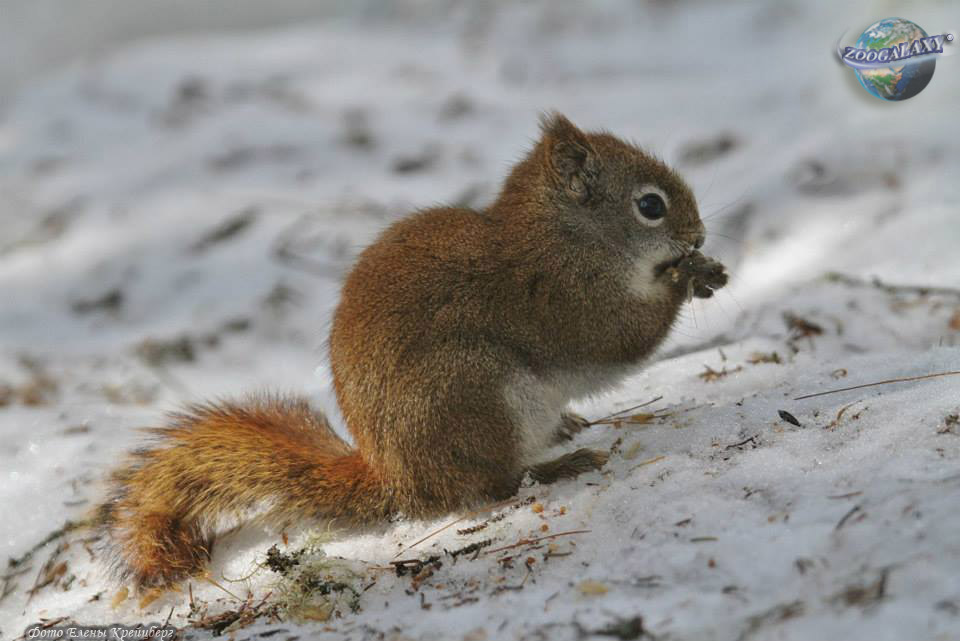
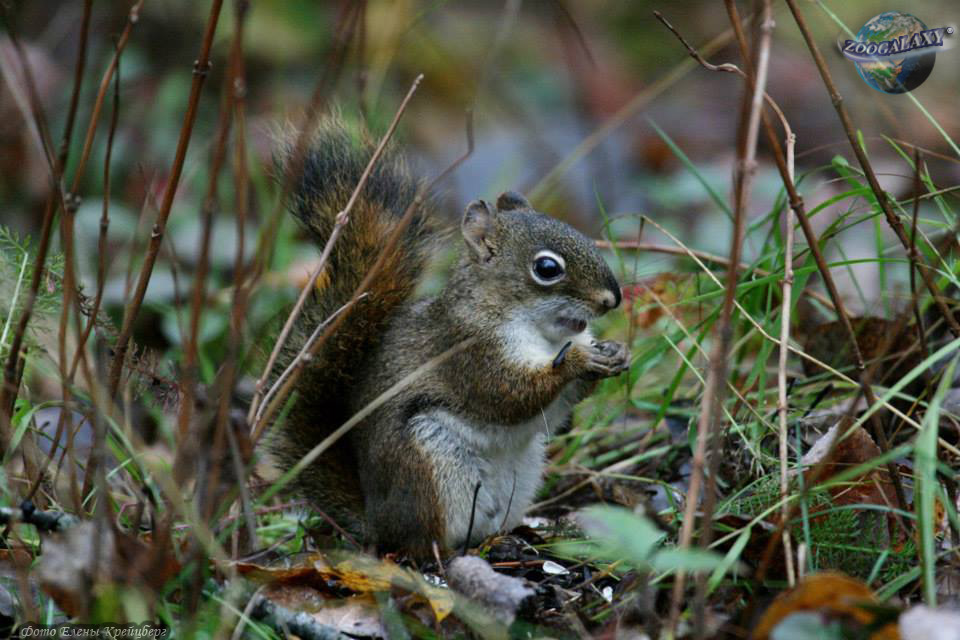
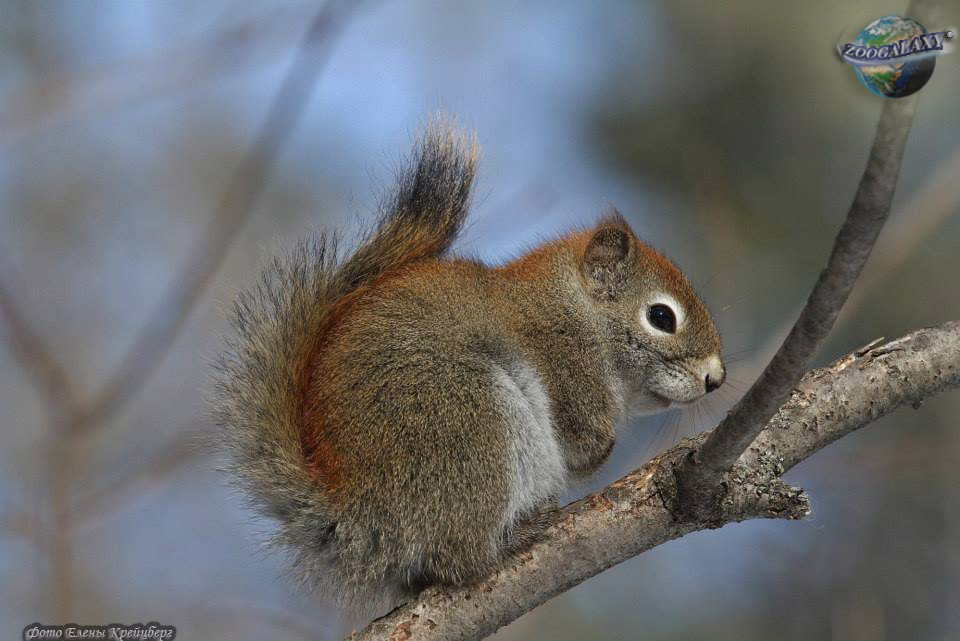
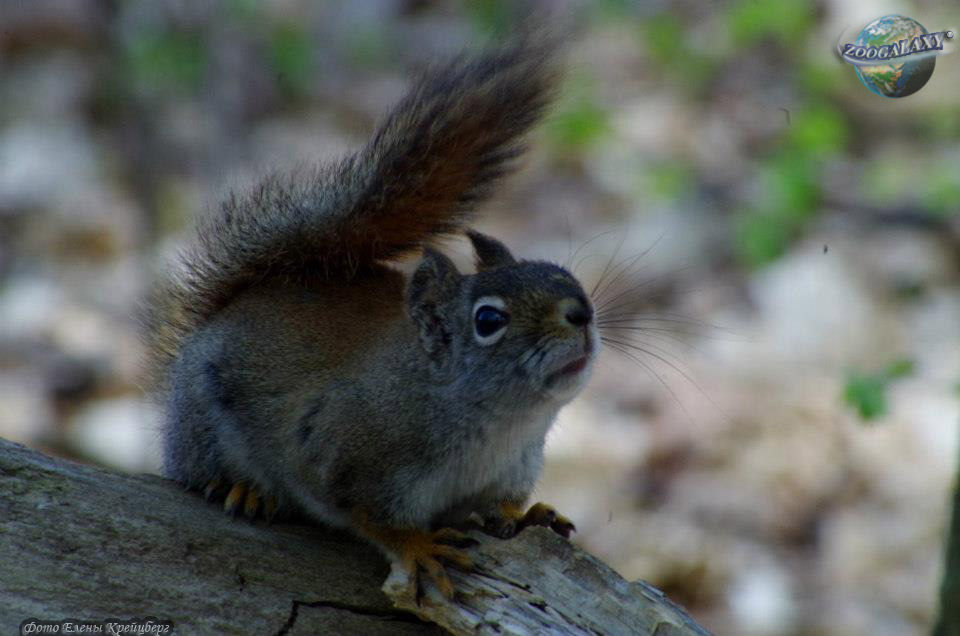
The American red squirrel (Tamiasciurus hudsonicus) is one of three species of tree squirrels currently classified in the genus Tamiasciurus, known as the pine squirrels (the others are the Douglas squirrel, Tamiasciurus douglasii, and the southwestern red squirrel, Tamiasciurus fremonti). The American red squirrel is variously known as the pine squirrel or piney squirrel, North American red squirrel, chickaree, boomer, or simply red squirrel.
Habitat
The Latin species name Tamiascirus hudsonicus was given to this squirrel in honour of Hudson Bay, where it was first described. In fact, the American red squirrel is distributed almost throughout North America - in Alaska, Canada, the United States down to the deserts of Arizona and New Mexico in the south and Georgia in the southeast. Tamiasciurus hudsonicus inhabit a variety of woodlands, including coniferous, deciduous, and mixed forests. They can also be found in suburban areas where tree plantations are present.
Distinguishing features
The body length of Tamiasciurus hudsonicus varies from 28 to 35 cm, with a tail length of 9.5-15 cm. The colour of the fur is very variable, usually brownish or olive-red. In summer, there is a black longitudinal stripe down the sides that separates the belly and back. The fur on the belly is white or cream coloured. The tail usually has a white border. Around the black eyes, the fur is white.
In the wild, Tamiasciurus hudsonicus live up to seven years, but most die before they reach one year of age. These rodents are solitary and diurnal and are active all year round. Squirrels make their nest in old woodpecker hollows, tree cavities or other small crevices. In the north of the range of Tamiasciurus hudsonicus they often spend winter in underground tunnel systems. Squirrels often migrate if the food supply in the living territory decreases. When migrating, they often have to swim across water bodies.
Taxonomy
American red squirrels should not be confused with Eurasian red squirrels (Sciurus vulgaris); since the ranges of these species do not overlap, they are both commonly referred to as simply "red squirrel" in the areas where they are native. The specific epithet hudsonicus refers to Hudson Bay, Canada, where the species was first catalogued by Erxleben in 1771; accordingly, the species was formerly sometimes known as Hudson's Bay squirrel, such as in John James Audubon's work The Viviparous Quadrupeds of North America. A recent phylogeny suggests the squirrels as a family can be divided into five major lineages. Red squirrels (Tamiasciurus) fall within the clade that includes flying squirrels and other tree squirrels (e.g., Sciurus). There are 25 recognised subspecies of the American red squirrel.
The southwestern red squirrel (Tamiasciurus fremonti) was long considered conspecific with Tamiasciurus hudsonicus, but a 2016 phylogenetic study found it to be a distinct species.
What Tamiasciurus hudsonicus feeds on
Tamiasciurus hudsonicus feeds mainly on conifer seeds, with white fir seeds making up to 55% of its diet in the Yukon. They also eat needles and young shoots of fir, leaves and earrings of willow and poplar, flowers, various berries and mushrooms (including those poisonous to humans), and some animal protein in the form of bird eggs or even hares.
Reproduction
Females of Tamiasciurus hudsonicus are capable of breeding as early as one year of age, although some do not start bearing offspring until they are 2 years old. Each female can mate with several males. Pregnancy lasts 31-35 days, and 1 to 5 naked and helpless cubs weighing about 10 g are born. The cubs grow very quickly and reach adult size at 125 days of age. The female feeds them with milk for 7-8 weeks. They begin to leave the nest at about 42 days of age and become independent at 18 weeks of age. Each female has several nests built of grass and tree branches in her territory and moves with her young from one to another.
Sociality
Red squirrels are highly territorial and asocial with very few non-reproductive physical interactions (0.6% of all recorded behaviours in one 19-year study). The majority of physical interactions are in male-female matings and between females and their offspring before the offspring disperse to their own territories (see Dispersal and survival). The non-reproductive physical interactions recorded were all instances of chasing an intruder from a territory.
Dispersal and survival
If juvenile American red squirrels are to survive their first winter, they must acquire a territory and midden. They can acquire a territory by competing for a vacant territory, creating a new territory or by receiving all or part of a territory from their mothers. This somewhat rare (15% of litters) female behavior is referred to as breeding dispersal or bequeathal, and is a form of maternal investment in offspring. The prevalence of this behavior is related to the abundance of food resources and the age of the mother. In some cases, females will acquire additional middens prior to reproduction, which they later bequeath to their offspring. Offspring that do not receive a midden from their mother typically settle within 150 m (3 territory diameters) of their natal territory. Observations suggest that male red squirrels have environmentally induced, alternative reproductive strategies that result in higher incidences of sexually selected infanticide in years when food is plentiful.
American red squirrels experience severe early mortality (on average only 22% survive to one year of age). The survival probability, however, increases to age three, when it begins to decrease again. Females that survive to one year of age have a life expectancy of 3.5 years and a maximum lifespan of 8 years. Increased maternal attention is correlated with increased offspring growth rate and higher lifetime reproductive success.
Chief predators include Canada lynx (Lynx canadensis), bobcat (Lynx rufus), coyote (Canis latrans), great horned owl (Bubo virginianus), northern goshawk (Accipiter gentilis), red-tailed hawk (Buteo jamaicensis), American crow (Corvus brachyrynchos), American marten (Martes americana), pacific marten (Martes caurina), red fox (Vulpes vulpes), gray fox (Urocyon cinereoargenteus), wolf (Canis lupus), and weasel (Mustela sp.).
Subspecies
- Tamiasciurus hudsonicus hudsonicus ERXLEBEN, 1777;
- Tamiasciurus hudsonicus abieticola A. H. HOWELL, 1929;
- Tamiasciurus hudsonicus baileyi J. A. ALLEN, 1898;
- Tamiasciurus hudsonicus dacotensis J. A. ALLEN, 1894;
- Tamiasciurus hudsonicus dixiensis HARDY, 1942;
- Tamiasciurus hudsonicus fremonti AUDUBON & BACHMAN, 1853;
- Tamiasciurus hudsonicus grahamensis J. A. ALLEN, 1894;
- Tamiasciurus hudsonicus gymnicus BANGS, 1899;
- Tamiasciurus hudsonicus kenaiensis A. H. HOWELL, 1936;
- Tamiasciurus hudsonicus lanuginosus BACHMAN, 1839;
- Tamiasciurus hudsonicus laurentianus ANDERSON, 1942;
- Tamiasciurus hudsonicus loquax BANGS, 1896;
- Tamiasciurus hudsonicus lychnuchus STONE & REHN, 1903;
- Tamiasciurus hudsonicus minnesota J. A. ALLEN, 1899;
- Tamiasciurus hudsonicus mogollonensis MEARNS, 1890;
- Tamiasciurus hudsonicus palescens A. H. HOWELL, 1942;
- Tamiasciurus hudsonicus petulans OSGOOD, 1900;
- Tamiasciurus hudsonicus picatus SWARTH, 1921;
- Tamiasciurus hudsonicus preblei A. H. HOWELL, 1936;
- Tamiasciurus hudsonicus regalis A. H. HOWELL, 1936;
- Tamiasciurus hudsonicus richardsoni BACHMAN, 1839;
- Tamiasciurus hudsonicus streatori J. A. ALLEN, 1898;
- Tamiasciurus hudsonicus ungavensis ANDERSON, 1942;
- Tamiasciurus hudsonicus ventorum J. A. ALLEN, 1898;