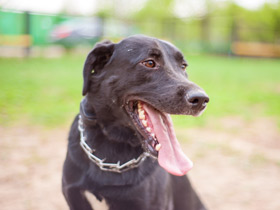















The Arabian wolf (Canis lupus arabs)
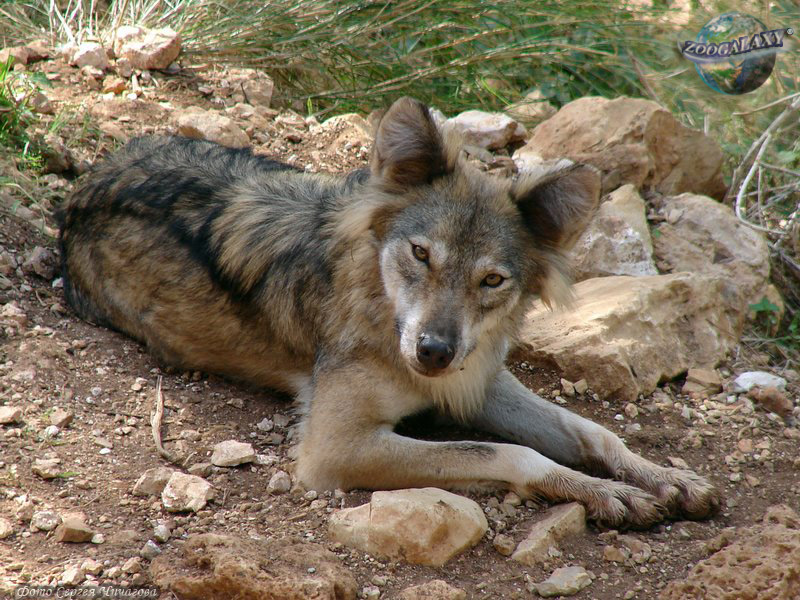
The Arabian wolf (Canis lupus arabs) is a subspecies of grey wolf native to the Arabian Peninsula, western Bahrain, as well as Oman, southern Saudi Arabia and Yemen. They are also found in the Negev and Arava deserts of Israel, Jordan, Palestine and Egypt's Sinai Peninsula. It is the smallest subspecies of grey wolf and a specialised xeroculture animal (adapted to arid areas) that normally lives in smaller family packs. Arabian wolves are omnivores and opportunistic feeders, consuming small to medium-sized prey ranging from insects, reptiles and birds to rodents and small ungulates, such as baby Nubian ibex and several species of gazelle (Arabian, boba, Dorcas and mountain gazelle).
Taxonomy
The British zoologist Reginald Innes Pocock designated the Arabian wolf in 1934 as Canis lupus arabs, although it was previously considered synonymous with Canis lupus pallipes (Indian wolf). Pocock noted its smaller skull and smaller size. In the third edition of Mammal Species of the World published in 2005, mammalogist W. Christopher Wozencraft included the subspecies Canis lupus lupus arabs under Canis lupus lupus lupus. A 2014 study suggests that genetically the Arabian wolf is closer to Canis lupus lupus than Canis lupus pallipes and supports the subspecies designation Canis lupus arabs. There has been admixture with domestic dogs, but it is unclear whether or not this is the reason why this wolf is genetically closer to Canis lupus lupus. This raises fears of extinction through hybridisation, as Arabian wolves are more adapted to desert life than wolf-dog hybrids.
In Israel and Palestine there is some disagreement over the exact taxonomic status of wolves. Some scientists argue that there are two subspecies of wolf: Canis lupus pallipes in the north and Canis lupus arabs in the south. They point out that the southern wolves are smaller than the northern wolves, which are also darker and have longer fur. Other scientists consider the wolf of the area to be Canis lupus arabs, with no real distinction between northern and southern wolves. As in other countries, there is interbreeding with feral dogs, which adds an element of uncertainty.
Description and habitat
Canis lupus arabs is a subspecies of wolf native to the Middle East, small in size and light greyish in colour.
Canis lupus arabs occurs in limited areas of southern Israel, Oman, Yemen, Jordan, Saudi Arabia and possibly parts of the Sinai Peninsula in Egypt. It is the smallest of all subspecies, well adapted to desert life, with a height at withers of about 66 cm and an average weight of only 18 kg.
The ears of Canis lupus arabs are disproportionately large compared to body size, unlike other wolf subspecies, which is an adaptation to dissipate body heat radiation, and the coat is short.
Arabian Canis lupus do not live in large packs (apparently due to lack of food resources) and hunt in pairs or groups of 3-4 animals. This subspecies has some unique characteristics: for example, no one has ever heard these wolves howl.
In addition, the two central toes of Canis lupus arabs are fused (a trait previously thought to be exclusive to the hyena dog). Like other wolves, the eyes of Canis lupus arabs are yellow, but in some individuals they are brown. This most likely suggests that part of the population is no longer purebred and that their ancestors have mixed with feral dogs.
Hunting and nutrition
Canis lupus arabs feed on ungulates, hares, various rodents, reptiles, carrion and even insects. They hunt mainly during the dark hours of the day, to avoid the heat. These wolves also eat fruit and some plants. Unfortunately, they can also attack domestic animals up to the size of a ram, which is why they are persecuted by farmers.
In Oman, the wolf population has increased considerably since hunting was banned. The population of Canis lupus arabs is likely to recover in several localities in the region in the relatively near future. There are currently between 100 and 150 inhabitants in the Negev and Arava in Israel.
Reproduction
The only time Canis lupus arabs become territorial is when they give birth to wolf cubs. Sometimes a litter consists of 12 pups, but usually there are only 2 or 3. They are born blind, their mother feeds them with milk until they are 8 weeks old, after which the parents begin to burp half-digested food into them.