














The mountain weasel (Mustela altaica), the pale weasel, Altai weasel or solongoi
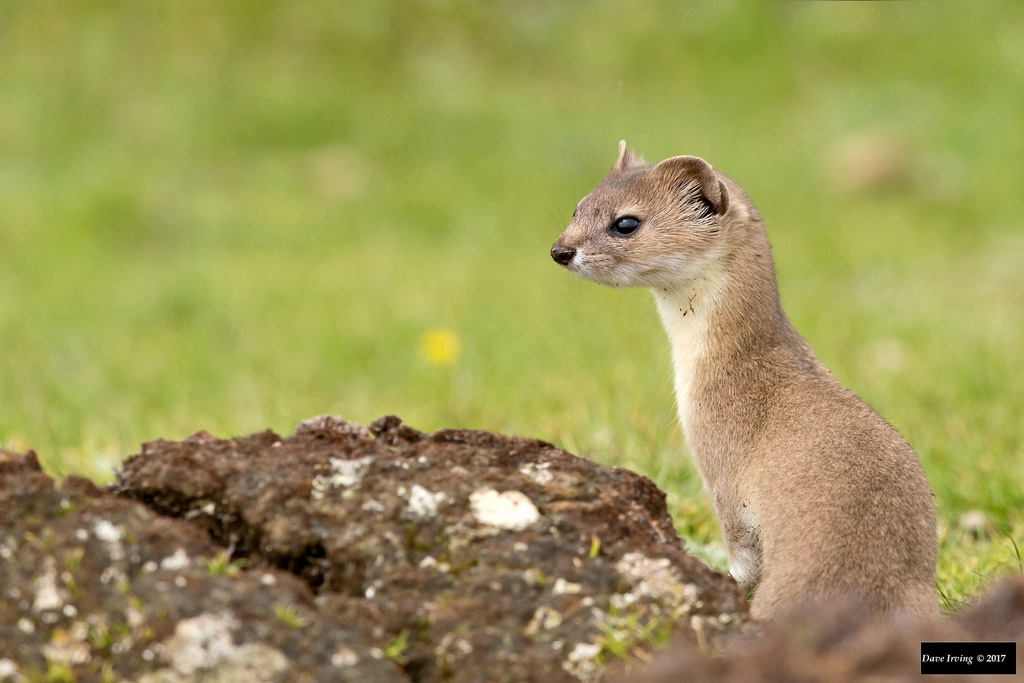

The mountain weasel (Mustela altaica), also known as the pale weasel, Altai weasel or solongoi, primarily lives in high-altitude environments, as well as rocky tundra and grassy woodlands. This weasel rests in rock crevices, tree trunks, and abandoned burrows of other animals or the animals it previously hunted. The home range size of this animal is currently unknown. Geographical distribution for this species lies in parts of Asia from Kazakhstan, Tibet, and the Himalayas to Mongolia, northeastern China, and southern Siberia. The most common area for this species, however, is Ladakh, India. The conservation status, according to the IUCN, is near threatened because it is considered to be in significant decline and requires monitoring mainly because of habitat and resource loss.
Habitat
Mustela altaica is a species of carnivorous mammal in the family Mustelidae.
Mustela altaica is a member of the polecat family. It occurs in Central Asia (Mongolia, China), eastern Central Asia, southern Siberia (except Altai and Tuva) and the southern Far East.
It inhabits mountainous landscapes with sparsely developed forest vegetation (e.g. the Daur Island range in the Jewish Autonomous Region), and also occurs in foothill forest-steppe and steppe. It avoids waterlogged lowlands. It lives in rock crevices, tree trunks or abandoned burrows. Mustela altaica is not afraid to live in the vicinity of human settlements. Mustela altaica has a focal range.
Appearance
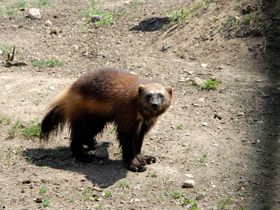
The colour of the Altai Mustela varies according to the season. In winter, the skin turns dark yellow to reddish brown on the back, and pale cream with white under the flanks. In summer, the solongoi turns grey or grey-brown. Males range in length from 21 to 28 cm, with a tail of 10-15 cm. Their weight ranges from 250 to 370 g. Females are slightly smaller and measure 21-26 cm in length with a tail of 9-12.5 cm. Females weigh between 120 and 245 g.
Reproduction and nutrition
Males are known for their fierce battles for mating supremacy with females. They mate once a year, usually in February or March. Pregnancy in females is 30 to 49 days. There is no certainty that females can delay embryo development. They produce 1 to 8 young and feed on milk for 2 months.
Mustela altaica feeds on various small animals and birds, their eggs and chicks, lizards, frogs, snails and insects.
Threats to existence
The main competitor of Mustela altaica, which is gradually displacing it from many biotopes, is the small murrelet. It is considered a commercial species. The species is listed in the Red Data Book of the Jewish Autonomous Region, the Red Data Book of Irkutsk Oblast and the Red Data Book of Primorsky Territory.
Threats
Some threats causing the weasel to be considered near-threatened include habitat change, mainly caused by human development, and other dangers, such as traffic on roads, which can reduce their population. Overgrazing by cattle, goats, and sheep causes the prey of the weasel to diminish because their hiding spots and food are reduced.
Conservation
The mountain weasel is listed in appendix III of the Convention on International Trade in Endangered Species. The category in which it is included consists of 45 species that are protected in at least one country which has asked for assistance in controlling the trade of that animal to safeguard resources for the future. The mountain weasel is also listed in the Wildlife Protection Act of 1972 in schedule II part II by the government of India, which states the animal receives absolute protection and offenders are prescribed the highest of penalties. Penalties may include three to seven years of imprisonment or a $25,000 fine.
Subespecie
- Mustela altaica altaica;
- Mustela altaica birulai;
- Mustela altaica raddei;
- Mustela altaica temon;
- Mustela altaica tsaidamensis.